The collector’s art library
Painting studies · 46
Explore 1,200 paintings through museum context, material records and interactive scale studies. Notice what you respond to, then use those observations to describe the art you want in your own space.
The reference works belong to the Cleveland Museum of Art’s collection and are not offered for sale here. Records and images use the museum’s CC0 open-access release; there is no museum partnership. Sources and methodology.
Studies 1081–1104 of 1200
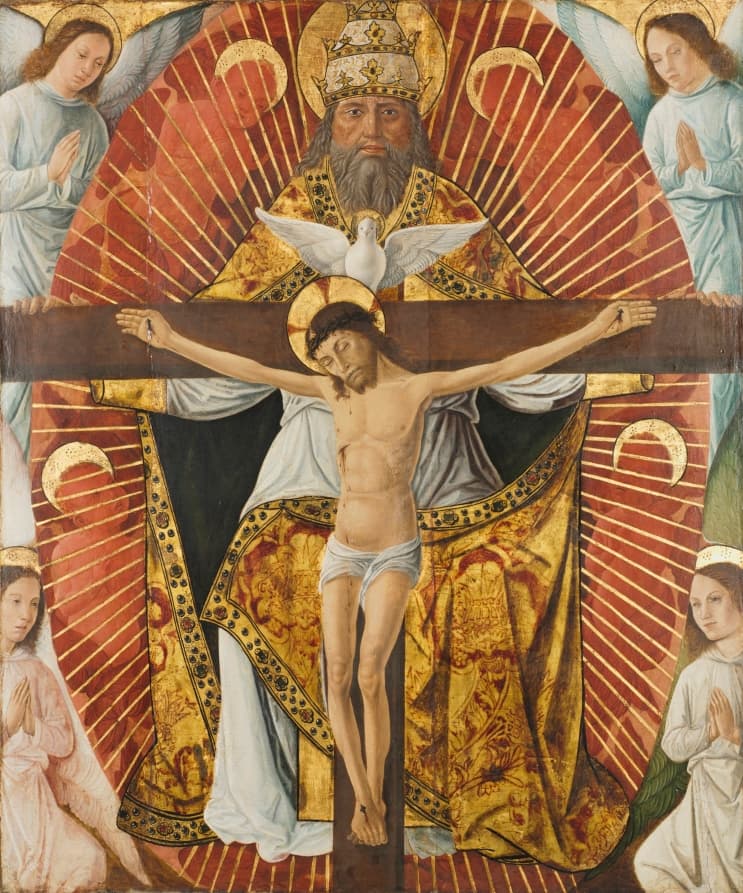
c. 1460 · France, Lyon
The Trinity
Laurent Girardin (French, 1478) · oil on wood
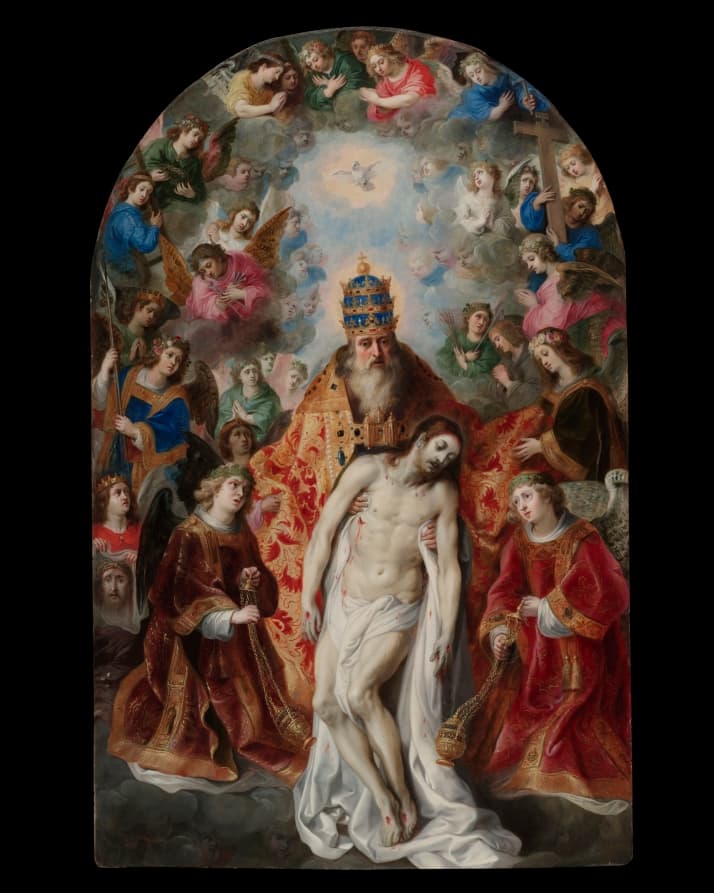
c. 1620 · Flanders
The Trinity
Hendrik van Balen (Flemish, 1575–1632) · oil on wood
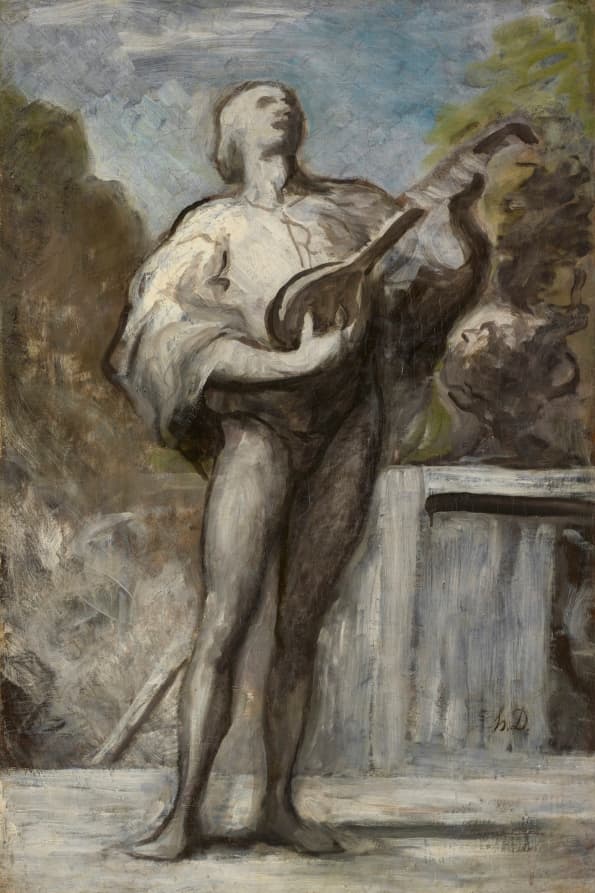
1868–73 · France, 19th century
The Troubadour
Honoré Daumier (French, 1808–1879) · oil on fabric
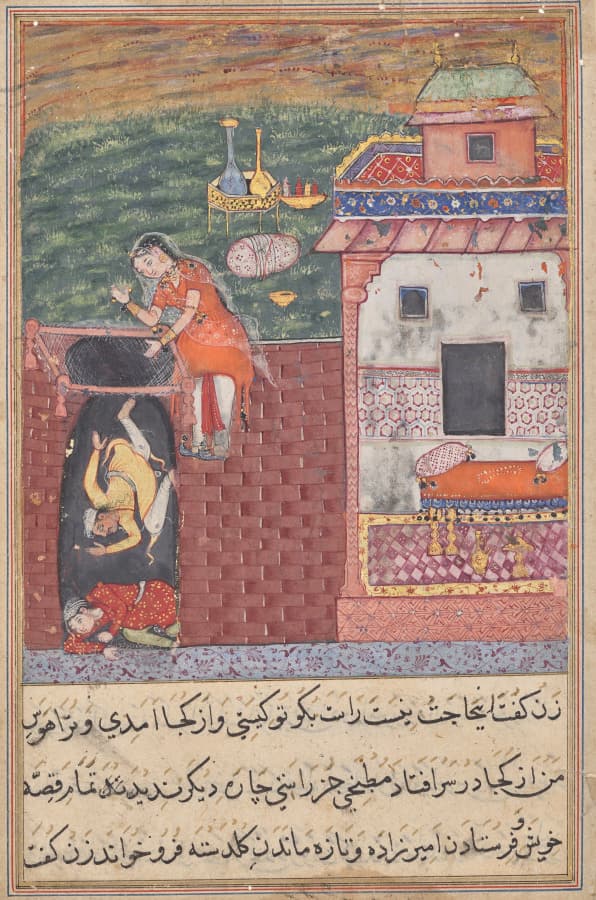
c. 1560 · Mughal India, court of Akbar (reigned 1556–1605)
The two cooks, who attempt to seduce the warrior’s loyal wife, are trapped by her in a cellar, from a Tuti-nama (Tales of a Parrot): Fourth Night
Artist not recorded · gum tempera, ink, and gold on paper
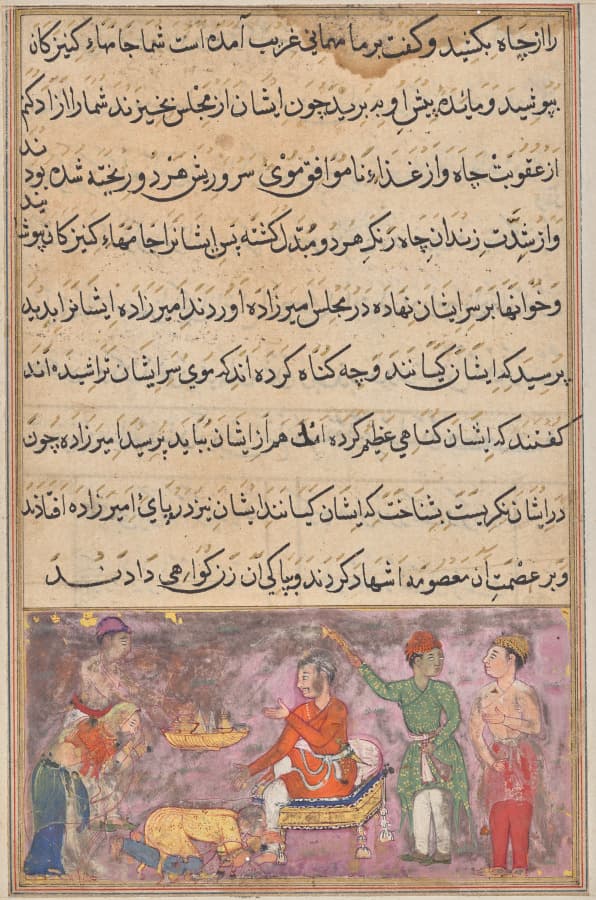
c. 1560 · Mughal India, court of Akbar (reigned 1556–1605)
The two erring cooks, dressed as maidservants, fall at the prince’s feet and beg forgiveness, from a Tuti-nama (Tales of the Parrot): Fourth Night
Artist not recorded · gum tempera, ink, and gold on paper
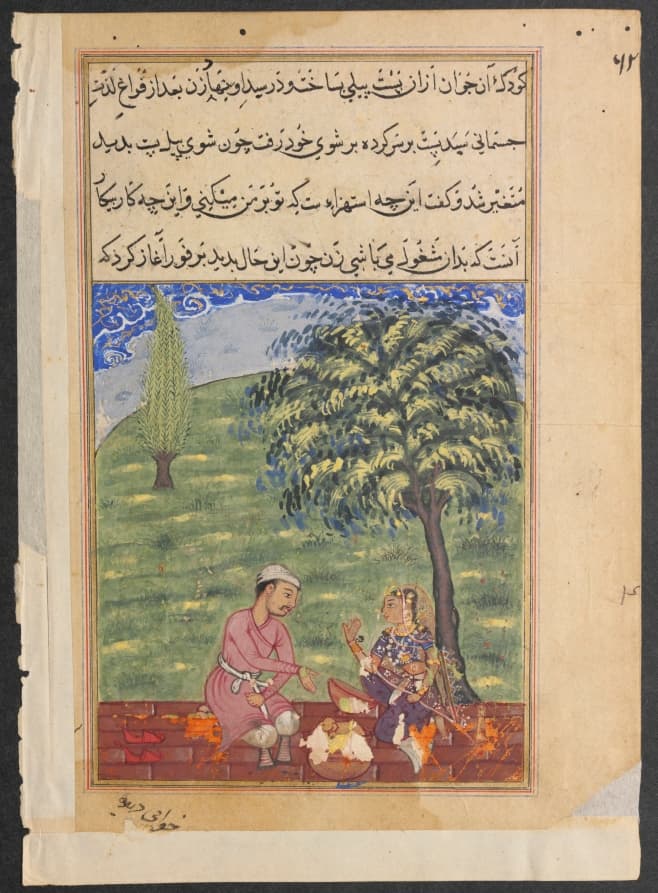
c. 1560 · Mughal India, court of Akbar (reigned 1556–1605)
The unfaithful wife explaining away the presence of the dough elephant, from a Tuti-nama (Tales of a Parrot): Eighth Night
Artist not recorded · gum tempera, ink, and gold on paper
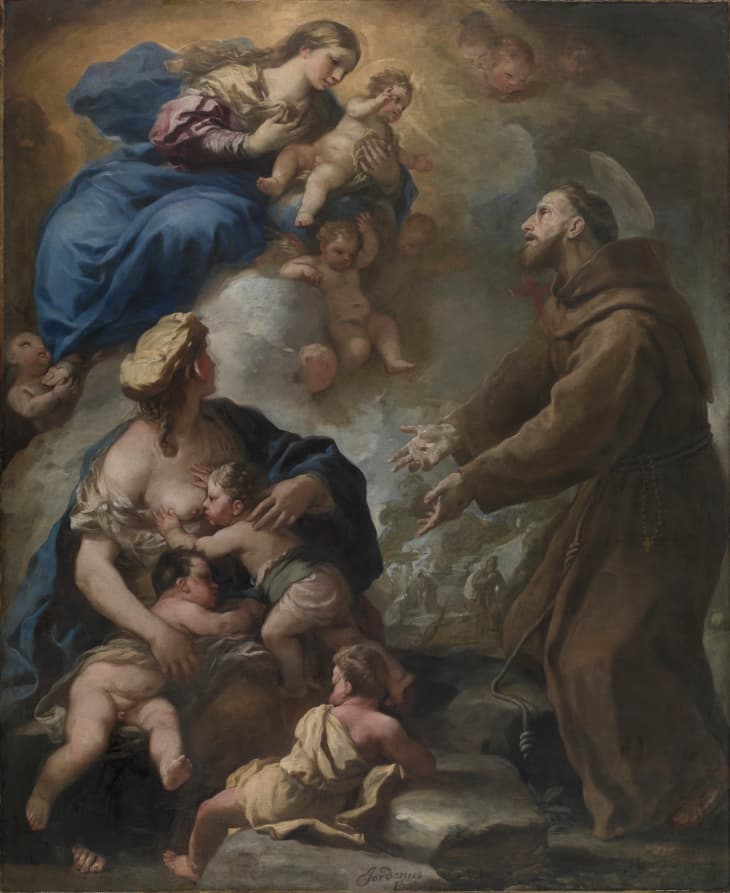
1680s · Italy
The Virgin and Child Appearing to Saint Francis of Assisi
Luca Giordano (Italian, 1634–1705) · oil on canvas
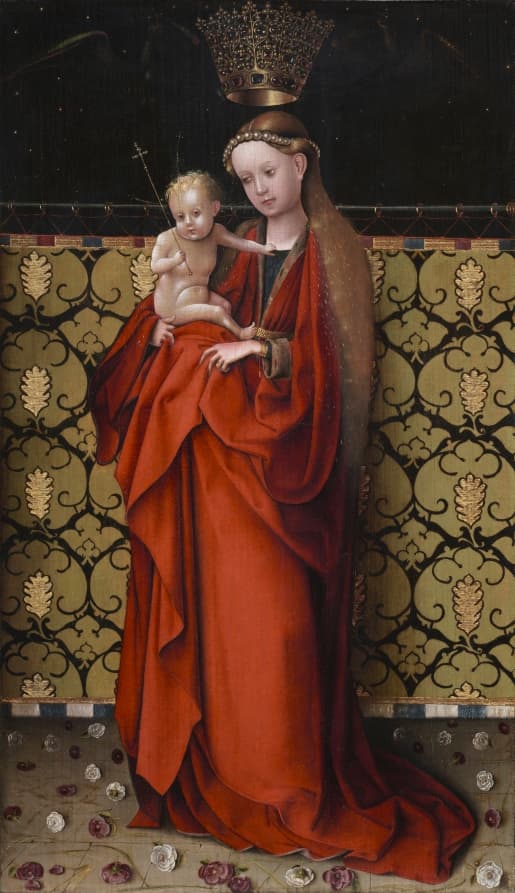
c. 1450 · Germany, Cologne
The Virgin Crowned by Angels
Stefan Lochner (German, 1400-c. 1452) · oil on wood
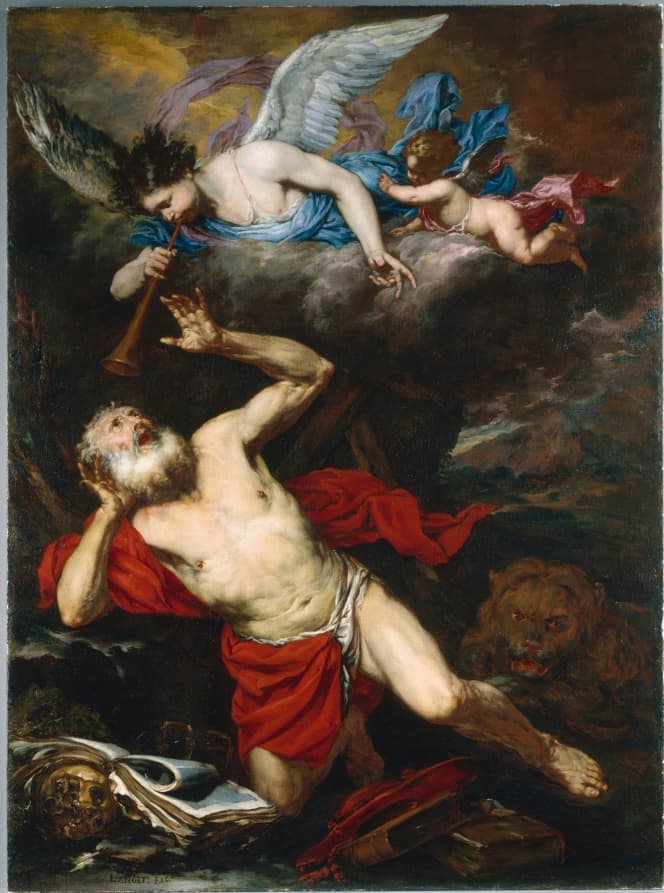
c. 1660 · Italy
The Vision of Saint Jerome
Giovanni Battista Langetti (Italian, 1635–1676) · oil on canvas
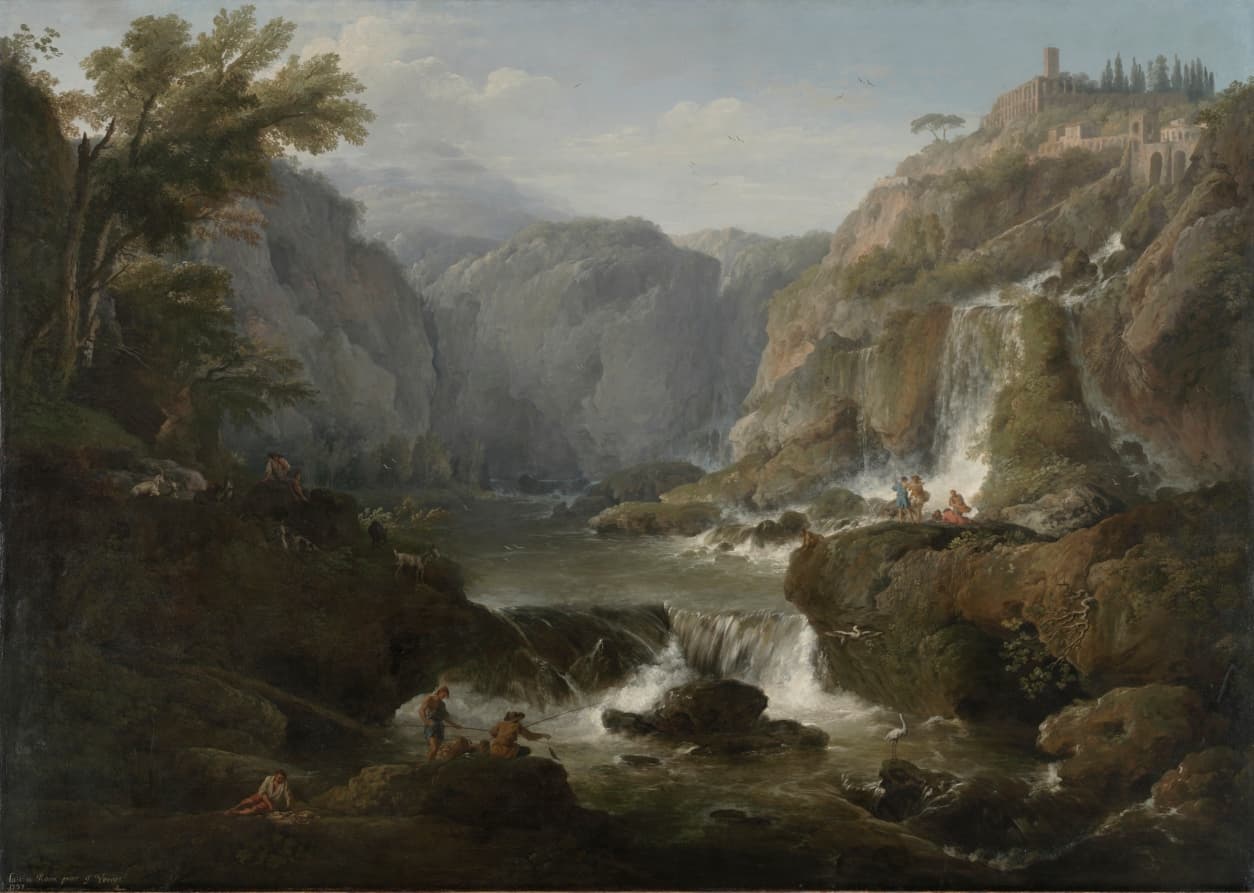
1737 · France
The Waterfalls at Tivoli
Claude-Joseph Vernet (French, 1714–1789) · oil on canvas
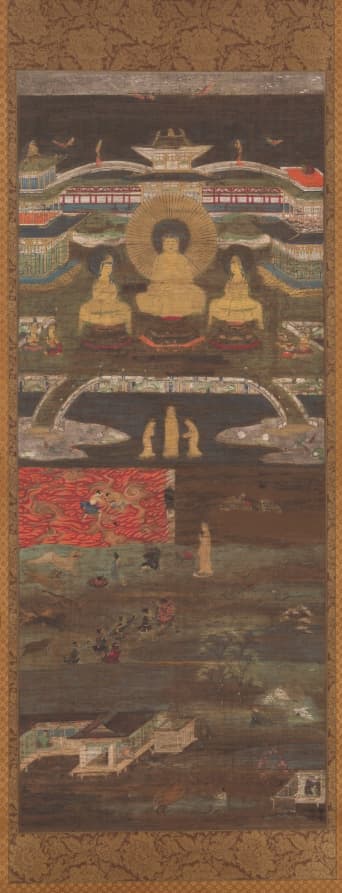
1200s · Japan, Kamakura period (1185–1333)
The White Path Between Two Rivers
Artist not recorded · hanging scroll; ink, color, gold, silver, and cut gold on silk
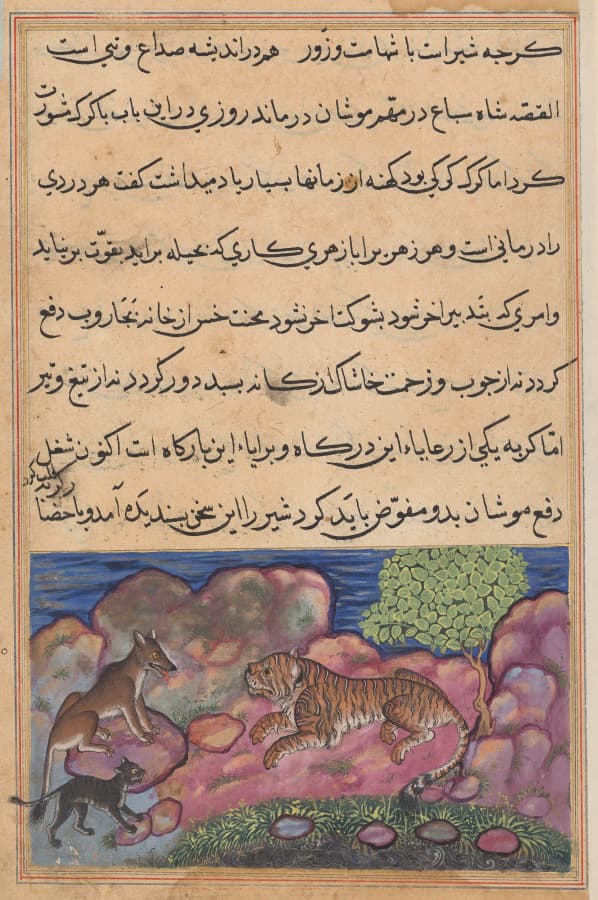
c. 1560 · Mughal India, court of Akbar (reigned 1556–1605)
The wolf advises the lion to consult the cat, from a Tuti-nama (Tales of a Parrot): Fifteenth Night
Artist not recorded · gum tempera, ink, and gold on paper
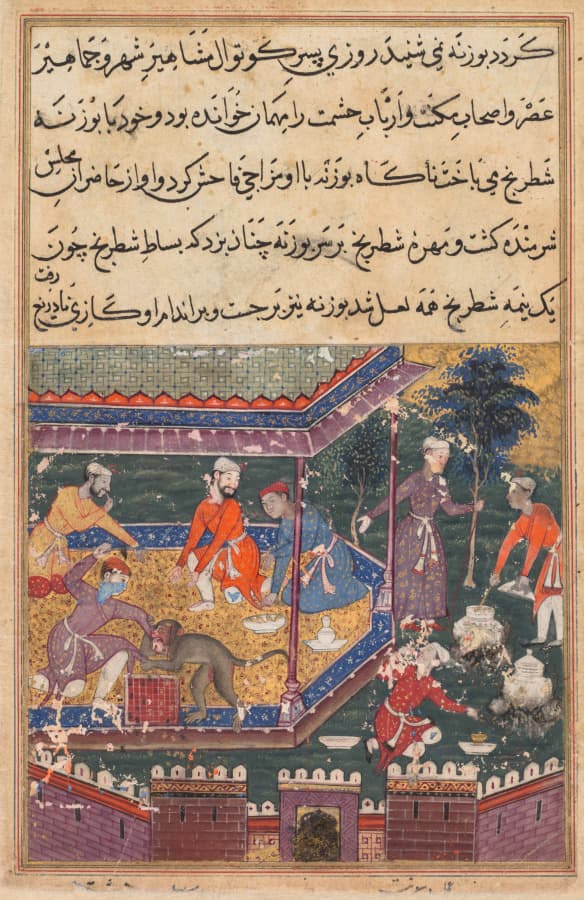
c. 1560 · Mughal India, court of Akbar (reigned 1556–1605)
The wounded monkey bites the hand of the prince, his chessmate, in the presence of guests, from a Tuti-nama (Tales of a Parrot): Fifth Night
Dasavanta (Indian, d. 1584) · gum tempera, ink, and gold on paper
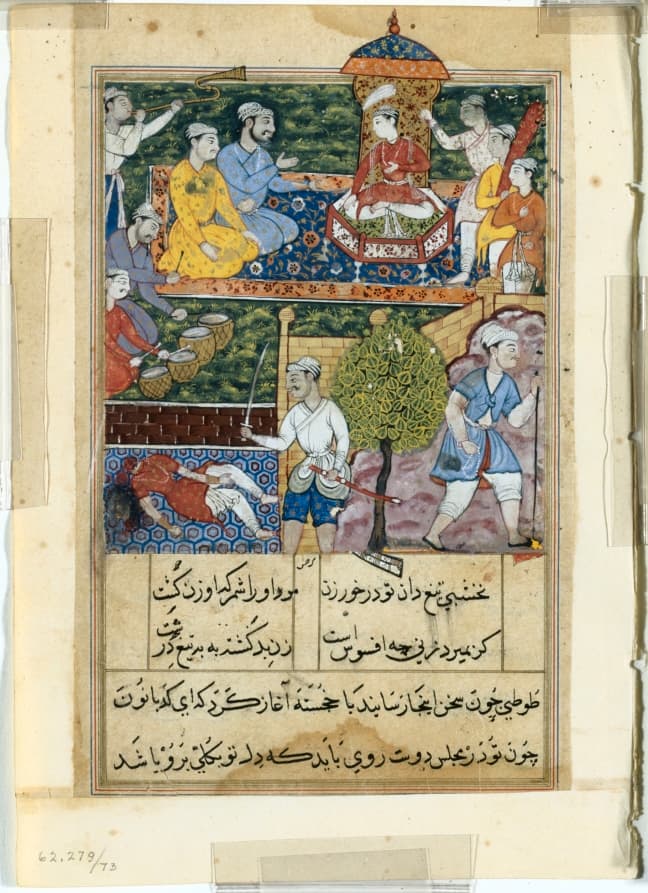
c. 1560 · Mughal India, court of Akbar (reigned 1556–1605)
The young prince is crowned and the wicked handmaiden is executed, from a Tuti-nama (Tales of a Parrot): Eighth Night
Suraju (Indian) · gum tempera, ink, and gold on paper
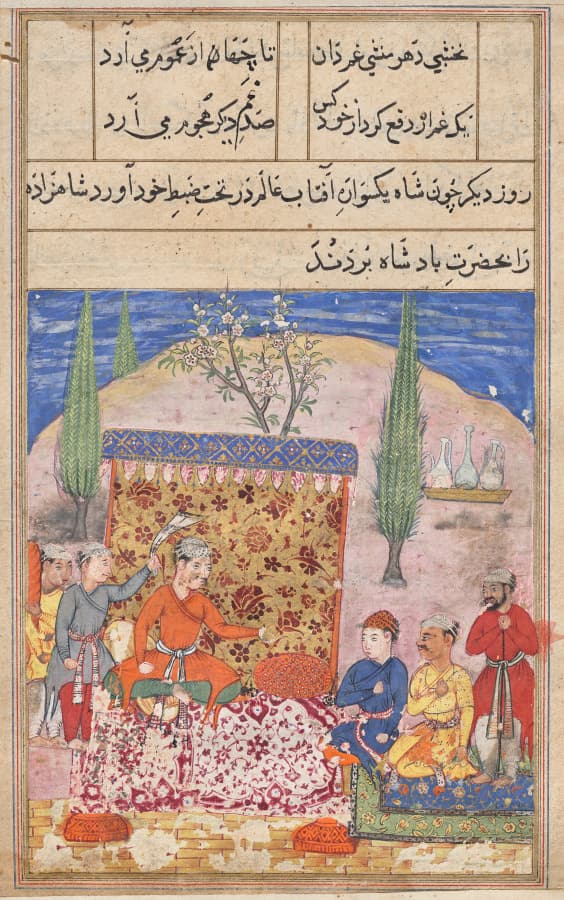
c. 1560 · Mughal India, court of Akbar (reigned 1556–1605)
The young prince is presented to the king, his father, by his teacher, but refuses to speak, from a Tuti-nama (Tales of a Parrot): Eighth Night
Artist not recorded · gum tempera, ink, and gold on paper
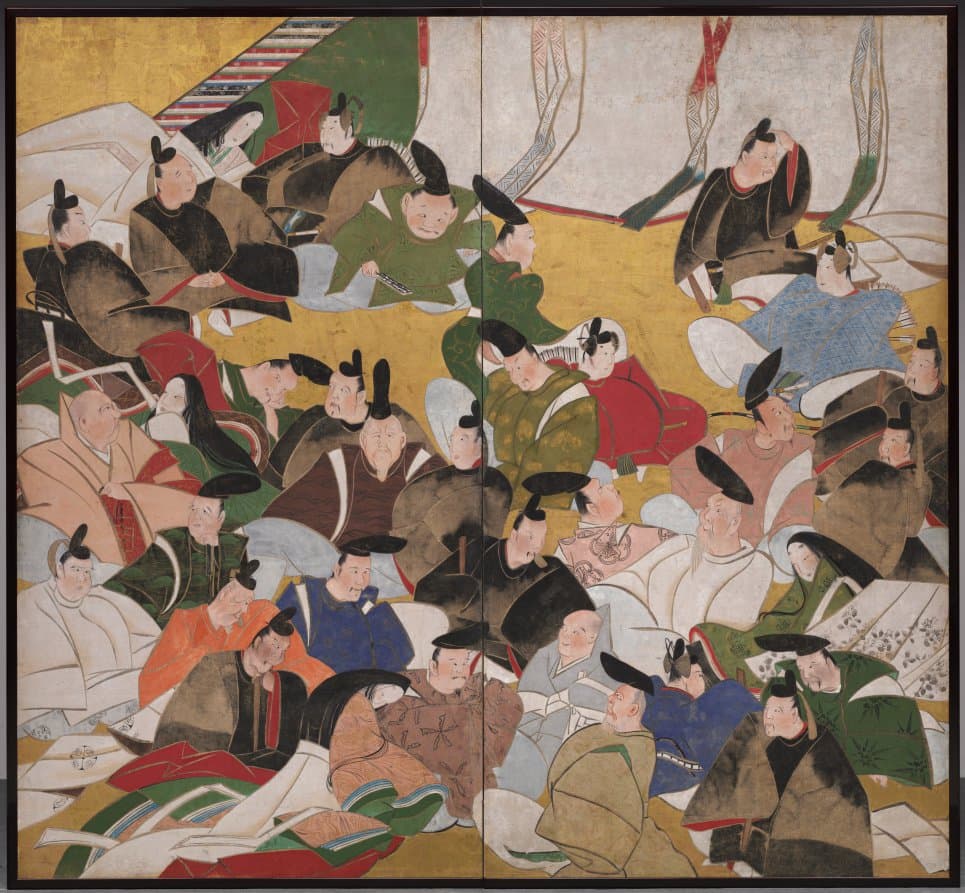
mid 1700s · Japan, Edo period (1615–1868)
Thirty-Six Poetic Immortals
Tatebayashi Kagei (Japanese, active mid-1700s) · two-fold screen; ink, color, and gold on paper
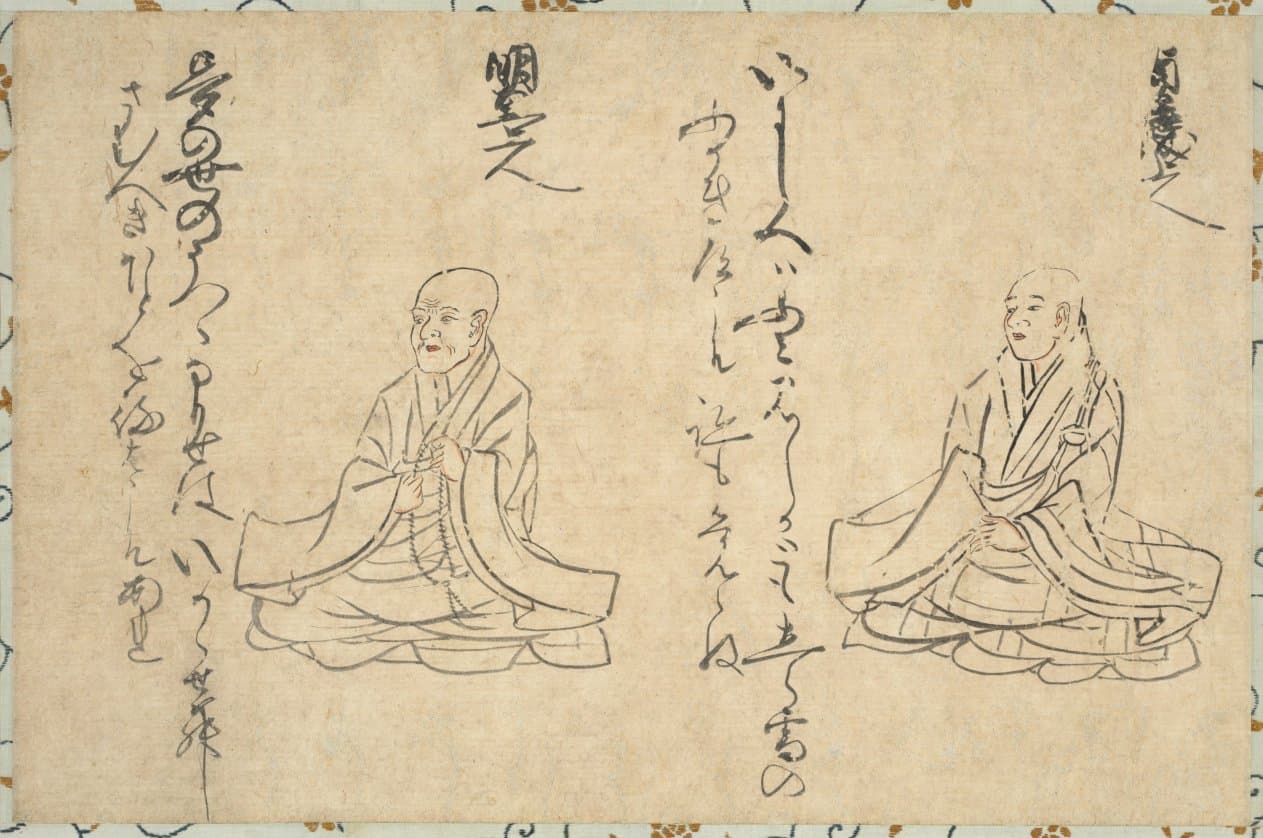
late 1300s–1400s · Japan, Muromachi period (1392–1573)
Thirty-Six Poetic Immortals of the Buddhist Clergy
Artist not recorded · Fragment of a handscroll remounted as a hanging scroll; ink and slight color on paper

c. 1320s · China, Yuan dynasty (1271–1368)
Three Horses and Four Grooms
Ren Renfa (Chinese, 1254–1328) · handscroll; ink and color on silk
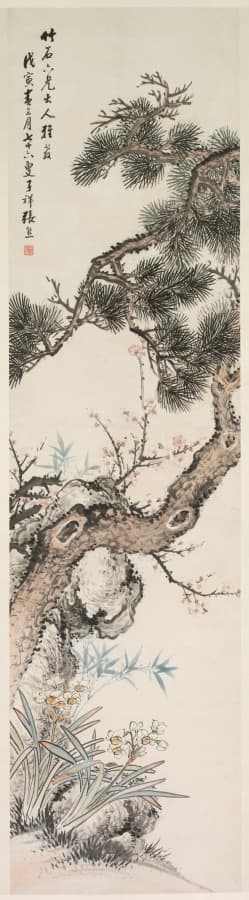
1878 · China, Xiaxing, Qing dynasty (1644–1911)
Three Purities
Zhang Xiong (Chinese, 1803–1886) · hanging scroll; ink and color on paper
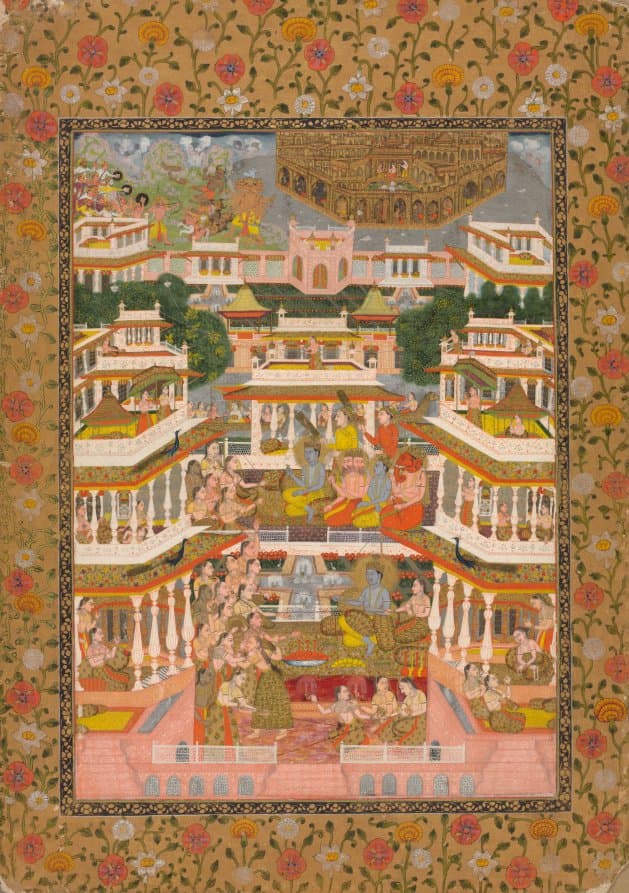
c. 1735 · Northern India, Delhi, Mughal court of Muhammad Shah (reigned 1719–48)
Tiered Court Scene
Chitarman II (Indian, c. 1680–с. 1750) · Gum tempera, ink, and gold on paper
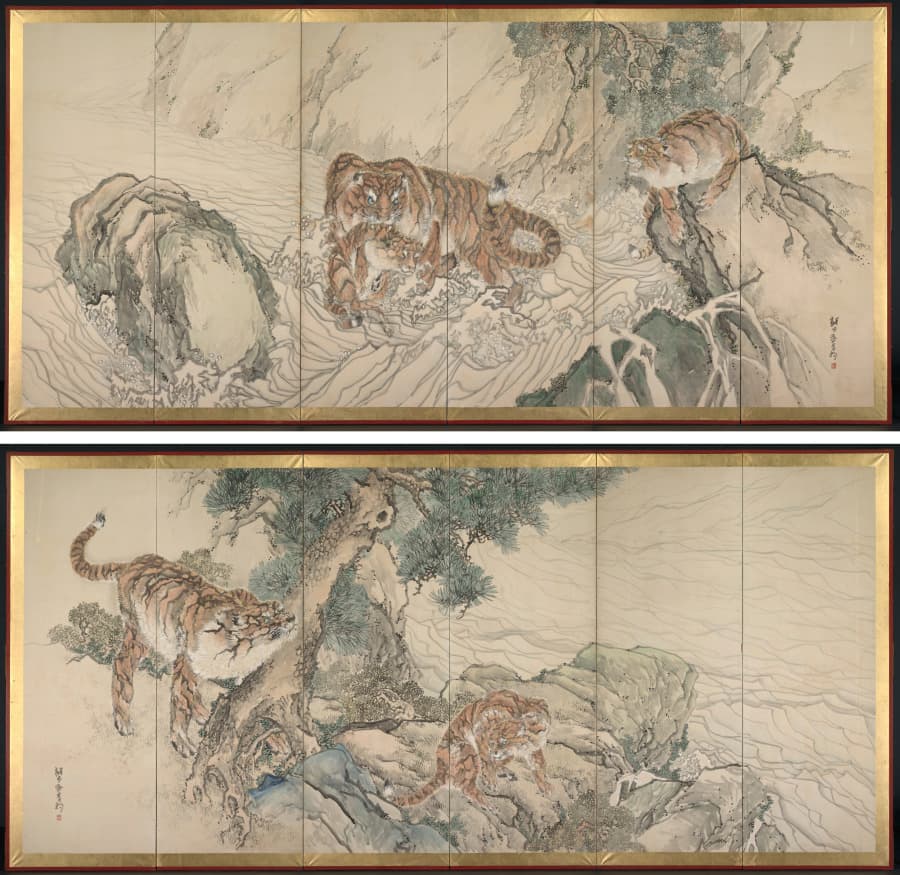
early 1800s · Japan, Edo period (1615–1868)
Tiger Family
Kishi Ganku (Japanese, 1749/56–1838) · Pair of six-panel folding screens; ink and color on paper
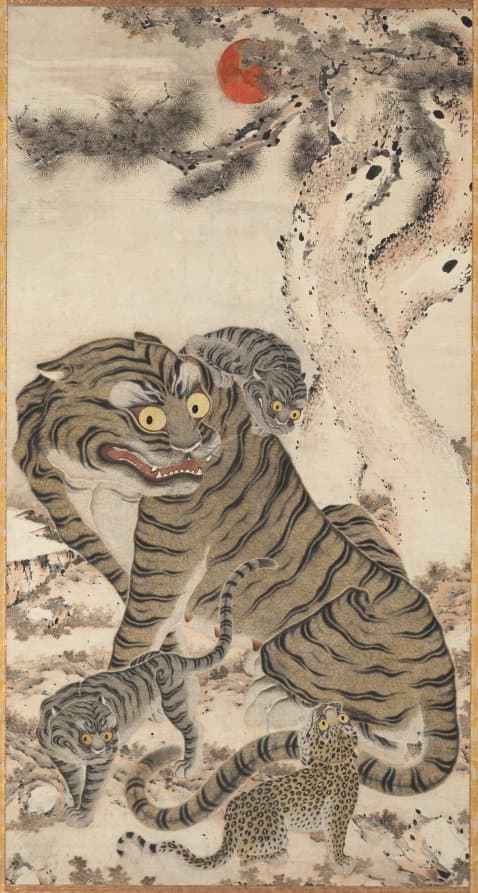
late 1800s · Korea, Joseon dynasty (1392–1910)
Tiger Family
Artist not recorded · hanging scroll; ink and color on paper
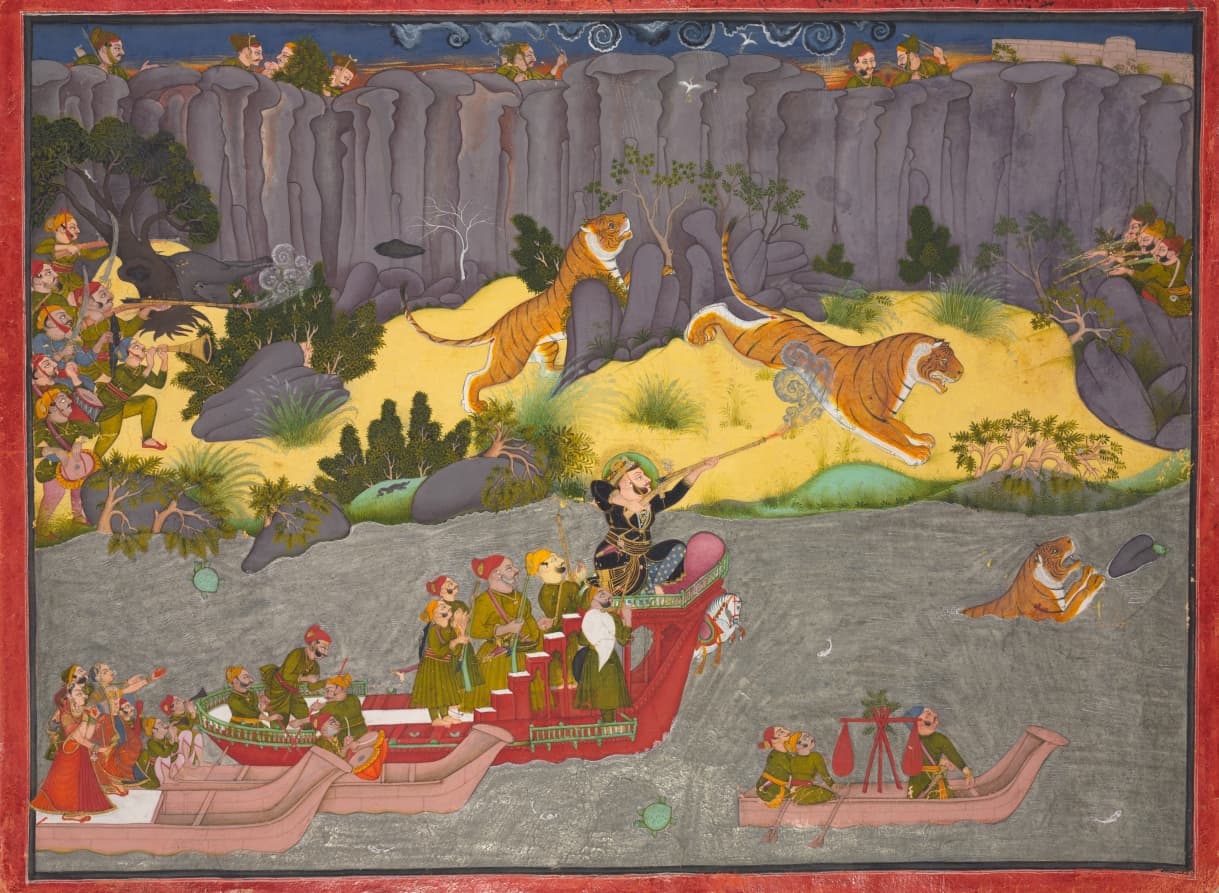
c. 1830–40 · Northwestern India, Rajasthan, Rajput Kingdom of Kota
Tiger Hunt of Raja Ram Singh II
Artist not recorded · Gum tempera, gold, and silver on paper
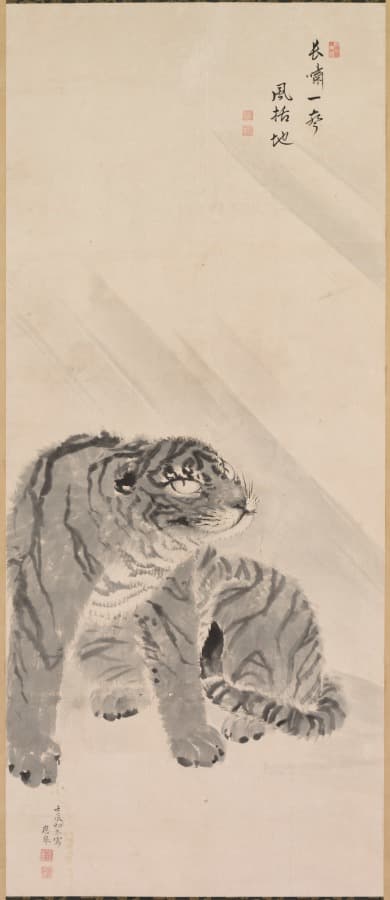
1800s · Japan, Edo period (1615–1868) to Meiji period (1868–1912)
Tiger in Wind
Maruyama Ōkyo (Japanese, 1733–1795) · hanging scroll; ink on paper