Collection Stewardship
Art Care & Maintenance
Preserving Your Original Paintings
An original painting is meant to last generations. Acrylic on canvas is one of the most durable art mediums ever developed — far more stable than oil, watercolor, or works on paper — but it still requires thoughtful care. This guide covers everything you need to know to keep your Lei-Kol original looking exactly as it did the day it arrived.
Daily Care & Gentle Cleaning
The single best thing you can do for your painting is dust it regularly. Dust is not inert — it attracts and holds moisture, which over years can create a micro-environment against the canvas surface that encourages degradation. A soft, clean, dry microfiber cloth is the only tool you need. Once every two to four weeks, depending on your home's dust levels, gently wipe the surface of the painting in one direction — never in circles, which can grind particles into the paint film.
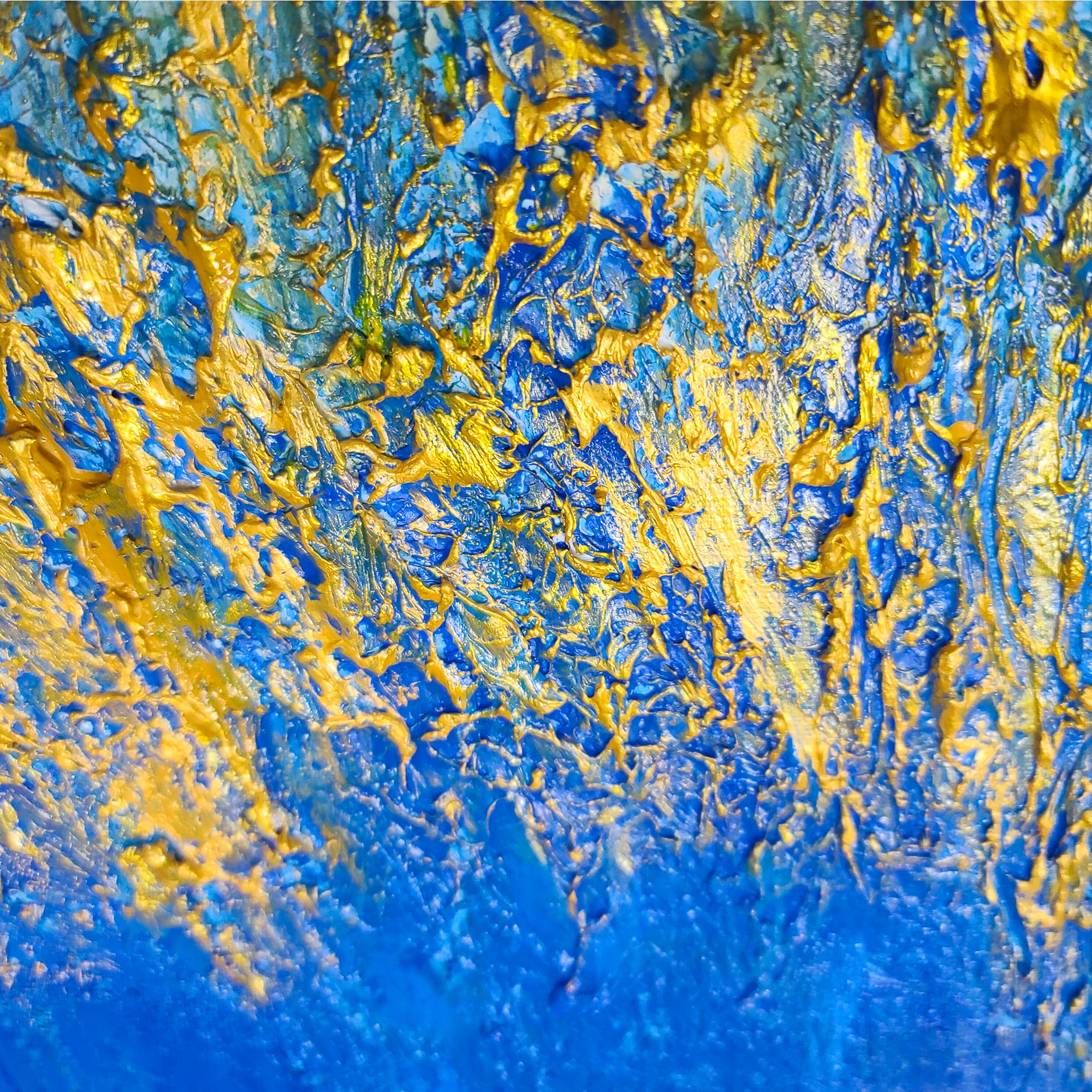
For heavy-texture works like Lei-Kol originals, dusting requires slightly more care. The peaks and valleys of impasto trap dust differently than a flat surface. A soft-bristled artist's brush — a clean, dry, 2-inch flat brush works perfectly — can reach into the crevices of heavy texture without disturbing the paint. Work from top to bottom and let gravity carry dislodged dust downward. Follow with a gentle pass of the microfiber cloth over the high points. This takes two minutes and should be done monthly.
Never use water, cleaning sprays, glass cleaner, dish soap, or any household cleaning product on a painting. Acrylic paint, once fully cured (which takes approximately two to four weeks after completion), is water-resistant but not waterproof. Prolonged contact with moisture can swell the acrylic film and cause adhesion failure between layers. Chemical cleaners can dissolve or cloud the paint surface, cause color shift, or strip any protective varnish. If something liquid spills on the painting — unlikely but not impossible — blot immediately with a clean, dry, white cloth. Do not rub. Contact a professional conservator if the stain persists.
A note on touching: textured paintings invite touch, and Lei-Kol's work is built to be physically present in a way flat paintings are not. Occasional careful contact — a guest running a finger along a ridge — will not damage a fully cured acrylic painting. But skin oils accumulate over time. If the painting is in a high-traffic area where touching is likely, consider placing it slightly out of reach or behind a piece of furniture. Not because one touch is dangerous, but because hundreds of touches over years will leave a visible patina.
Environmental Protection: Light, Humidity & Temperature
Light is both a painting's best friend and its worst enemy. Good light makes art sing. Bad light destroys it. Direct sunlight is the single biggest threat to any painting. Ultraviolet radiation breaks down the molecular bonds in acrylic polymer, causing colors to fade, whites to yellow, and the paint film to become brittle over years. Never hang an original painting on a wall that receives direct sun for more than an hour or two per day. If the wall gets sun, either choose a different wall or install UV-filtering window film — a product available from any home improvement store that blocks 99% of UV while remaining essentially invisible.
Artificial light is safer but not risk-free. Incandescent and halogen bulbs emit heat as well as light. A picture light mounted too close to the canvas — less than six inches — can create a hot spot that accelerates localized aging. LED is the safest artificial light source for art. It emits negligible UV, produces minimal heat, and can be dimmed to any level. For more detailed guidance, see our full article on lighting artwork.
Humidity is the silent killer of paintings. Acrylic on canvas is hygroscopic — it absorbs and releases moisture from the air. In consistently high humidity (above 65% relative humidity), the canvas can expand, loosen on its stretcher bars, or become a breeding ground for mold, particularly on the unprimed back surface. In consistently low humidity (below 30%), the canvas can contract, causing the paint film to crack or the stretcher bars to warp. The ideal range for art is 40–55% relative humidity at 65–72°F (18–22°C). Most modern homes with HVAC systems stay within this range naturally. If you live in an extreme climate — tropical humidity or desert aridity — consider a room humidifier or dehumidifier for the room where the art hangs. A basic hygrometer costs less than twenty dollars and gives you peace of mind.
Never hang original art above a working fireplace, above a radiator, on a wall that backs onto a bathroom shower, or in a kitchen within splash range of a stove. These are the four horsemen of painting destruction. Heat, steam, grease, and soot are all enemies of acrylic paint film. If a fireplace is the focal point of the room, hang the art on an adjacent wall, not above the mantle. The painting will thank you by lasting another fifty years.
Moving and Storing Large Paintings
If you are moving house, take your art with you personally if possible — do not put it on the moving truck with the furniture. A 48x60-inch original is not a sofa. It cannot absorb bumps, stack under boxes, or tolerate temperature swings in the back of a truck for three days. Transport it flat or upright in your own vehicle, wrapped in a clean cotton sheet or moving blanket, with nothing stacked on or against the painted surface.
For long-term storage — between homes, during renovation, or for works rotated out of display — the ideal environment is climate-controlled, dark, and vertical. Store paintings upright, not flat. Stacking paintings flat risks pressure damage to the stretcher bars and impasto surface. Separate stored paintings with sheets of acid-free foam board or archival cardboard — never let painted surfaces touch each other. Wrap each piece in a clean cotton sheet, then in a layer of bubble wrap with the bubbles facing outward (away from the paint), and stand them against a wall in a closet or dedicated storage room. Avoid basements (damp), attics (temperature extremes), and garages (both).
If you must store paintings flat — and sometimes you must — place them face-up on a clean, flat surface with nothing resting on the painted surface. Never stack canvases directly on top of each other. Use rigid spacers (foam blocks, not books or cardboard boxes) at the corners and center of the stretcher bars to transfer weight to the frame, not the canvas. This is a temporary solution only. Paintings belong on walls, not in stacks.
What Never to Do
Never use glass cleaner, window spray, or any ammonia-based product on or near a painting — even on the frame, because overspray will reach the canvas. Never hang art above a radiator, heat vent, or fireplace. Never use adhesive hooks, tape, or sticky putty to hang a painting — use proper picture hooks rated for the weight, anchored into wall studs where possible. Never lean a canvas directly against a wall for more than a few days — the stretcher bar will warp. Never wrap a painting in plastic for storage — plastic traps moisture and guarantees mold. Never attempt to repair a tear, crack, or paint loss yourself with household glue or craft paint. Never store paintings in an attic, basement, or garage. Never use feather dusters — the quills can scratch paint. Never eat or drink near displayed art without putting some distance between you and the painting — a splash of red wine on a canvas is a conservator's fee you do not want.
These are not hypothetical risks. Conservators see the same damage repeated across decades of collections: fireplace soot, sun-faded quadrants where curtains were left open, water-damaged bottom edges from flood-prone storage, wine stains, cracked paint from radiator heat. Each of these is preventable with basic awareness. Your painting will outlive you if you treat it with the care it deserves. It is not fragile — acrylic on canvas is remarkably durable — but it is not indestructible either.
Professional Restoration vs. DIY
If your painting sustains damage — a tear, a puncture, significant paint loss, or water damage — do not attempt to fix it yourself. The temptation is understandable: it looks like paint on canvas, and you might figure a little matching acrylic from the craft store will do the job. It will not. The color will not match, the sheen will be wrong, the texture will look like a patch, and your well-intentioned repair will make a professional restoration harder and more expensive later. Worse, some DIY repairs cause irreversible damage — using the wrong adhesive, ironing the canvas, or applying varnish over an uncleaned surface can permanently alter the painting.
Professional art conservators are trained in chemistry, art history, and material science. They understand the specific properties of acrylic polymers, how they age, and how to repair damage invisibly using reversible, archival-grade materials. A good conservator can repair a tear in a canvas so that, from six inches away, you cannot tell it ever happened. Their work preserves both the physical object and its value. If your painting needs restoration, search for a conservator accredited by the American Institute for Conservation (AIC) or your country's equivalent professional body. Expect to pay several hundred to several thousand dollars depending on the extent of the damage — which is why insurance matters.
For Lei-Kol originals specifically, contact the studio before engaging a conservator. We can advise on the specific materials used in your piece (which mediums, which pigments) and may be able to recommend a conservator familiar with heavy-texture acrylic work. In some cases, the artist herself can perform minor touch-up work — a service we offer to owners of Lei-Kol originals on a case-by-case basis.
Insurance for Art Collections
Your homeowners or renters insurance policy covers personal property, but it almost certainly has sub-limits for fine art — typically $1,000 to $2,500 per item, which is not enough to replace an original painting. Worse, standard policies often exclude damage from common art-related perils like accidental damage during moving, gradual light damage, or improper storage. If you own original art worth more than your policy's sub-limit, you need additional coverage.
There are three main options. First, a scheduled personal property endorsement — sometimes called a floater or rider — added to your existing homeowners policy. You provide the insurer with a description, appraisal or receipt, and photograph of each piece, and they cover it for the agreed value with few exclusions. This is the simplest and most affordable option for collections of one to five pieces. Second, a standalone fine art insurance policy from a specialty insurer like AXA Art, Chubb, or Hiscox. These policies are designed specifically for art collections, offer all-risk coverage (including mysterious disappearance, a surprisingly useful provision), and can cover art in transit, on loan, or in storage. Premiums typically run 0.1% to 0.5% of the insured value annually — meaning a $3,500 painting costs $3.50 to $17.50 per year to insure. Third, for very large collections, an umbrella policy that sits above your primary coverage.
Regardless of which path you choose, you need documentation: the original purchase receipt, the Certificate of Authenticity, clear photographs of the front and back of the painting (including any distinguishing marks or signatures), and ideally a professional appraisal for pieces over $5,000. Keep digital copies in at least two locations — cloud storage and a local drive. If you paid with cryptocurrency, your on-chain transaction record serves as additional proof of purchase. This documentation serves insurance, estate planning, and potential future sale equally well.
Questions About Care?
We Are Here to Help
Explore Related
Related Guides for Collectors
How to Light Artwork
A complete guide to lighting paintings — color temperature, fixtures, UV protection, and smart lighting.
Framing Original Art
How to frame paintings: float frames, gallery wrap, matting, and professional framing advice.
Art as an Investment
Understanding the value of original paintings, provenance, and art appreciation.
Certificate of Authenticity
What your certificate includes and why it matters for insurance, resale, and provenance.
Shipping & Returns
How your painting is packed, shipped, insured, and delivered to your door.
Building an Art Collection
How to start and grow a collection — budgeting, focus, documentation, and display.