Painting study · Ink painting
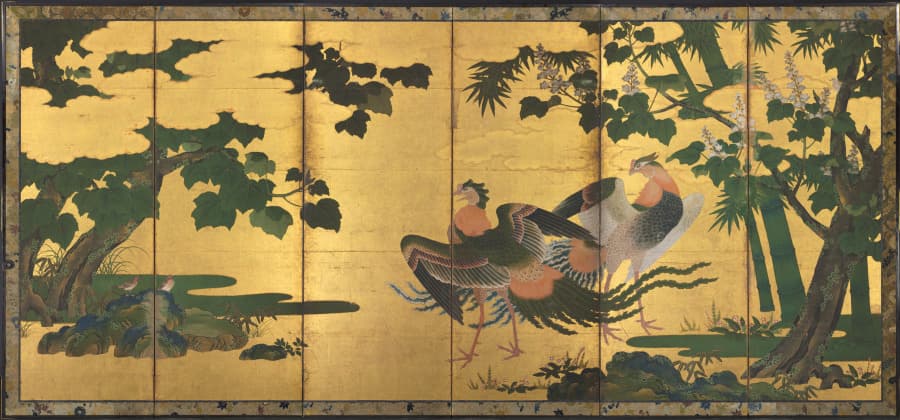
Phoenixes and Paulownialate 1500s · Study 1986.2.1
Tosa Mitsuyoshi (Japanese, 1539–1613)
late 1500s
Recorded as One of a pair of six-panel screens; ink, color, and gold on gilded paper, this horizontal work measures 362 × 160.5 cm using the museum’s image dimensions. Explore the museum’s context and compare the format with a wall of your choice.
Museum collection reference. This work is not offered for sale by Physical Art For Crypto. Museum attribution does not imply a partnership or endorsement.
Context from the museum
The immense heraldic birds on display in these byøbu reflect the Momoyama era's spirit of newly gained self-confidence and an affinity for grand expressive statements in painting, architecture, the textile and ceramic arts, as well as garden design. While that period preceded the arrival of prosperity, it clearly marked an extra---ordinary moment in Japanese cultural history, one frequently compared with the twelfth century of the Heian period. Through the extensive use of gold-foil backgrounds rather than the somber palette of carefully orchestrated ink tones evident in Muromachi byøbu, patrons colla-borated with artists as well as craftsmen in fostering a decidedly new look in much of Japanese painting. Here for instance there is no imaginary vista suggesting China's vast waterways and mountain ranges. The setting is composed instead of highly stylized lozenges of mineral green paint, suggesting the earth from which clumps of grass, flowering plants, and towering bamboo and paulownia trees emerge. Clusters of lumpy, blue-green rocks dotted with lichen provide stabilizing three-dimensional foils for these islands of vegetation as well as the all-encompassing flat, golden surface. The glorious artificiality of the setting precisely serves the artist's effort to compose a credible yet other-worldly vista for depicting the legendary phoenix gazing across the landscape at the pair of peacocks. Rather than an emblem of immortality, as it is in Western lore, in Japan the phoenix evolved out of its origins in Chinese mythology to become, by the sixteenth century, an auspicious symbol of political authority. Together with clusters of the distinctively shaped paulownia leaves, this long-tailed, mythical bird graced lacquerware as well as mural paintings, proclaiming an air of graceful com-mand. A characteristic infusion of temporality has been included also, through a seasonal flowering schema extending from spring to early summer (right) to fall and the advent of winter (left). Although traditionally attributed to the Tosa school master Tosa Mitsuyoshi (1539-1613), these byøbu possess neither seals nor signatures to confirm that authorship. Known for his jewel-like, modest-sized album paintings of courtly narratives such as The Tale of Genji, it is likely both studio training and contemporary fashions in patronage conspired to produce a good number of such byøbu. This example from the Momoyama era represents one such effort from a masterful Tosa painter, too little seen in Western collections.
Museum description reproduced from its CC0 open-access record. Read the original catalog entry.
Read the dimensions before the image
The selected image measurement for Phoenixes and Paulownia is 362 cm wide and 160.5 cm high, equivalent to approximately 142.5 × 63.2 inches. Dividing width by height gives a format ratio of 2.26:1. The rectangular bounding area is 5.81 square meters; it describes the measured footprint, not the amount of paint or the monetary value.
On an illustrative 300 cm wall, the recorded width occupies 120.7% of the span before adding a frame. That exceeds the example wall width, so a smaller reference wall would not reproduce the recorded scale. These are calculations by Physical Art For Crypto using museum measurements. They are not the museum’s display recommendations.
Questions to bring to your own collection
With Phoenixes and Paulownia in view, identify one feature you can point to, then distinguish what the museum records from your personal response. Keep its medium, One of a pair of six-panel screens; ink, color, and gold on gilded paper, in your notes when comparing contemporary works.
- Which part of this horizontal composition catches your eye first?
- Would a 362 cm width still suit the space after allowing for furniture and a frame?
- What surface detail would you need to see in person or in a close photograph?
Explore physical scale
How large would this format feel on your wall?
Use this museum work’s recorded format as a reference. Adjust a blank wall and optional frame allowance to compare proportions. The museum painting is an educational reference and is not for sale here.
Calculation: outside width = recorded width + twice your frame allowance. This is a proportion study, not an installation assessment. It excludes furniture, hardware, load capacity, depth and delivery clearance. The display image may include margins absent from the recorded measurement.
Compare formats with the studio collection
These Lei-Kol works have the closest width-to-height ratios in the current catalog. This is a geometry comparison, not a claim of artistic similarity, equivalent value, or association with the museum artist.
| Painting | Width × height | Format ratio | USD catalog price |
|---|---|---|---|
| Bipolar | 60 × 48 in | 1.25:1 | $3,499 |
| Brick and Mortar | 60 × 48 in | 1.25:1 | $3,499 |
| Dominion | 60 × 48 in | 1.25:1 | $3,499 |
Availability and delivery costs must be confirmed for the individual order.
Related studies
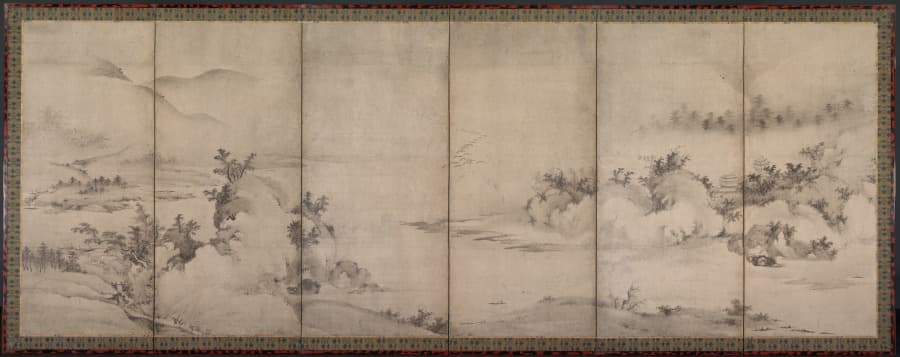
late 1500s–early 1600s · Japan, Momoyama period (1573–1615)
Landscape with Motifs from the Eight Views of Xiao-Xiang
Artist not recorded · One of a pair of six-panel folding screens; ink on paper
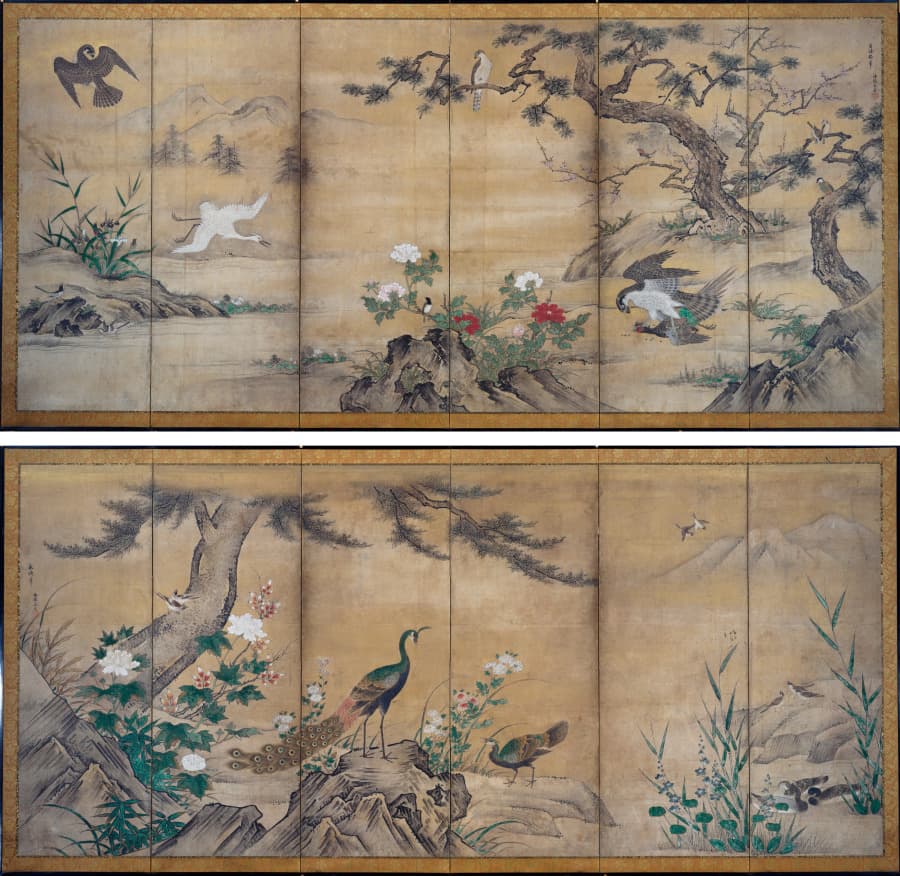
late 1500s · Japan, Momoyama period (1573–1615)
Birds and Flowers
Kano Mitsunobu (Japanese, 1565–1608); Kano Shōei (Japanese, 1519–1592) · Pair of six-panel folding screens; ink, color, and gold on paper
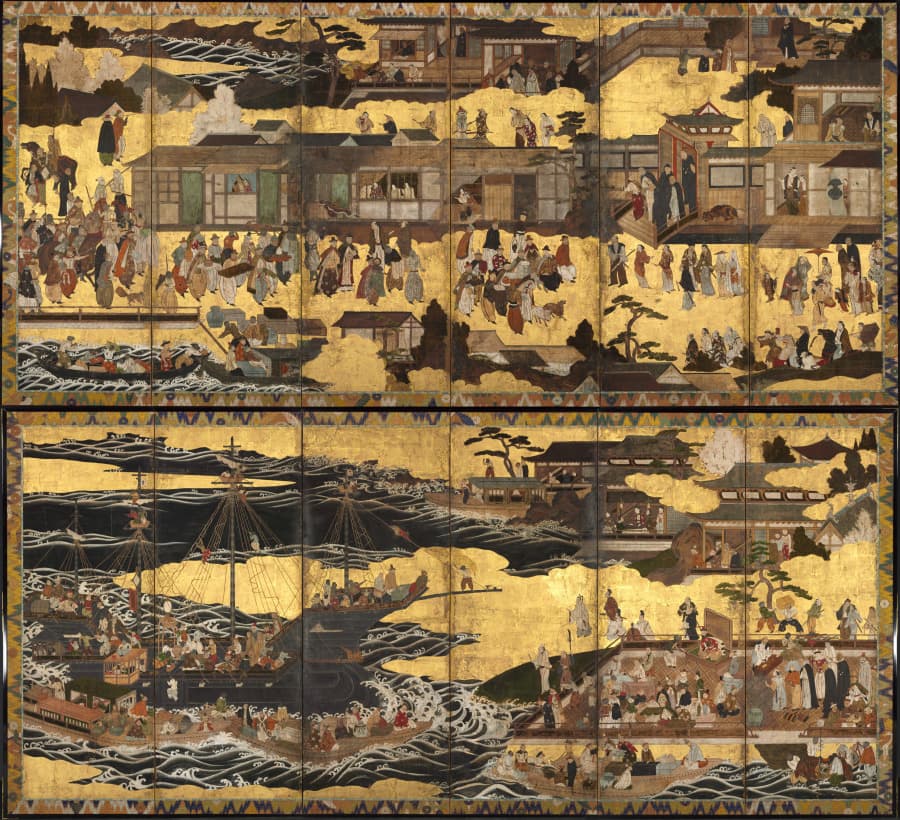
c. 1600 · Japan, Momoyama period (1573–1615)
Arrival of the "Southern Barbarians"
Artist not recorded · Pair of six-panel folding screens; ink, color, and gold on paper
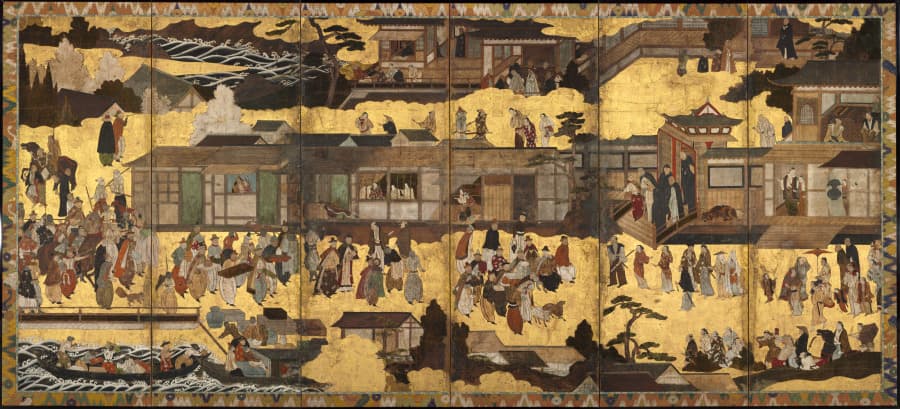
c. 1600 · Japan, Momoyama period (1573–1615)
Arrival of the "Southern Barbarians"
Artist not recorded · One of a pair of six-panel folding screens; ink, color, and gold on paper
Ready to describe what you want in your own space?
Start an artwork inquiry ↗