Cost Transparency
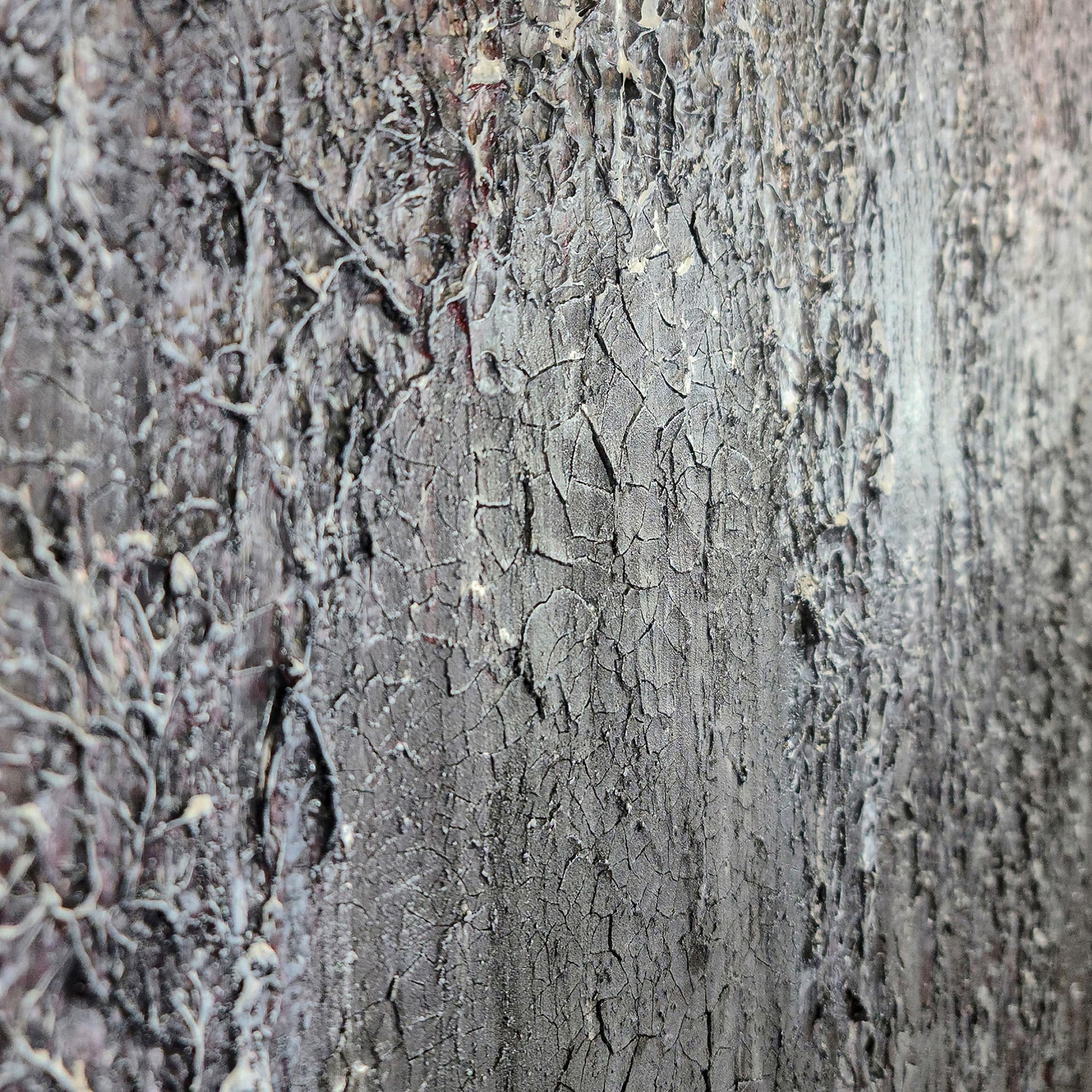
Textured Acrylic
Painting Cost
An honest breakdown of what goes into the price of a heavy-texture acrylic original — from materials and studio time to shipping and documentation. No hidden costs. No gallery markup.
What Goes Into the Cost
Materials
Heavy-body acrylic paint costs significantly more than student-grade paint. A single large piece can consume $200-400 in professional-grade pigments, gels, and mediums. The stretcher bars, heavy-duty canvas, and varnish add further material cost.
Studio Time
A 48x60 inch impasto painting takes 2-4 weeks of full-time studio work. Paint is applied in layers that must dry between sessions. The artist cannot simply paint faster — impasto requires patience. This is skilled labor, priced accordingly.
One-of-a-Kind Rarity
When you buy an original, you buy the only copy that will ever exist. This is fundamentally different from a print or edition. The scarcity is real and absolute — when it sells, it is gone. That rarity is priced in.
Documentation & Provenance
Every painting ships with a signed Certificate of Authenticity, care instructions, and full provenance documentation. You are not just buying canvas and paint — you are buying a documented, verifiable original artwork.
Shipping & Insurance
Large paintings require custom wooden crates, professional packing, and full insurance. USA shipping is free (we absorb the cost). International shipping is quoted transparently. No surprises.
Detailed Cost Breakdown: Where Your Money Goes
| Cost Category | Small (up to 24x30) | Medium (30x40 to 36x48) | Large (48x60+) |
|---|---|---|---|
| Canvas & stretcher bars | $40–$80 | $80–$150 | $150–$300 |
| Heavy-body acrylic paint | $60–$120 | $150–$300 | $300–$600 |
| Gel mediums & modeling paste | $20–$50 | $50–$100 | $100–$200 |
| Varnish & finishing | $10–$25 | $25–$50 | $50–$100 |
| Physical studio overhead | Included in pricing | Included in pricing | Included in pricing |
| Artist labor (hours × rate) | 15–30 hours | 40–80 hours | 80–160+ hours |
| COA & documentation | Included | Included | Included |
| Custom crate & packing | $75–$150 | $150–$300 | $300–$600 |
| Shipping (USA) | Free | Free | Free |
| Insurance (full value) | Included | Included | Included |
These are representative cost ranges for raw materials and direct expenses. Artist labor — the largest component — is priced at the artist's professional rate, reflecting skill, experience, and the fact that each painting is a unique creative act, not a manufactured product.
Price Comparison by Size
| Typical Size | Surface Area | Price Range | Per Square Inch | What You Get |
|---|---|---|---|---|
| 16x20 inches | 320 sq in | $500–$800 | $1.56–$2.50 | Intimate piece for small walls, shelves, or collections |
| 24x30 inches | 720 sq in | $800–$1,500 | $1.11–$2.08 | Medium presence — works above desks, consoles, or as part of a gallery wall |
| 30x40 inches | 1,200 sq in | $1,500–$2,500 | $1.25–$2.08 | Substantial piece — anchors a seating area or a dining room wall |
| 36x48 inches | 1,728 sq in | $2,000–$3,500 | $1.16–$2.03 | Room-defining — works above a queen bed or standard sofa |
| 48x48 inches | 2,304 sq in | $2,500–$4,000 | $1.09–$1.74 | Square statement — ideal above fireplaces or as a standalone feature |
| 48x60 inches | 2,880 sq in | $3,000–$5,500 | $1.04–$1.91 | Large statement — above a king bed, large sofa, or open wall |
Note: Price per square inch decreases slightly as size increases. This reflects the fact that while larger paintings consume more materials and time, certain fixed costs (documentation, basic packing, studio overhead) are spread across a larger canvas. The per-square-inch value improves at larger sizes.
What Drives Price in Original Art
Size
The single largest factor. Larger paintings use more materials, take more time, cost more to ship, and command more wall presence. A 48x60 is four times the area of a 24x30 — and exponentially more work because thick layers compound.
Complexity of texture
A painting with uniform texture across the surface takes less time than one with varied topography — some areas high, some scraped thin, some built into almost sculptural relief. Lei-Kol's characteristic varied impasto takes longer than uniform application.
Color palette
Some pigments are dramatically more expensive than others. Cadmium reds and yellows can cost 3-5x more than earth tones. Cobalt blue is pricier than ultramarine. Quinacridone magenta is a premium pigment. Paintings with many colors require buying more tubes.
Layering and drying time
Thick acrylic layers can take 24-72 hours to dry enough for the next layer. The artist cannot compress this — it is a hard physical constraint. A painting with 10 layers takes at least 10 drying cycles, which means at minimum 10-20 calendar days.
Artist reputation and demand
Art pricing is not a simple cost-plus equation. As an artist builds a following, exhibits, sells work, and gains recognition, their prices naturally rise. This reflects increasing demand for a fixed or decreasing supply of work.
Uniqueness premium
Every Lei-Kol original is one of a kind. The price includes the fact that when you buy it, no one else can ever own that exact painting. If you pass on a piece and it sells to someone else, you lost the only copy. That scarcity has value.
No Gallery Markup
Galleries typically take 30-50% of an artwork sale price. By buying direct from the artist, you avoid that markup entirely. The price you see is the price the artist set — no middleman taking a cut. When you add crypto payment with no processor fee, the full value of your purchase goes to the art and the artist.
Gallery Markup vs Direct Purchase
| Gallery Purchase | Direct from Lei-Kol | |
|---|---|---|
| Artist receives | 50-70% of sale price | 100% of sale price (minus shipping and materials) |
| Buyer pays | Gallery price (30-50% higher than direct) | Artist's direct price — no markup |
| Selection | Curated by gallery — what they choose to show | Full catalog — every available piece |
| Relationship | Mediated through gallery staff | Direct with the artist |
| Custom work | Gallery commission fees may apply | Direct commission — no middleman surcharge |
| Payment flexibility | Gallery decides accepted methods | PayPal + crypto — flexible |
The Investment Perspective on Original Art Pricing
Original art is not a stock — it does not pay dividends, has no earnings reports, and cannot be liquidated in seconds. But it occupies a unique place in a diversified asset strategy: it is a tangible, portable, privately held asset with zero counterparty risk. A painting cannot go bankrupt. It cannot be diluted by a stock offering. It cannot be hacked. It just exists — and if the artist continues to work, exhibit, and build reputation, it typically holds or appreciates in value.
Consider the trajectory of a working artist. Year one: small works sell for $500-800. Year three: solo exhibitions, press coverage, prices rise to $1,500-3,000. Year five: museum acquisitions, art fair representation, large works command $5,000-10,000+. Every collector who bought in year one now owns pieces worth 3-10x what they paid. No one can guarantee this trajectory, but it is the pattern that repeats across every successful artist's career — and it only applies to originals. Prints, by definition, cannot participate in this appreciation because more can always be made.
When you buy a Lei-Kol original at today's prices, you are buying at the early-career stage of an artist who is actively producing, exhibiting, and building a collector base. Whether or not the work appreciates, you own a unique physical object that was created by hand over weeks — and there is exactly one of it. For many collectors, that is the entire point.
Why do some paintings cost more than others of the same size?
Texture complexity, color palette cost, number of layers, and the specific materials used all vary between pieces. Two 36x48 paintings may look similar in a thumbnail but involve very different amounts of studio time and pigment.
Do paintings appreciate in value?
Original paintings by active, exhibiting artists typically hold or appreciate in value as the artist's career grows. However, art should be bought because you love it — appreciation is a bonus, not a guarantee.
Is there a payment plan option?
Contact us to discuss. We aim to make original art accessible and are open to arrangements that work for serious collectors.
Why not just buy a print for less?
A print is a reproduction — flat, mass-produced, and one of hundreds or thousands. An original is a unique physical object created by the artist's hand. The difference is the difference between owning a photograph of a meal and eating the meal. For more detail, see our Original Art vs Prints comparison.
Explore Related
Explore Pricing & Value
Original Art Price Guide
Detailed pricing for every size tier with example paintings.
Original Art vs Prints
Why prints cost less and originals cost more — the full economic comparison.
PayPal vs Crypto for Art
How payment method affects total cost — crypto eliminates processor fees.
One-of-a-Kind Original Art
What the uniqueness premium means and why it is priced into every original.
Heavy Texture Acrylic Paintings
How the labor-intensive impasto process drives material and time costs.
Art Gallery
Browse all available paintings with current prices.