Collector Education
Original Art
vs Prints
They look similar in a thumbnail. They are not similar on your wall. Here is what actually separates a real original painting from a reproduction — and why the difference matters.
Side-by-Side: Original vs Print
Original
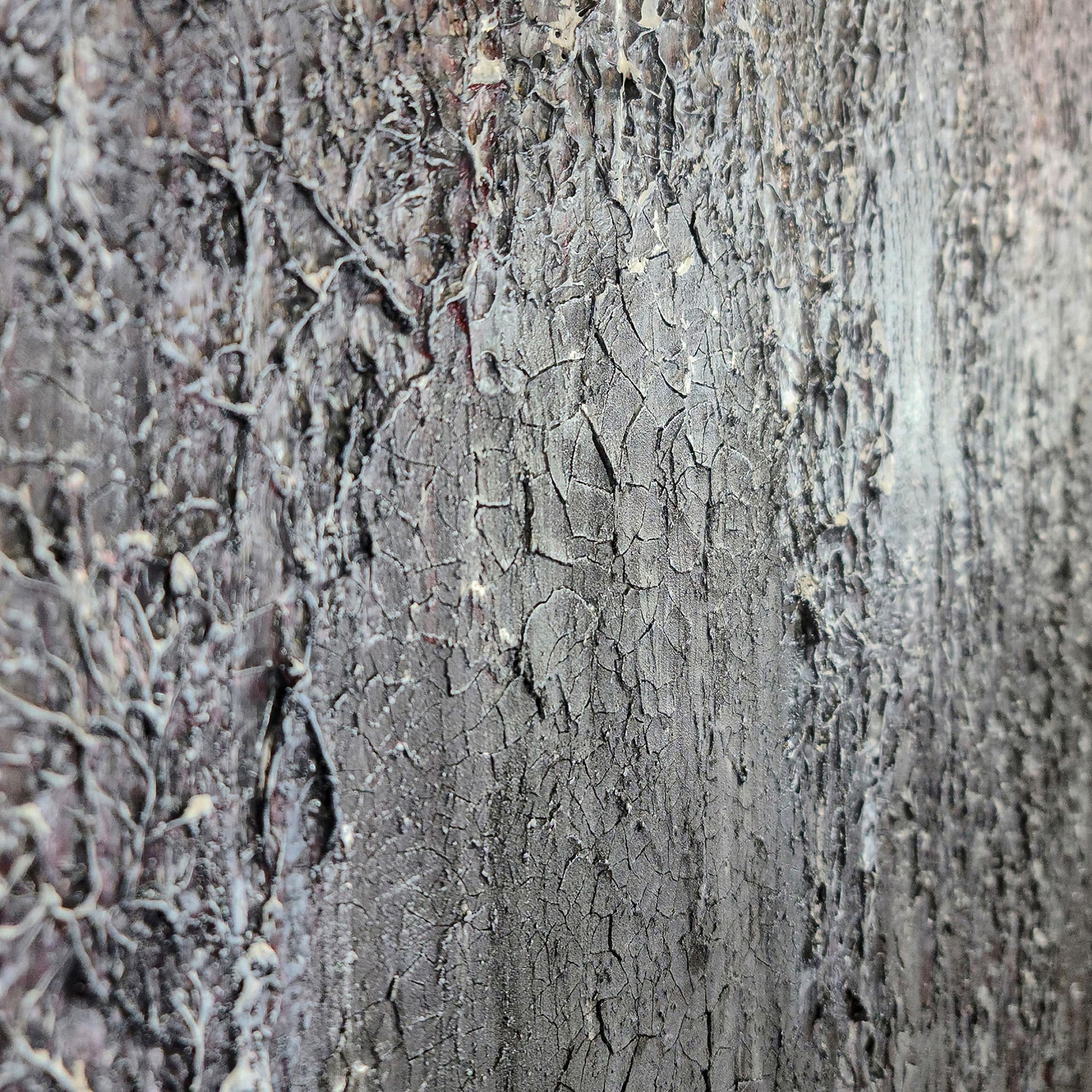
Sculptural, dimensional — heavy impasto you can feel. Light catches the ridges and casts real shadows that change throughout the day.
Perfectly flat. Ink on paper or canvas. No physical depth. Looks the same from every angle, in every light.
Original
One of a kind. Exists nowhere else. When it sells, it is gone forever. You own THE object.
One of thousands — or unlimited. Someone else has the same image on their wall right now.
Original
Original paintings by working artists typically hold or appreciate in value as the artist's career grows.
Depreciates immediately. Like a new car, a print is worth less the moment you unbox it.
Original
Signed Certificate of Authenticity. The artist touched this canvas. Provenance is clear and verifiable.
A signature on a print is not the same thing. Digital reproductions can be generated endlessly.
Original
A real painting changes the energy of a room. Guests stop. They lean in. They touch (even when they shouldn't).
Decoration. It fills wall space. It rarely starts a conversation.
How to Spot a Real Original vs a Giclée Print
A giclée print is a high-quality inkjet reproduction — often on canvas, sometimes with a clear gel coating brushed on top to simulate brushstrokes. From across the room, a good giclée can look like a painting. Up close, the deception falls apart. Here is what to look for:
Look for the dot pattern
Under magnification (a jeweler's loupe or your phone camera zoomed in), a giclée reveals a regular grid of ink dots. A real painting has no dot pattern — pigment is irregular, layered, and organic.
Check the edges
On a print-on-canvas, the image often wraps around the stretcher bars or stops abruptly at the edge. A real painting has continuous paint on every side — sometimes drips, sometimes intentional strokes, always paint.
Look for texture that matches the image
Some giclée prints add a clear gel texture on top — but it is random and does not follow the image beneath. In a real painting, texture follows composition. A raised ridge aligns with a compositional line because the artist put it there.
Check for a signature in paint
A printed signature is flat and uniform. A real signature is applied in paint or pen — it sits slightly above or below the surface, reflects light differently, and may have slight irregularities.
Limited Edition vs Open Edition: What the Labels Actually Mean
The term "limited edition" sounds exclusive, but the numbers can be deceptive. A "limited edition of 500" means 500 identical copies exist — plus artist proofs (typically 10% more), plus printer's proofs. Suddenly your "limited" print is one of 550 or more. An open edition has no cap at all — the publisher can print as many as they sell, forever.
| Type | Copies Exist | Value Trajectory | Verifiable Scarcity |
|---|---|---|---|
| Original Painting | Exactly 1 | Typically holds or appreciates | Absolute — only one exists |
| Limited Edition Print (< 50) | 50 or fewer | May hold value if artist becomes famous | Moderate — edition size is declared |
| Limited Edition Print (500+) | 500+ | Unlikely to appreciate | Weak — large editions have low scarcity |
| Open Edition Print | Unlimited | Near-zero aftermarket value | None — more can be printed anytime |
The Economics of Originals vs Prints
A $300 limited-edition framed print feels like a bargain compared to a $2,000 original — until you consider what happens after purchase. The print's value drops by 50-80% the moment you open the box. If the artist releases more editions, the value drops further. Five years later, that print is worth what someone will pay on a secondary marketplace — often less than the frame it sits in.
An original painting works differently. The artist continues to create, exhibit, and build their reputation. Each new body of work raises the profile of the earlier pieces. A painting bought for $2,000 from an emerging artist whose work later sells for $5,000 has objectively appreciated — and there is only one of it. The print buyer, meanwhile, has a decorative object that 499 other people also own.
What Collectors Say: The Texture Test
Seasoned collectors have a simple test for distinguishing a real painting from a reproduction: close your eyes and run your fingers over the surface. An original impasto painting has a topography — ridges, valleys, peaks of dried acrylic that form a landscape you can feel with your fingertips. A print, no matter how good, is flat. Even prints on textured paper or canvas have a uniform, mechanical texture that the human hand instantly recognizes as non-human. This tactile difference is the most reliable test — and it is why galleries encourage collectors to experience paintings in person before buying.
When a Print Makes Sense (And When It Doesn't)
Prints are not valueless. If you want a specific image on your wall and the original is in a museum, a print is your only option. If you are decorating a rental apartment on a tight budget and want something that looks good, a well-framed print serves that purpose. Interior designers often use prints in staging because they are disposable — if a client does not like it, it costs nothing to replace.
But if you are furnishing a home you own, building a collection, or buying art as an asset, the calculation changes. A print will never become more valuable. An original can. A print will never be the only one of its kind. An original is. A print will never have the surface, the texture, the physical presence of paint built up by hand. An original does — and that is the difference between owning art and owning a picture of art.
Are all Lei-Kol paintings original — no prints at all?
Correct. Every painting in the Lei-Kol catalog is a true original. No prints, no editions, no reproductions. When a piece sells, it is gone.
How can I verify a painting is original when buying online?
Every Lei-Kol original ships with a signed Certificate of Authenticity that references the specific painting by title, dimensions, and unique certificate number. Close-up texture photos are available for every piece so you can see the impasto surface before buying.
Do originals hold their value?
Original paintings by active, exhibiting artists typically hold or appreciate in value. While no one can guarantee future value, an original is a unique asset — unlike a print, which depreciates the moment it is purchased.
What if I want something that looks like a Lei-Kol but costs less?
We do not produce prints. The value is in the original — the paint, the texture, the artist's hand. If budget is a concern, smaller original works are available that carry the same quality in a more compact format.
The Bottom Line
Prints serve a purpose — they make art accessible. But if you are buying a piece to anchor a room, to build a collection, or to own something that genuinely exists only once in the world, an original is the only thing that delivers. Every Lei-Kol painting is built by hand over weeks, shipped with a signed certificate, and confirmed to be one of a kind. When it sells, it is gone.
Browse Original PaintingsExplore Related
Explore More Collector Resources
Certificate of Authenticity
How Lei-Kol's signed COAs protect your investment and establish provenance.
One-of-a-Kind Original Art
What it truly means to own the only copy of a painting that will ever exist.
Heavy Texture Acrylic Paintings
Why impasto texture is impossible to fake — and why it matters for authenticity.
Textured Acrylic Painting Cost
Understand the pricing behind original art vs mass-produced reproductions.
Physical Art vs NFT
How physical originals compare to digital tokens — and why both have their place.
Art Gallery
Browse all available one-of-a-kind original paintings in the current catalog.