Painting study · Ink painting
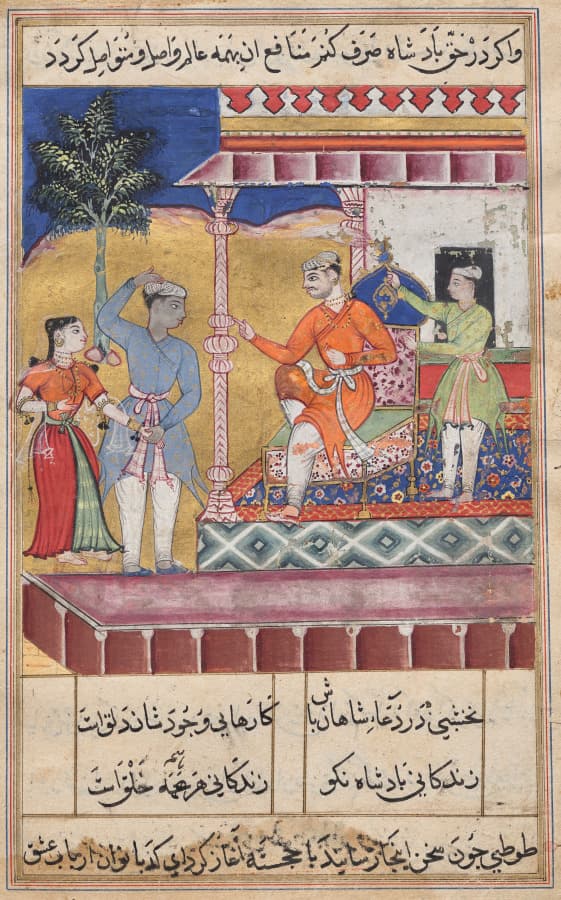
The rejuvenated old man and the daughter of the king of the jinns take leave of the King of Kings, from a Tuti-nama (Tales of a Parrot): Seventh Nightc. 1560 · Study 1962.279.50.b
Artist not recorded
c. 1560
Recorded as gum tempera, ink, and gold on paper, this vertical work measures 10.1 × 11.3 cm using the museum’s painting only dimensions. Explore the museum’s context and compare the format with a wall of your choice.
Museum collection reference. This work is not offered for sale by Physical Art For Crypto. Museum attribution does not imply a partnership or endorsement.
Context from the museum
The artist who painted the first two scenes rendered the pit as a structure made of bricks. Peering over the edge is a Brahmin, a member of the Hindu priest class, wearing white. In the first painting he holds the bracelets given to him by the jinn princess to pay off his gambling debts; in the second he holds a text. In the pit, the jinn princess has been waiting for 70 years for her beloved to find the courage to pass through the cauldron of boiling oil in order to become purified enough to be with her––a jinn, who is a being of light, like a genie. Hearing of this predicament from the Brahmin, the King of Kings, wearing orange, provided a salve that protects the wearer from the harm of the hot oil, so the old man could safely pass through the boiling cauldron, which restored his youth. The artist Banavari, whose name is inscribed on the margin of the third page, went on to become a prominent artist in Akbar’s atelier. This painting may be the earliest surviving example of his work.
Museum description reproduced from its CC0 open-access record. Read the original catalog entry.
A detail to notice
The old man emerges from the boiling oil eighteen years old and beardless.
Observation supplied by the Cleveland Museum of Art.
Read the dimensions before the image
The selected painting only measurement for The rejuvenated old man and the daughter of the king of the jinns take leave of the King of Kings, from a Tuti-nama (Tales of a Parrot): Seventh Night is 10.1 cm wide and 11.3 cm high, equivalent to approximately 4.0 × 4.4 inches. Dividing width by height gives a format ratio of 0.89:1. The rectangular bounding area is 0.01 square meters; it describes the measured footprint, not the amount of paint or the monetary value.
On an illustrative 300 cm wall, the recorded width occupies 3.4% of the span before adding a frame. A centered placement leaves approximately 144.9 cm on each side before adding a frame. These are calculations by Physical Art For Crypto using museum measurements. They are not the museum’s display recommendations.
Questions to bring to your own collection
With The rejuvenated old man and the daughter of the king of the jinns take leave of the King of Kings, from a Tuti-nama (Tales of a Parrot): Seventh Night in view, identify one feature you can point to, then distinguish what the museum records from your personal response. Keep its medium, gum tempera, ink, and gold on paper, in your notes when comparing contemporary works.
- Which part of this vertical composition catches your eye first?
- Would a 10.1 cm width still suit the space after allowing for furniture and a frame?
- What surface detail would you need to see in person or in a close photograph?
Explore physical scale
How large would this format feel on your wall?
Use this museum work’s recorded format as a reference. Adjust a blank wall and optional frame allowance to compare proportions. The museum painting is an educational reference and is not for sale here.
Calculation: outside width = recorded width + twice your frame allowance. This is a proportion study, not an installation assessment. It excludes furniture, hardware, load capacity, depth and delivery clearance. The display image may include margins absent from the recorded measurement.
Compare formats with the studio collection
These Lei-Kol works have the closest width-to-height ratios in the current catalog. This is a geometry comparison, not a claim of artistic similarity, equivalent value, or association with the museum artist.
| Painting | Width × height | Format ratio | USD catalog price |
|---|---|---|---|
| Blue Denim | 48 × 48 in | 1.00:1 | $1,699 |
| Mushrooms | 48 × 48 in | 1.00:1 | $2,399 |
| Stardust | 48 × 48 in | 1.00:1 | $2,199 |
Availability and delivery costs must be confirmed for the individual order.
Related studies
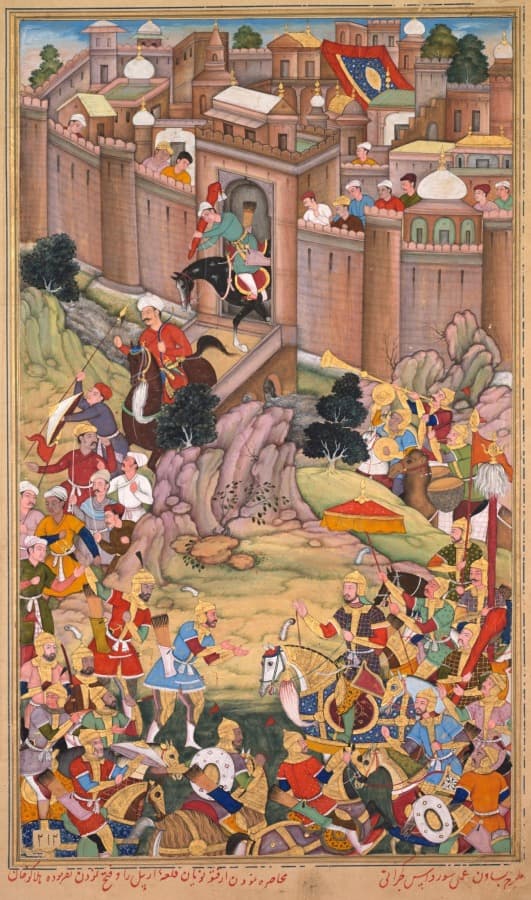
c. 1596 · Mughal India, court of Akbar (reigned 1556–1605)
The siege of Arbela in the era of Hulagu Khan, from a Chingiz-nama (Book of Chingiz Khan) of the Jami al-tavarikh (Compendium of Chronicles) of Rashid al-Din (Persian, 1247–1318)
Basavana (Indian, active c. 1560–1600); Sur Das Gujarati (Indian, active 16th century) · Gum tempera, ink, and gold on paper
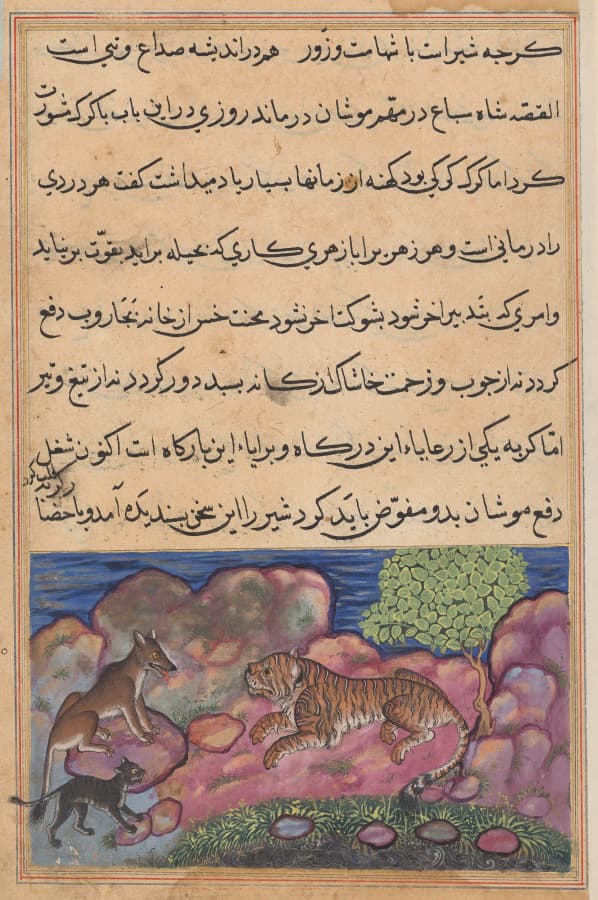
c. 1560 · Mughal India, court of Akbar (reigned 1556–1605)
The wolf advises the lion to consult the cat, from a Tuti-nama (Tales of a Parrot): Fifteenth Night
Artist not recorded · gum tempera, ink, and gold on paper
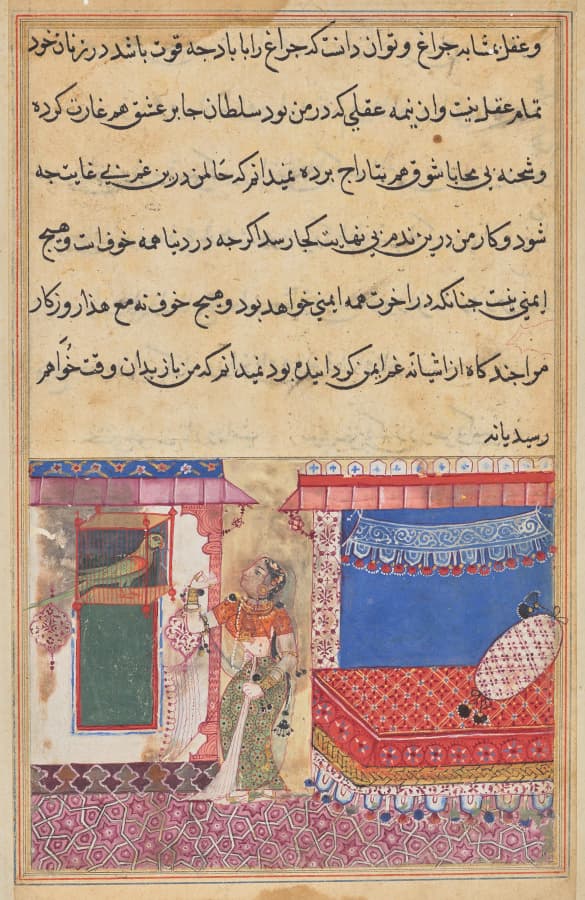
c. 1560 · Mughal India, court of Akbar (reigned 1556–1605)
The Parrot Addresses Khujasta at the Beginning of the Eighteenth Night, from a Tuti-nama (Tales of a Parrot)
Artist not recorded · gum tempera, ink, and gold on paper
c. 1560 · Mughal India, court of Akbar (reigned 1556–1605)
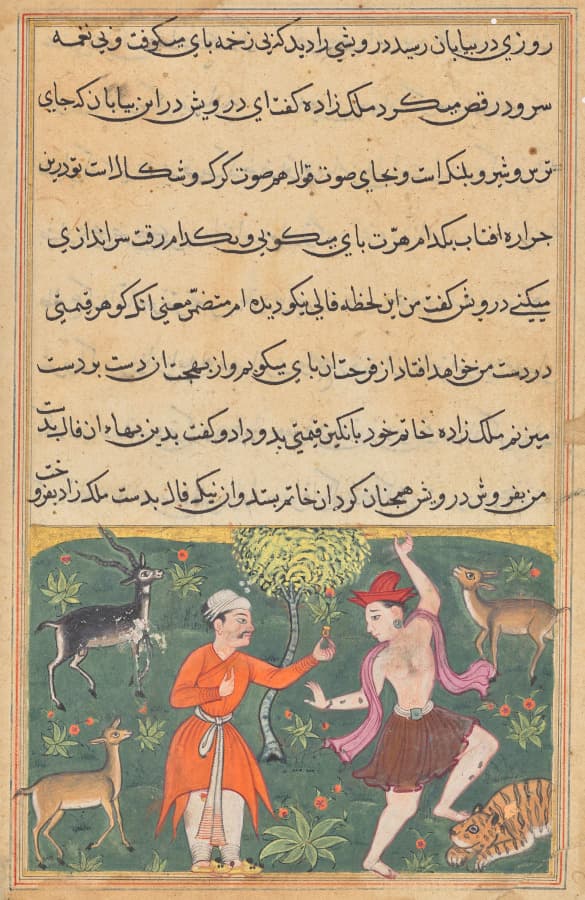
The prince meets a carefree dancing dervish whose good fortune he purchases for his ring, from a Tuti-nama (Tales of a Parrot): Eighteenth Night
Artist not recorded · gum tempera, ink, and gold on paper
Ready to describe what you want in your own space?
Start an artwork inquiry ↗