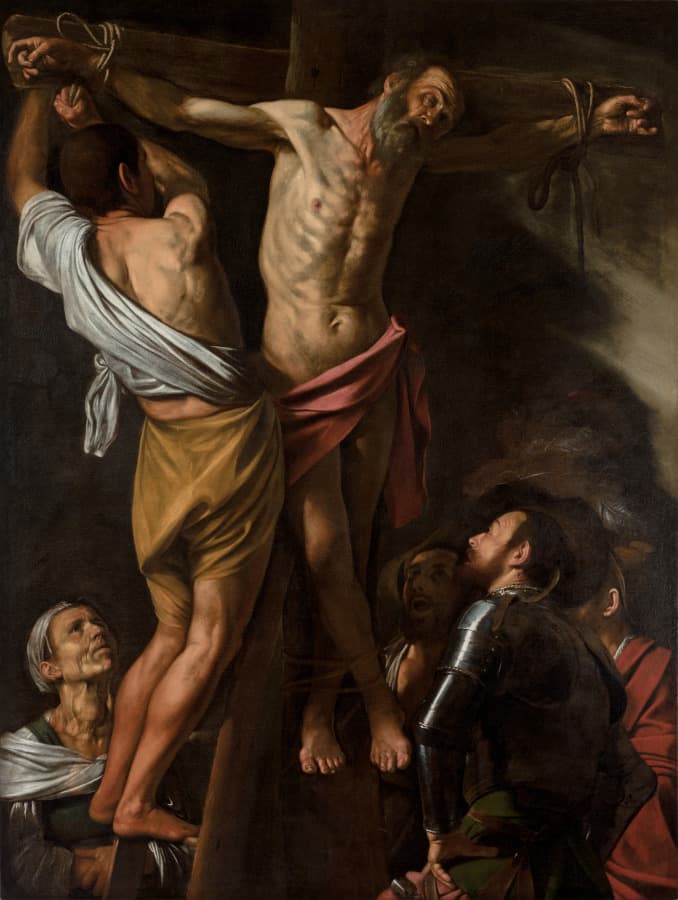
Painting study · Oil painting
The Crucifixion of Saint Andrew1606–7 · Study 1976.2
Caravaggio (Italian, 1571–1610)
1606–7
Recorded as oil on canvas, this vertical work measures 152.7 × 202.5 cm using the museum’s unframed dimensions. Explore the museum’s context and compare the format with a wall of your choice.
Museum collection reference. This work is not offered for sale by Physical Art For Crypto. Museum attribution does not imply a partnership or endorsement.
Context from the museum
Saint Andrew’s efforts to introduce Christianity to Greece in the first century CE were met with hostility from local authorities. He was sentenced to die on the cross because he refused to acknowledge pagan gods. For two days, Andrew preached from his martyr’s station to an increasingly sympathetic crowd. Bowing to public demand, Andrew’s would-be executioners attempted to untie him, but their hands were mysteriously paralyzed. Andrew’s desire for martyrdom was thus fulfilled and he died enveloped in divine light. Caravaggio’s innovative interpretation involves the viewer more closely in the event by presenting the crucifixion as intimate and private, rather than as a gruesome public spectacle. Bold contrasts of light and dark suggest the presence of God. A masterpiece of Baroque painting, Caravaggio’s Crucifixion of Saint Andrew is the only altarpiece by the artist in America.
Museum description reproduced from its CC0 open-access record. Read the original catalog entry.
A detail to notice
Although Saint Andrew is typically associated with an X-shaped cross, here he is depicted on a standard vertical cross.
Observation supplied by the Cleveland Museum of Art.
Read the dimensions before the image
The selected unframed measurement for The Crucifixion of Saint Andrew is 152.7 cm wide and 202.5 cm high, equivalent to approximately 60.1 × 79.7 inches. Dividing width by height gives a format ratio of 0.75:1. The rectangular bounding area is 3.09 square meters; it describes the measured footprint, not the amount of paint or the monetary value.
On an illustrative 300 cm wall, the recorded width occupies 50.9% of the span before adding a frame. A centered placement leaves approximately 73.7 cm on each side before adding a frame. These are calculations by Physical Art For Crypto using museum measurements. They are not the museum’s display recommendations.
Questions to bring to your own collection
With The Crucifixion of Saint Andrew in view, identify one feature you can point to, then distinguish what the museum records from your personal response. Keep its medium, oil on canvas, in your notes when comparing contemporary works.
- Which part of this vertical composition catches your eye first?
- Would a 152.7 cm width still suit the space after allowing for furniture and a frame?
- What surface detail would you need to see in person or in a close photograph?
Explore physical scale
How large would this format feel on your wall?
Use this museum work’s recorded format as a reference. Adjust a blank wall and optional frame allowance to compare proportions. The museum painting is an educational reference and is not for sale here.
Calculation: outside width = recorded width + twice your frame allowance. This is a proportion study, not an installation assessment. It excludes furniture, hardware, load capacity, depth and delivery clearance. The display image may include margins absent from the recorded measurement.
Compare formats with the studio collection
These Lei-Kol works have the closest width-to-height ratios in the current catalog. This is a geometry comparison, not a claim of artistic similarity, equivalent value, or association with the museum artist.
| Painting | Width × height | Format ratio | USD catalog price |
|---|---|---|---|
| Blood Moon | 30 × 40 in | 0.75:1 | $1,199 |
| Gray Day | 24 × 36 in | 0.67:1 | $1,199 |
| Waterfalls | 24 × 36 in | 0.67:1 | $999 |
Availability and delivery costs must be confirmed for the individual order.
Related studies
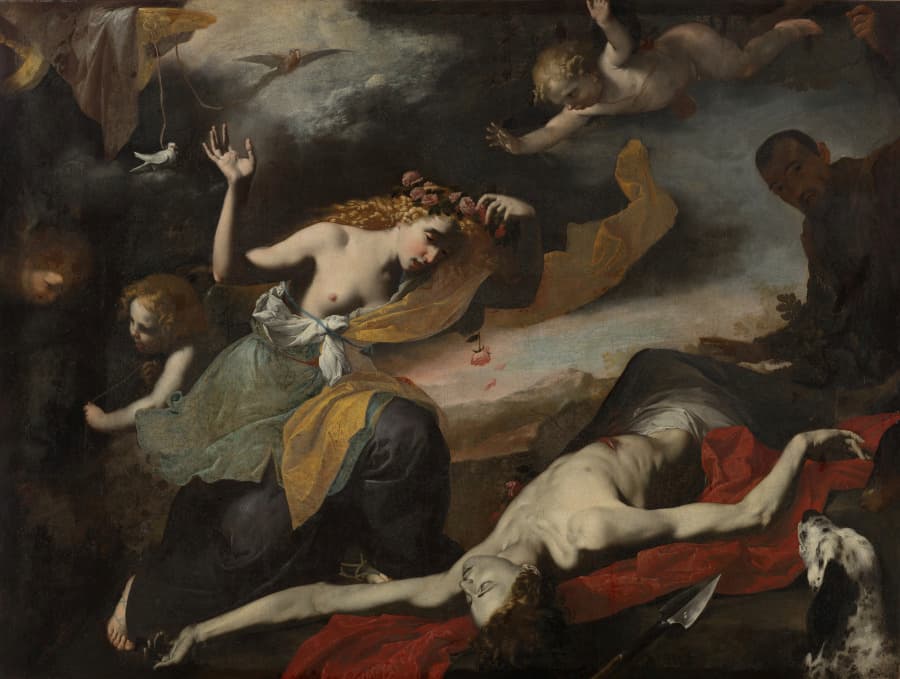
c. 1650 · Italy, Naples
Venus Discovering the Dead Adonis
Artist not recorded · oil on canvas
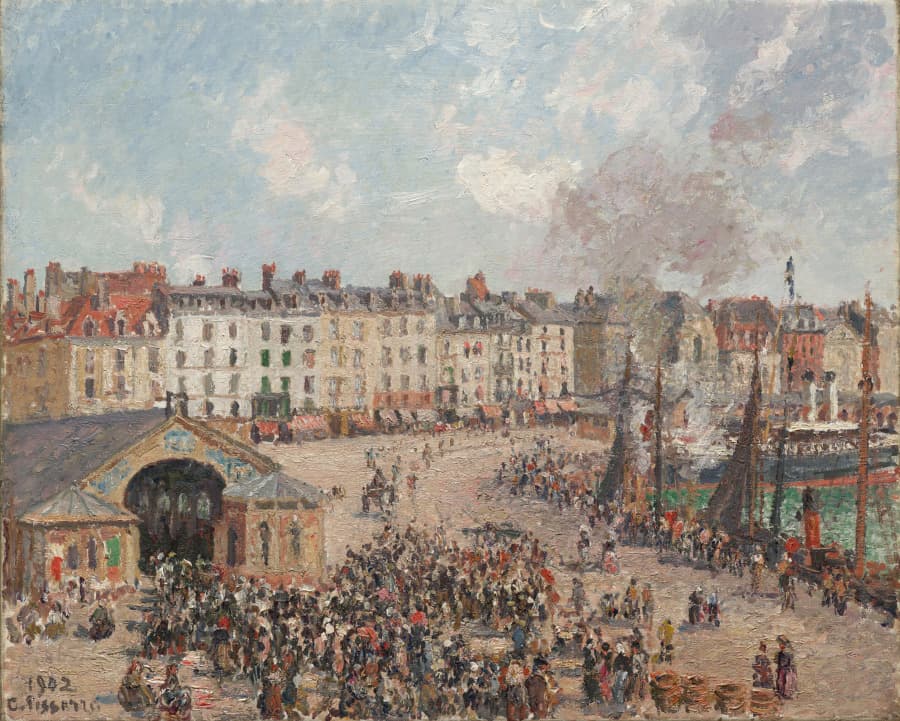
1902 · France, 20th century
Fishmarket
Camille Pissarro (French, 1830–1903) · oil on canvas
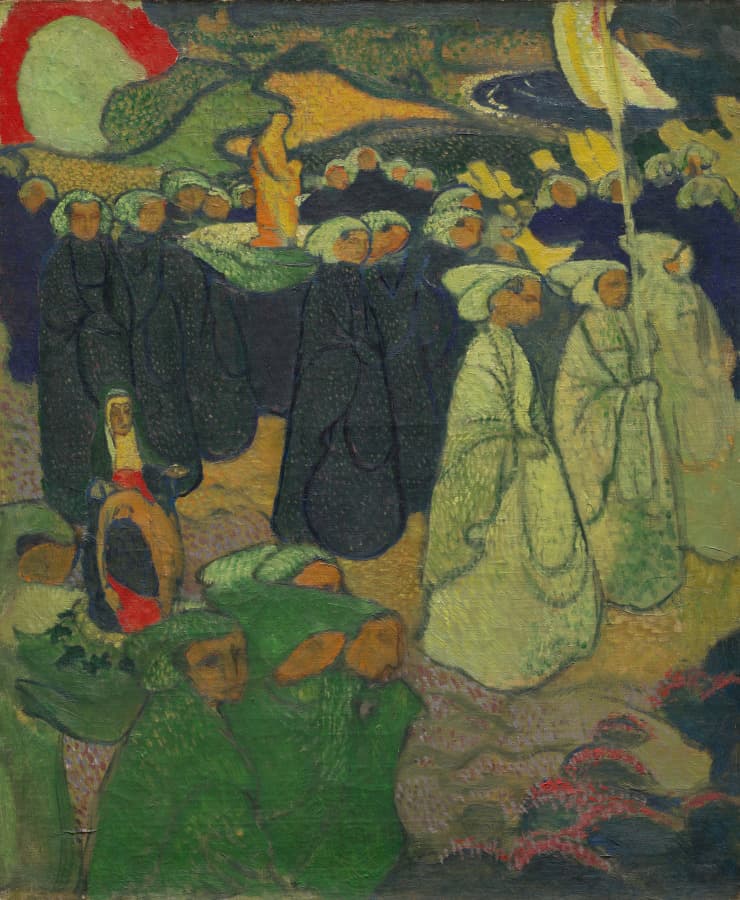
1891 · France
Procession or Pardon at Perros-Guirec
Maurice Denis (French, 1870–1943) · oil on canvas
1899 · France, 19th century
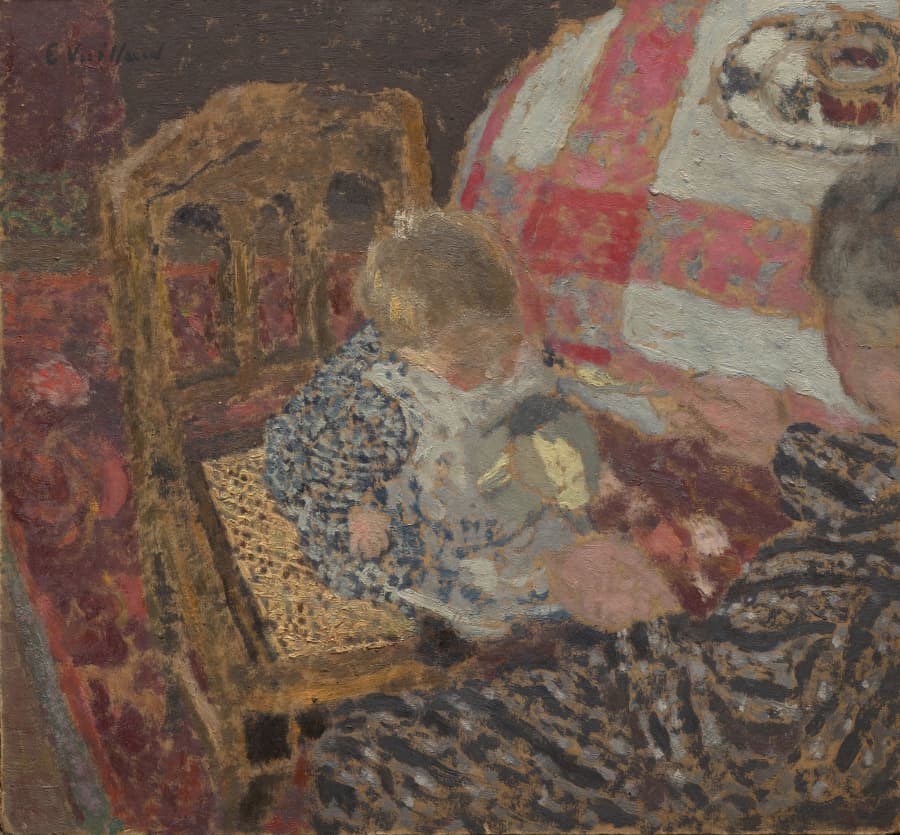
Luncheon (Annette and Her Grandmother)
Édouard Vuillard (French, 1868–1940) · oil on board
Ready to describe what you want in your own space?
Start an artwork inquiry ↗