Painting study · Ink painting
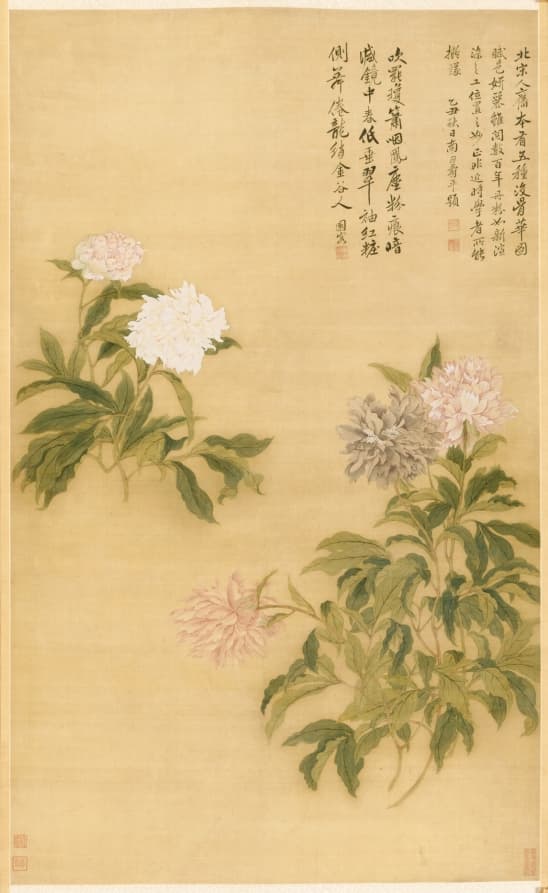
Herbaceous Peony1685 · Study 1967.192
Yun Shouping (Chinese, 1633–1690)
1685
Recorded as Hanging scroll; ink and color on silk, this vertical work measures 71.8 × 118.7 cm using the museum’s painting dimensions. Explore the museum’s context and compare the format with a wall of your choice.
Museum collection reference. This work is not offered for sale by Physical Art For Crypto. Museum attribution does not imply a partnership or endorsement.
Context from the museum
Yun Shouping came from Piling (modern Changzhou), Jiangsu province, a center of floral, plant, and insect painting. He had joined the anti-Manchu resistance, was briefly imprisoned, and witnessed the death of family members in 1644. Like other artists, Yun Shouping expressed his Ming loyalism in coded pictures. The peony, king of flowers, and a spring garden motif developed new meaning during the Qing dynasty. The inscription indicates that Yun turns the flower into a motif representing the glorious past. The herbaceous peonies here appear somewhat withered and pale, with faint reddish veins running through its broken branches, perhaps a coded message. The inscription reads, An old painting by an anonymous painter of the Northern Song Dynasty has five varieties of flowers painted in the boneless manner. Its colors are so beguiling and beautiful, that even after several hundred years its lead pigments are like new. The skill with which the ink and colors were applied and the subtlety of its composition find no equal among modern followers .
Museum description reproduced from its CC0 open-access record. Read the original catalog entry.
A detail to notice
In East Asian art, peonies traditionally symbolize prosperity and wealth.
Observation supplied by the Cleveland Museum of Art.
Read the dimensions before the image
The selected painting measurement for Herbaceous Peony is 71.8 cm wide and 118.7 cm high, equivalent to approximately 28.3 × 46.7 inches. Dividing width by height gives a format ratio of 0.60:1. The rectangular bounding area is 0.85 square meters; it describes the measured footprint, not the amount of paint or the monetary value.
On an illustrative 300 cm wall, the recorded width occupies 23.9% of the span before adding a frame. A centered placement leaves approximately 114.1 cm on each side before adding a frame. These are calculations by Physical Art For Crypto using museum measurements. They are not the museum’s display recommendations.
Questions to bring to your own collection
With Herbaceous Peony in view, identify one feature you can point to, then distinguish what the museum records from your personal response. Keep its medium, Hanging scroll; ink and color on silk, in your notes when comparing contemporary works.
- Which part of this vertical composition catches your eye first?
- Would a 71.8 cm width still suit the space after allowing for furniture and a frame?
- What surface detail would you need to see in person or in a close photograph?
Explore physical scale
How large would this format feel on your wall?
Use this museum work’s recorded format as a reference. Adjust a blank wall and optional frame allowance to compare proportions. The museum painting is an educational reference and is not for sale here.
Calculation: outside width = recorded width + twice your frame allowance. This is a proportion study, not an installation assessment. It excludes furniture, hardware, load capacity, depth and delivery clearance. The display image may include margins absent from the recorded measurement.
Compare formats with the studio collection
These Lei-Kol works have the closest width-to-height ratios in the current catalog. This is a geometry comparison, not a claim of artistic similarity, equivalent value, or association with the museum artist.
| Painting | Width × height | Format ratio | USD catalog price |
|---|---|---|---|
| Graffiti | 30 × 48 in | 0.63:1 | $2,199 |
| Gray Day | 24 × 36 in | 0.67:1 | $1,199 |
| Waterfalls | 24 × 36 in | 0.67:1 | $999 |
Availability and delivery costs must be confirmed for the individual order.
Related studies
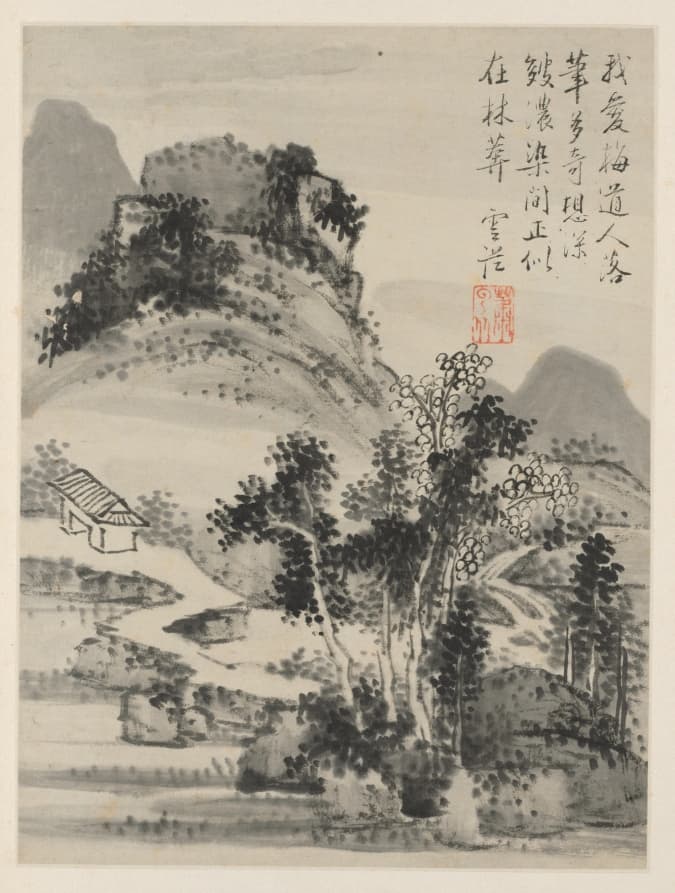
1668 · China, Qing dynasty (1644-1911)
Album of Seasonal Landscapes, Leaf D (previous leaf 2)
Xiao Yuncong (Chinese, 1596–1673) · album leaf; ink and light color on paper
1684 · China, Qing dynasty (1644-1911)
Album of Seasonal Landscapes
Zha Shibiao (Chinese, 1615–1698) · Album of twelve leaves; ink or ink and light color on paper
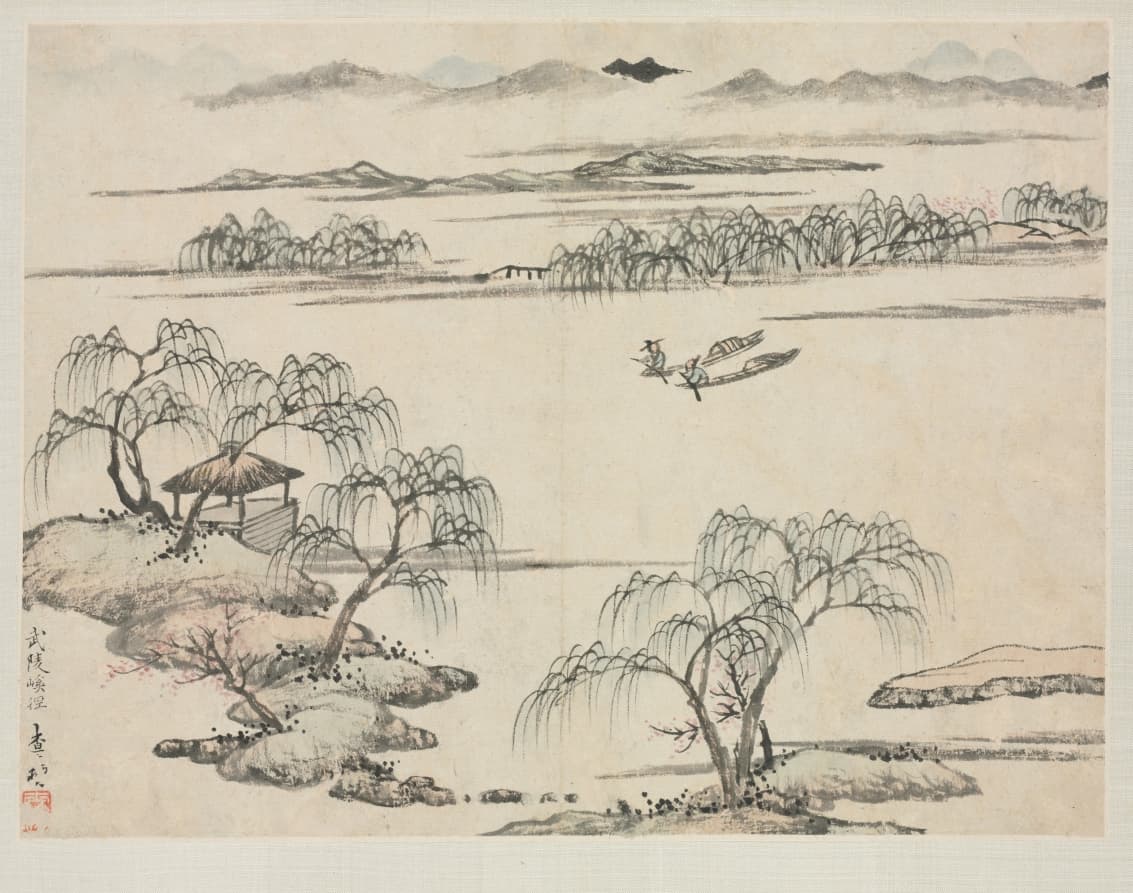
1684 · China, Qing dynasty (1644-1911)
Landscape Album in Various Styles: The Stream of Wuling
Zha Shibiao (Chinese, 1615–1698) · album leaf, ink and light color on paper
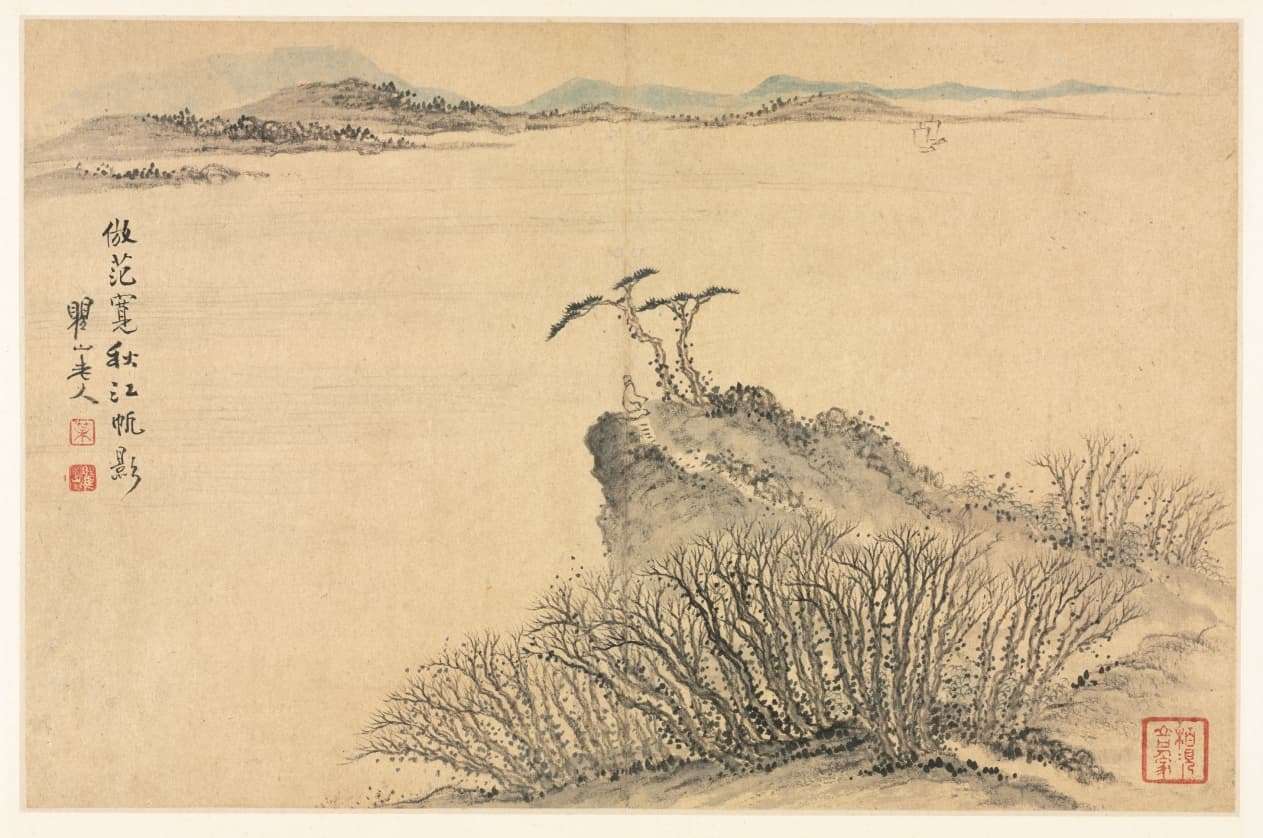
1690 · China, Qing dynasty (1644-1911)
Landscapes in Various Styles after Old Masters
Mei Qing (Chinese, 1623–1697) · album leaf: ink and color on paper
Ready to describe what you want in your own space?
Start an artwork inquiry ↗