Painting study · Ink painting
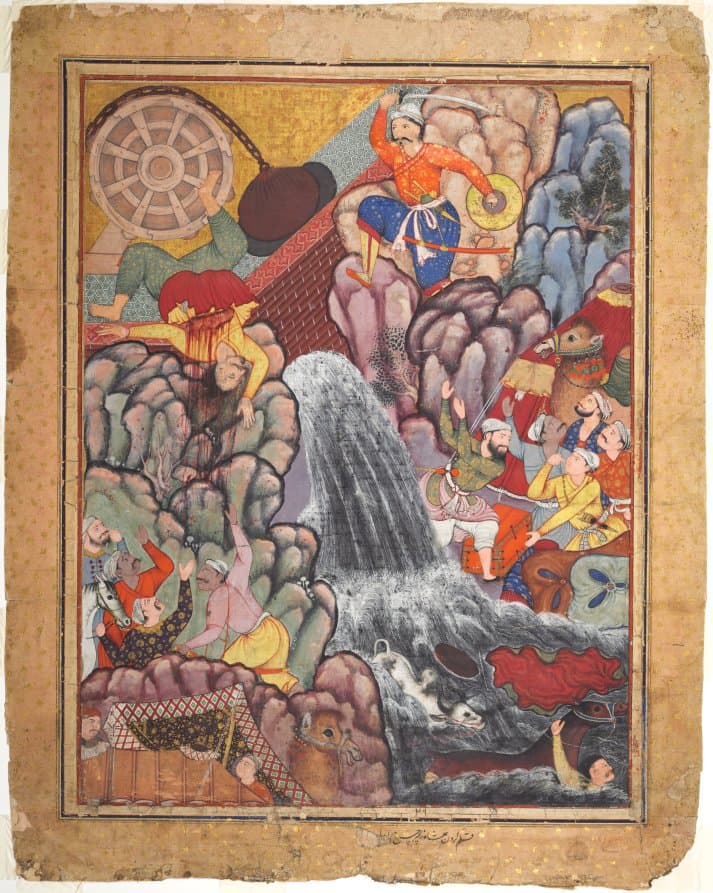
Alamshah cleaving asunder the chain of the wheel, from volume 11 of a Hamza-nama (Adventures of Hamza)c. 1560s–70s · Study 1976.74
Artist not recorded
c. 1560s–70s
Recorded as Gum tempera, ink, and gold on cotton and paper, this vertical work measures 52.2 × 69 cm using the museum’s painting only dimensions. Explore the museum’s context and compare the format with a wall of your choice.
Museum collection reference. This work is not offered for sale by Physical Art For Crypto. Museum attribution does not imply a partnership or endorsement.
Context from the museum
The hero, Alamshah the Greek, perches on a cliff above a rushing torrent of water. He has just slain the villain who raised the massive bronze plug on the dam in order to wash away the camp of Alamshah’s father, Hamza. The Hamza-nama recounts the adventures of an uncle of the Prophet Mohammed. It was the first major undertaking of the fledgling painting workshop created by Akbar. Originally in 14 volumes of 100 illustrations each, just a little more than 10 percent of the pages survive.
Museum description reproduced from its CC0 open-access record. Read the original catalog entry.
A detail to notice
The title in the bottom margin is a continuation of the text on the previous page.
Observation supplied by the Cleveland Museum of Art.
Read the dimensions before the image
The selected painting only measurement for Alamshah cleaving asunder the chain of the wheel, from volume 11 of a Hamza-nama (Adventures of Hamza) is 52.2 cm wide and 69 cm high, equivalent to approximately 20.6 × 27.2 inches. Dividing width by height gives a format ratio of 0.76:1. The rectangular bounding area is 0.36 square meters; it describes the measured footprint, not the amount of paint or the monetary value.
On an illustrative 300 cm wall, the recorded width occupies 17.4% of the span before adding a frame. A centered placement leaves approximately 123.9 cm on each side before adding a frame. These are calculations by Physical Art For Crypto using museum measurements. They are not the museum’s display recommendations.
Questions to bring to your own collection
With Alamshah cleaving asunder the chain of the wheel, from volume 11 of a Hamza-nama (Adventures of Hamza) in view, identify one feature you can point to, then distinguish what the museum records from your personal response. Keep its medium, Gum tempera, ink, and gold on cotton and paper, in your notes when comparing contemporary works.
- Which part of this vertical composition catches your eye first?
- Would a 52.2 cm width still suit the space after allowing for furniture and a frame?
- What surface detail would you need to see in person or in a close photograph?
Explore physical scale
How large would this format feel on your wall?
Use this museum work’s recorded format as a reference. Adjust a blank wall and optional frame allowance to compare proportions. The museum painting is an educational reference and is not for sale here.
Calculation: outside width = recorded width + twice your frame allowance. This is a proportion study, not an installation assessment. It excludes furniture, hardware, load capacity, depth and delivery clearance. The display image may include margins absent from the recorded measurement.
Compare formats with the studio collection
These Lei-Kol works have the closest width-to-height ratios in the current catalog. This is a geometry comparison, not a claim of artistic similarity, equivalent value, or association with the museum artist.
| Painting | Width × height | Format ratio | USD catalog price |
|---|---|---|---|
| Blood Moon | 30 × 40 in | 0.75:1 | $1,199 |
| Gray Day | 24 × 36 in | 0.67:1 | $1,199 |
| Waterfalls | 24 × 36 in | 0.67:1 | $999 |
Availability and delivery costs must be confirmed for the individual order.
Related studies
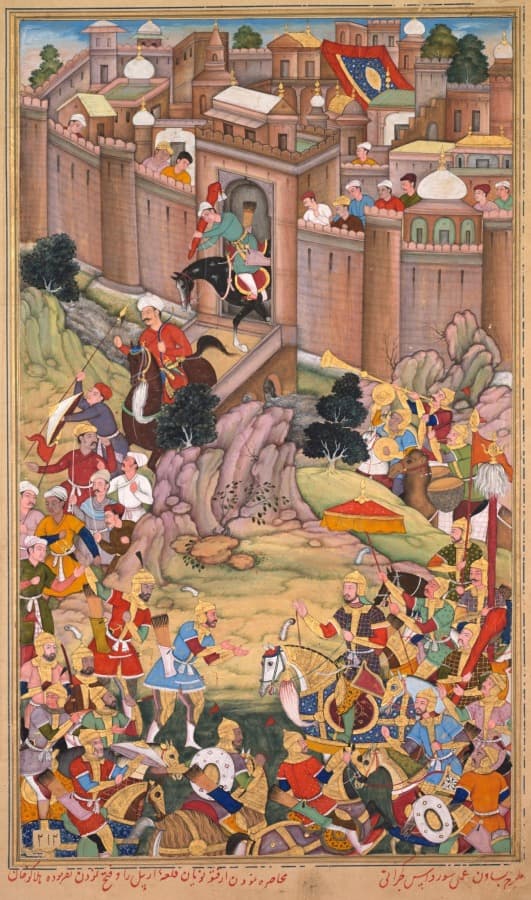
c. 1596 · Mughal India, court of Akbar (reigned 1556–1605)
The siege of Arbela in the era of Hulagu Khan, from a Chingiz-nama (Book of Chingiz Khan) of the Jami al-tavarikh (Compendium of Chronicles) of Rashid al-Din (Persian, 1247–1318)
Basavana (Indian, active c. 1560–1600); Sur Das Gujarati (Indian, active 16th century) · Gum tempera, ink, and gold on paper
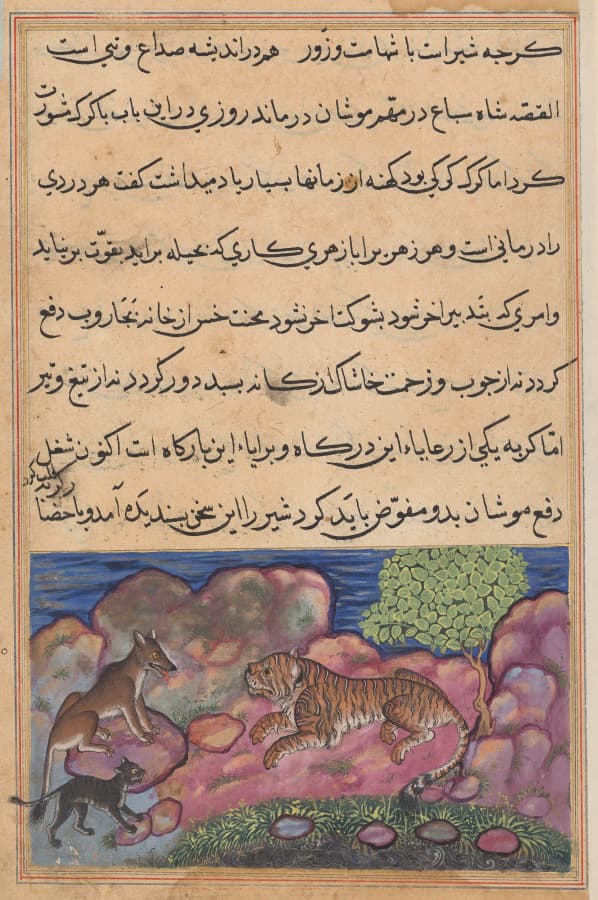
c. 1560 · Mughal India, court of Akbar (reigned 1556–1605)
The wolf advises the lion to consult the cat, from a Tuti-nama (Tales of a Parrot): Fifteenth Night
Artist not recorded · gum tempera, ink, and gold on paper
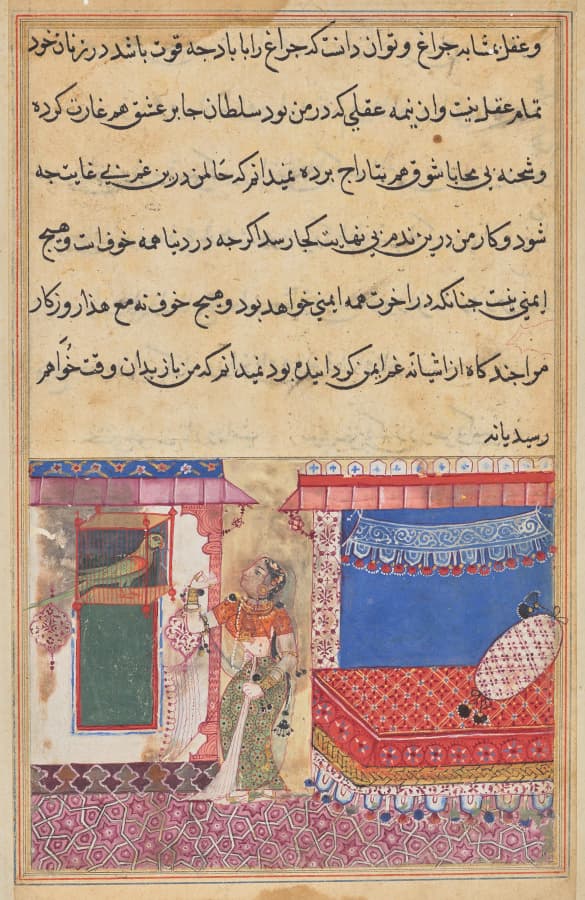
c. 1560 · Mughal India, court of Akbar (reigned 1556–1605)
The Parrot Addresses Khujasta at the Beginning of the Eighteenth Night, from a Tuti-nama (Tales of a Parrot)
Artist not recorded · gum tempera, ink, and gold on paper
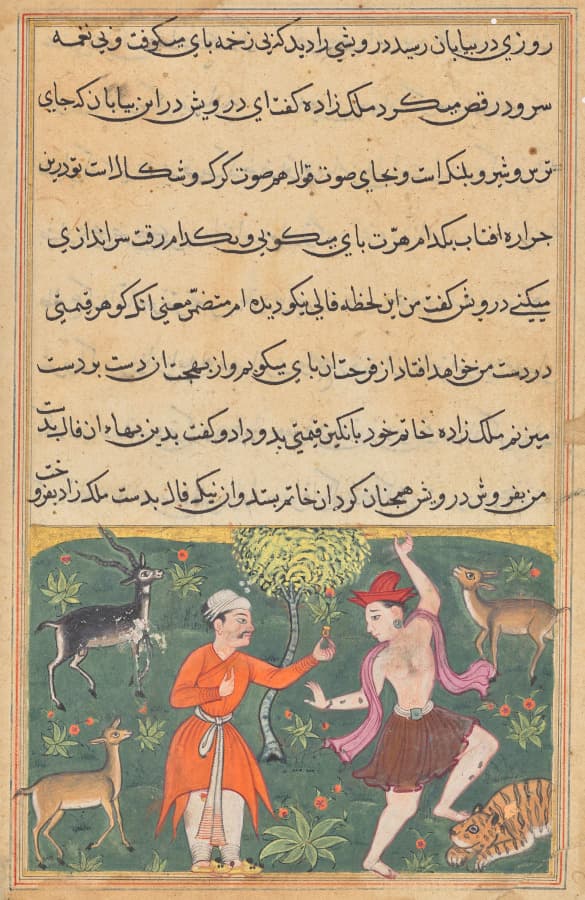
c. 1560 · Mughal India, court of Akbar (reigned 1556–1605)
The prince meets a carefree dancing dervish whose good fortune he purchases for his ring, from a Tuti-nama (Tales of a Parrot): Eighteenth Night
Artist not recorded · gum tempera, ink, and gold on paper
Ready to describe what you want in your own space?
Start an artwork inquiry ↗