Physical vs Digital
Physical Art
vs NFT
We love crypto. We get paid in crypto. But we sell physical paintings — real canvas, real paint, real texture — because some things belong on walls, not in wallets. Here is the honest comparison.
Head-to-Head Comparison
Physical Original Painting
- ✦ A real object. It occupies physical space. It has weight, texture, and presence.
- ✦ Changes with the light. Looks different at morning, noon, and night.
- ✦ One of a kind. No copies exist. When sold, gone forever.
- ✦ Includes signed Certificate of Authenticity.
- ✦ Ships to your door. You unbox it, hang it, and live with it.
- ✦ Can be insured as physical property.
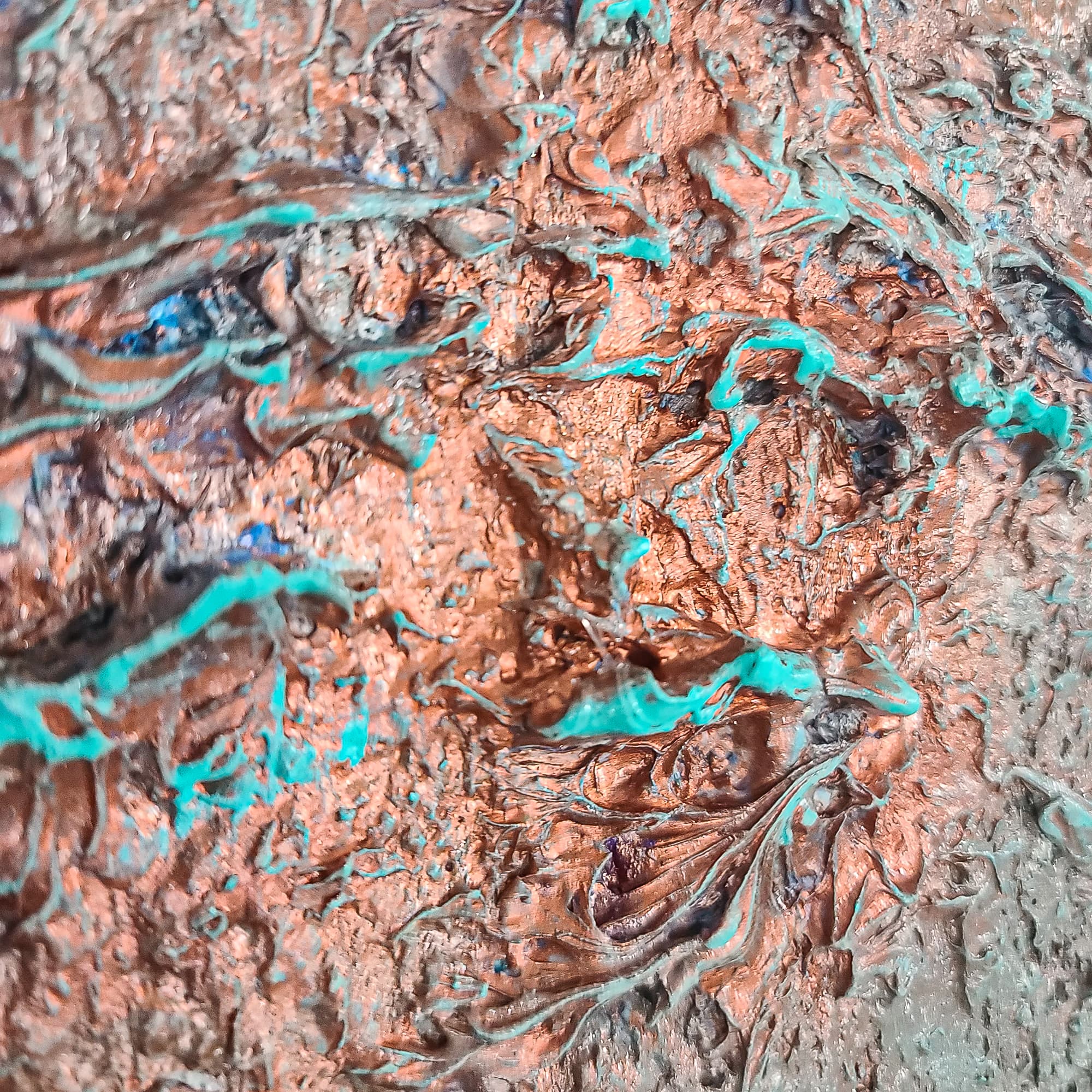
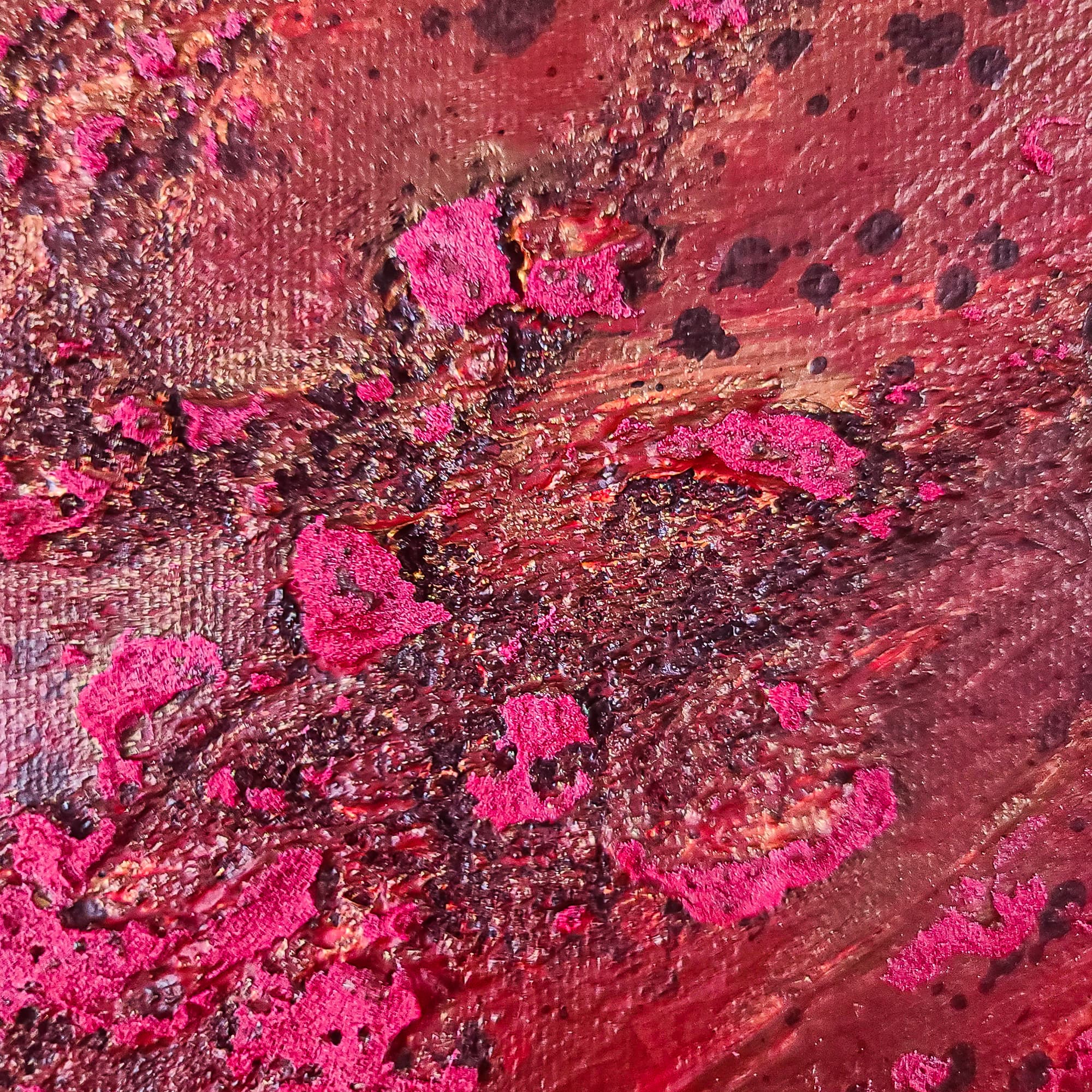
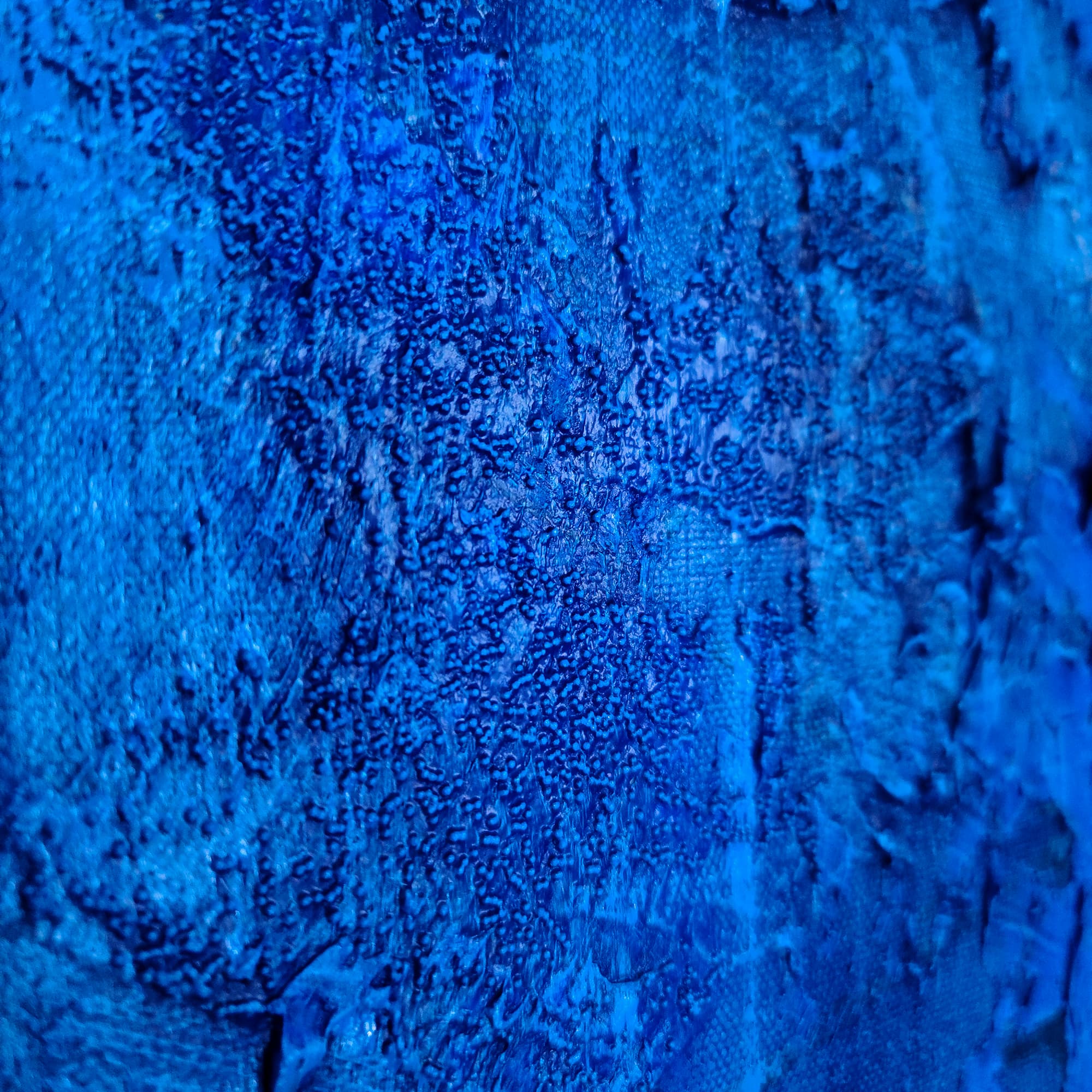
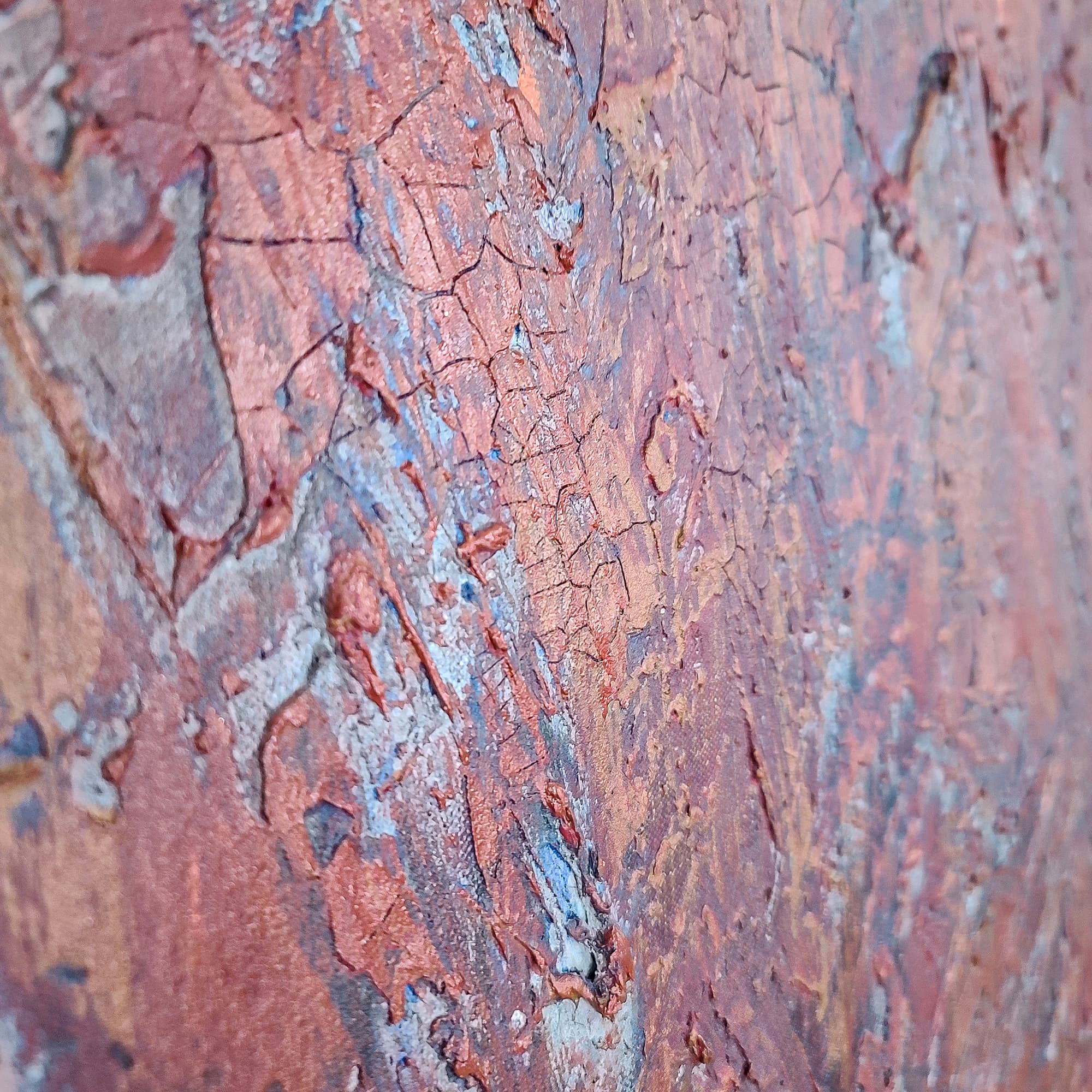
- ✦ Has genuine sculptural texture you can feel.
NFT / Digital Art
- ✦ A token on a blockchain. Points to a digital file, not a physical object.
- ✦ Looks the same on every screen, in every light. No physical presence.
- ✦ Often editioned. Multiple identical tokens may exist for the same image.
- ✦ Provenance is on-chain, but what you own is the token, not the art.
- ✦ No shipping, no wall, no physical experience.
- ✦ Value is driven by market speculation, not physical rarity.
- ✦ No texture. No surface. No real-world presence.
What You Actually Own
When you buy a physical painting from Lei-Kol, you own the canvas, the paint, the stretcher bars — the physical object itself. Title transfers to you. You can hang it, insure it, loan it to a museum, bequeath it in your will, or resell it. Ownership is governed by centuries of property law and is unambiguous.
When you buy an NFT, you own a token — a unique entry on a blockchain that points to a digital asset. In most cases, you do not own the copyright, the image file itself, or any physical manifestation. You own a pointer. The image that the token references is typically hosted on IPFS or a centralized server — it can disappear if the hosting goes down. Your NFT may remain, but it points to nothing. Physical art does not have this problem. The painting is the painting. It does not depend on servers, seed phrases, or compatible wallet software to continue existing.
Provenance: Paper vs Blockchain
NFTs excel at provenance. Every transfer is recorded on-chain — you can trace a token from mint to current holder with mathematical certainty. No forgeries, no disputes. This is genuinely superior to the traditional art world, where provenance often relies on paper records, gallery archives, and the memories of experts.
Lei-Kol bridges this gap. When you pay with crypto, your purchase is permanently recorded on a blockchain. Combined with the physical Certificate of Authenticity signed by the artist, you get the best of both worlds: the cryptographic certainty of on-chain provenance and the tangible authenticity of a hand-signed document attached to the actual physical object. You do not have to choose between paper and chain — you get both.
Environmental Impact
Early NFT criticism centered on the energy consumption of proof-of-work blockchains like Ethereum pre-Merge. Ethereum's transition to proof-of-stake in 2022 reduced its energy consumption by approximately 99.95%, largely neutralizing this argument. Modern NFT transactions on proof-of-stake chains have negligible energy footprints comparable to a few Google searches.
Physical art has its own environmental costs: pigments, canvas production, wooden stretcher bars, and international shipping. A large painting shipped across an ocean in a wooden crate has a measurable carbon footprint. Neither medium is zero-impact. The honest assessment is that both have environmental costs, and both can be managed responsibly — choose local artists and efficient blockchains where possible.
Investment Profiles
| Factor | Physical Original | NFT |
|---|---|---|
| Liquidity | Low — selling takes weeks or months | High — can sell instantly on marketplaces |
| Volatility | Low to moderate — values shift slowly | Extreme — 90%+ drawdowns are common |
| Underlying value | The physical object has intrinsic material and artistic value | The token has no intrinsic value beyond market demand |
| Historical track record | Millennia of art markets | ~10 years, mostly speculative |
| Income potential | None while you hold (unless loaned/rented) | Some NFTs pay royalties or staking rewards |
| Storage cost | Wall space (free), insurance (optional) | Wallet security (hardware wallet recommended) |
How NFTs and Physical Art Can Work Together
A thoughtful art collection probably includes both. NFTs offer instant global liquidity, programmatic royalties for artists, and verifiable on-chain provenance — all genuinely useful innovations. Physical art offers the irreplaceable experience of living with a real object: the way light shifts across an impasto surface, the weight and presence of a large canvas, the way a painting changes a room in ways no screen ever could.
Some artists are bridging the gap with projects like "phygital" art — physical paintings paired with companion NFTs that serve as blockchain-based certificates of authenticity. Damien Hirst's "The Currency" project forced buyers to choose between keeping the physical painting or the NFT — one would be burned. Beeple opened a physical gallery in Charleston. The two worlds are converging, not diverging. Lei-Kol's approach — sell physical originals, accept payment in crypto, record transactions on-chain — occupies the sweet spot in this convergence: all the real-world presence of physical art with the payment freedom and provenance advantages of blockchain technology.
Why Physical Wins for Daily Life
An NFT lives in a wallet. You can display it on a screen — digital frames exist — but a screen is not a painting. A screen emits light; a painting catches it. A screen is uniform; a painting is dimensional. A screen requires electricity and a functioning device; a painting requires a nail. When you walk into a room with a large original painting on the wall, you feel it before you consciously notice it. The scale, the texture, the color — these affect your nervous system in ways that a display panel cannot replicate. That is not nostalgia or Luddism. It is biology.
We are not anti-NFT. We are pro-physical. A thoughtful art collection probably includes both. But if you are deciding between a token that represents a JPEG and a painting you can actually live with — the painting wins every time. And you can still pay for it in crypto.
Browse Physical Originals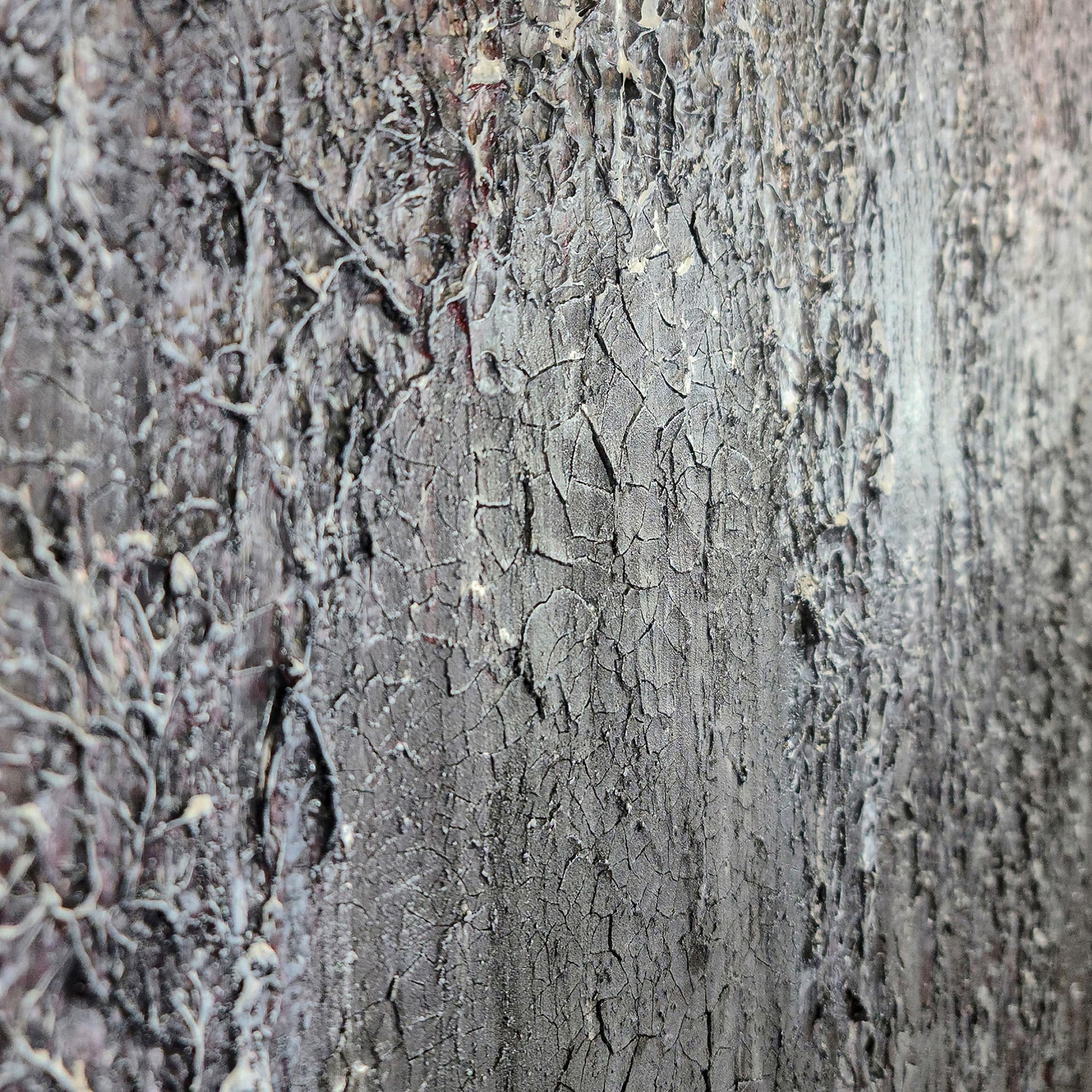
Explore Related
Continue Exploring
Buy Art with Crypto
How to purchase original paintings using Bitcoin, Ethereum, USDC, and other cryptocurrencies.
PayPal vs Crypto for Art
Fee comparison, speed, privacy — which payment method fits your needs.
Original Art vs Prints
Why a real painting is fundamentally different from any reproduction.
Certificate of Authenticity
How provenance works — on paper and on-chain.
One-of-a-Kind Original Art
What it means to own the only copy of a painting.
Art Gallery
Browse all available physical original paintings in the catalog.