The Paradox Explained
Small room, small art. It sounds logical — and it is exactly backwards. When you hang a modest-sized painting on a wall in a compact room, you create a visual reference point that emphasizes how large the wall is relative to the art. Your brain registers the generous empty space around the small painting as evidence that the wall is large — and by extension, that the room is large. But the painting looks lost, timid, and out of proportion. The result is a room that feels awkwardly scaled.
Now hang a single large painting on that same wall. The art fills the visual field. Your brain registers the painting as large — and by extension, the room must be large enough to accommodate it. The absence of awkward empty space around the art prevents your brain from making unfavorable comparisons. The room feels intentional, confident, and paradoxically, more spacious.
The Science Behind It
This phenomenon is rooted in how humans perceive space. We judge room size not by measuring dimensions but by evaluating relationships between objects. A small painting on a large wall creates a relationship that reads as "mismatched." A large painting that occupies two-thirds of a wall creates a relationship that reads as "well-proportioned." The well-proportioned room feels larger because nothing in it signals "this space is too small for what it contains."
Interior designers have known this for decades but rarely articulate it clearly because it contradicts common sense. The most effective technique for making a compact room feel expansive is not painting the walls white or adding mirrors — it is installing one large, confident piece of art that owns the wall.
How Large Is Large Enough?
For a small room (under 150 square feet), aim for a painting that occupies roughly 60 to 70 percent of the available wall width above the main piece of furniture. In a 10-foot-wide room with a 7-foot sofa, that means a painting 48 to 54 inches wide. Pieces like Maui or Bipolar at 48 × 60 inches fit this requirement perfectly.
The painting should be centered on the wall at standard gallery height (57 to 60 inches from floor to center). Leave 6 to 8 inches between the bottom of the canvas and the top of the furniture below. The generous proportions create the illusion of a room designed around the art rather than art squeezed into a room.
Texture Amplifies the Effect
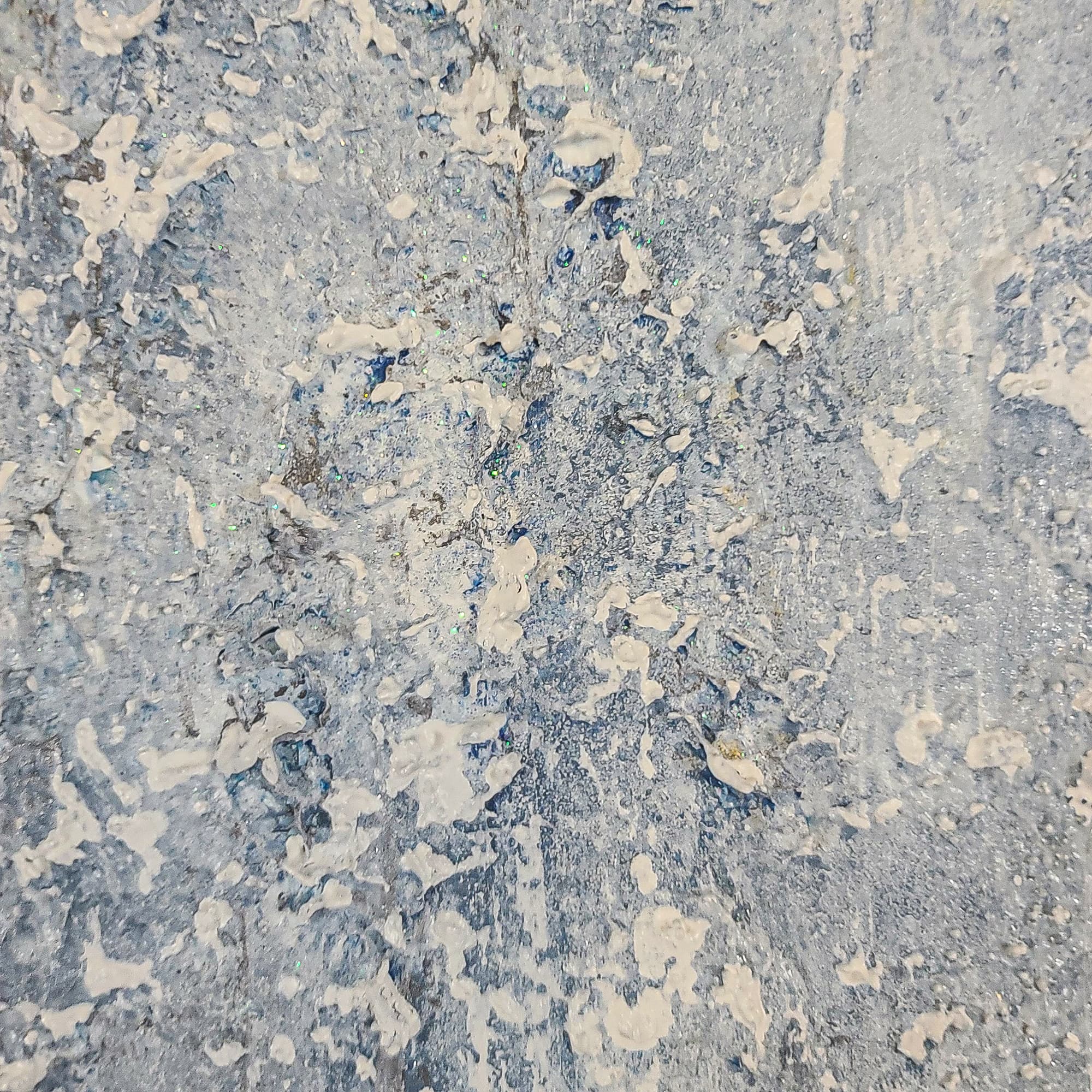
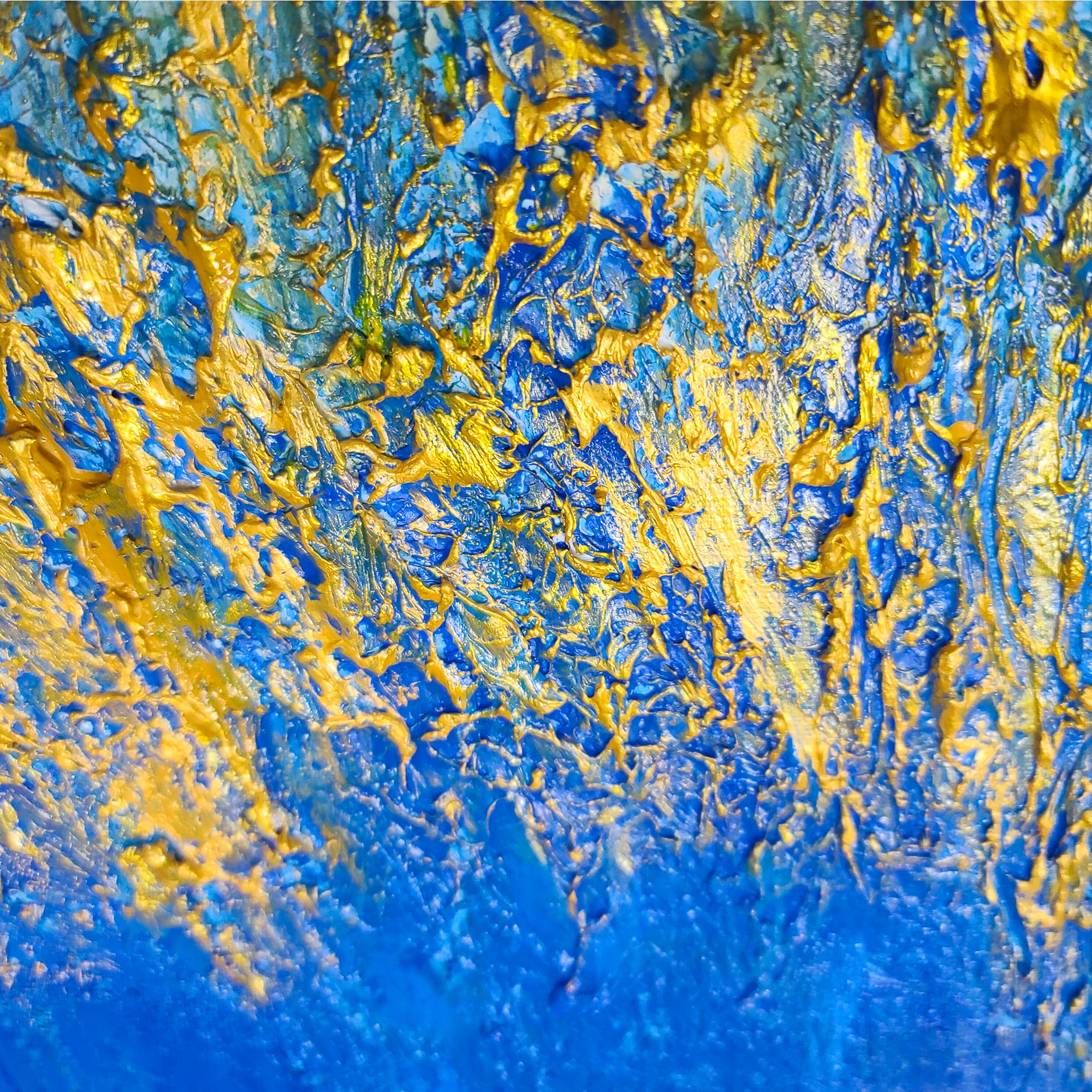
A large textured painting adds another dimension to the spatial expansion effect. The impasto surface projects from the wall, creating depth that flat art cannot provide. Your eye explores the three-dimensional surface, traveling into the painting rather than stopping at the wall plane. This perceptual depth makes the wall feel less like a boundary and more like a portal — another reason heavily textured pieces from the Lei-Kol collection are so effective in compact urban apartments and small rooms.
The One-Painting Rule
In a small room, resist the urge to create a gallery wall of multiple small pieces. Every additional frame adds visual fragmentation. Every gap between pieces introduces spatial relationships that your brain evaluates. A single large painting creates one clear focal point, one dominant spatial relationship, and a room that feels generous rather than cramped.
Find your large-format piece and transform how your small room feels. Contact Lei-Kol for a free mock-up showing a specific painting on your actual wall.
Tags