Painting study · Tempera
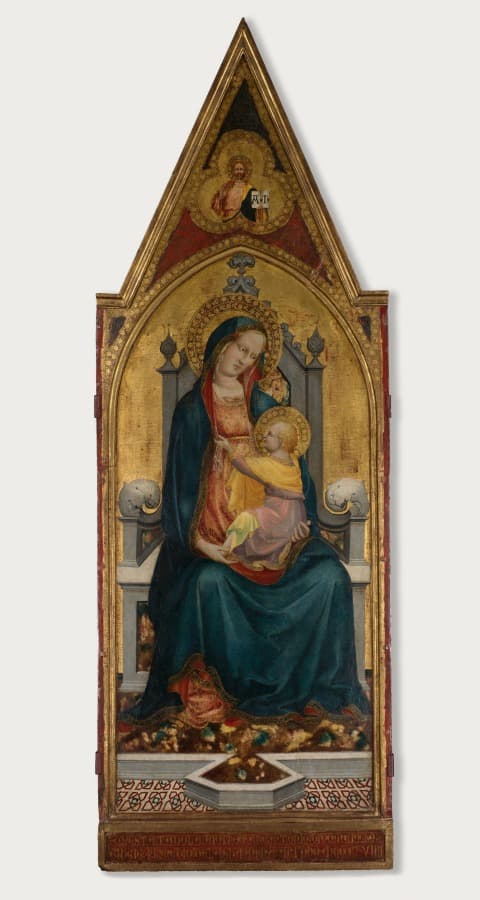
Virgin and Child Enthroned1419 · Study 1954.834
Battista di Biagio Sanguigni (Italian, active 1393–1451)
1419
Recorded as tempera and gold on wood, this vertical work measures 68.2 × 196.2 cm using the museum’s unframed dimensions. Explore the museum’s context and compare the format with a wall of your choice.
Museum collection reference. This work is not offered for sale by Physical Art For Crypto. Museum attribution does not imply a partnership or endorsement.
Context from the museum
Rather than depicting a single moment in time, this gold-ground painting symbolically encapsulates Christ. Seated on a rich throne, the monumental Virgin holds the Christ child. Above, the risen Christ is seen in heaven holding a book, inscribed with the alpha and omega, the first and last letters of the Greek alphabet, signifying Christ’s role as the beginning and end of all things. The Italian inscription states: "This painting was made for Antonio di Domenicho Giugni for the repose of his soul, the year of our Lord 1419." In the 1300s, Italian painting focused on the heavenly aspects of Christian faith in order to convey abstract religious concepts. Depicted as specimens of formal beauty, sacred figures were placed against an ethereal gold background. Within a hundred years, artists began to highlight the earthly aspects of sacred figures, placing them within naturalistic landscapes. In this newer style of painting, the approachability of sacred figures fostered devotion among the faithful.
Museum description reproduced from its CC0 open-access record. Read the original catalog entry.
Read the dimensions before the image
The selected unframed measurement for Virgin and Child Enthroned is 68.2 cm wide and 196.2 cm high, equivalent to approximately 26.9 × 77.2 inches. Dividing width by height gives a format ratio of 0.35:1. The rectangular bounding area is 1.34 square meters; it describes the measured footprint, not the amount of paint or the monetary value.
On an illustrative 300 cm wall, the recorded width occupies 22.7% of the span before adding a frame. A centered placement leaves approximately 115.9 cm on each side before adding a frame. These are calculations by Physical Art For Crypto using museum measurements. They are not the museum’s display recommendations.
Questions to bring to your own collection
With Virgin and Child Enthroned in view, identify one feature you can point to, then distinguish what the museum records from your personal response. Keep its medium, tempera and gold on wood, in your notes when comparing contemporary works.
- Which part of this vertical composition catches your eye first?
- Would a 68.2 cm width still suit the space after allowing for furniture and a frame?
- What surface detail would you need to see in person or in a close photograph?
Explore physical scale
How large would this format feel on your wall?
Use this museum work’s recorded format as a reference. Adjust a blank wall and optional frame allowance to compare proportions. The museum painting is an educational reference and is not for sale here.
Calculation: outside width = recorded width + twice your frame allowance. This is a proportion study, not an installation assessment. It excludes furniture, hardware, load capacity, depth and delivery clearance. The display image may include margins absent from the recorded measurement.
Compare formats with the studio collection
These Lei-Kol works have the closest width-to-height ratios in the current catalog. This is a geometry comparison, not a claim of artistic similarity, equivalent value, or association with the museum artist.
| Painting | Width × height | Format ratio | USD catalog price |
|---|---|---|---|
| Cheesecake | 24 × 48 in | 0.50:1 | $1,099 |
| Riptide | 24 × 48 in | 0.50:1 | $1,199 |
| Graffiti | 30 × 48 in | 0.63:1 | $2,199 |
Availability and delivery costs must be confirmed for the individual order.
Related studies
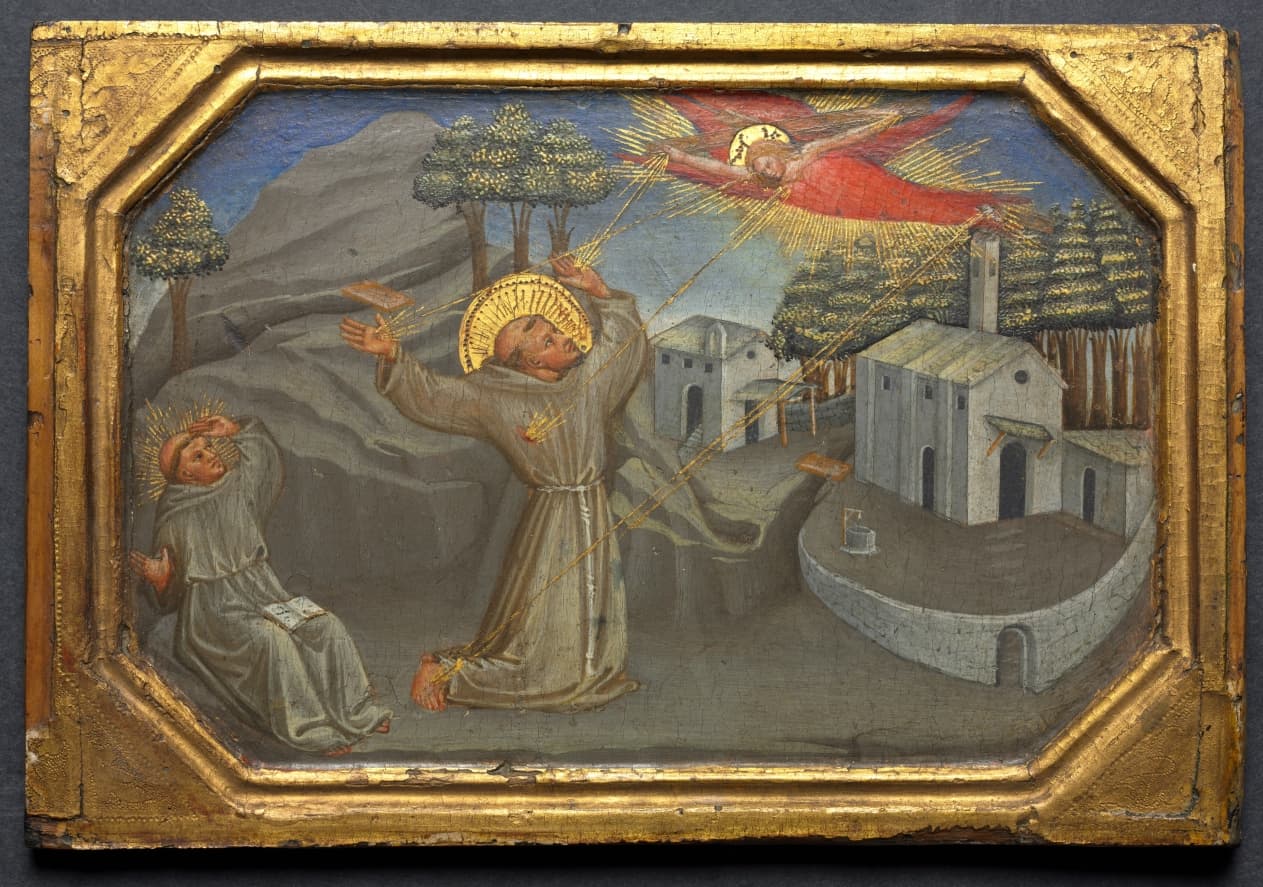
c. 1430 · Italy
St. Francis of Assisi Receiving the Stigmata
Bicci di Lorenzo (Italian, 1373–1452) · tempera and gold on wood
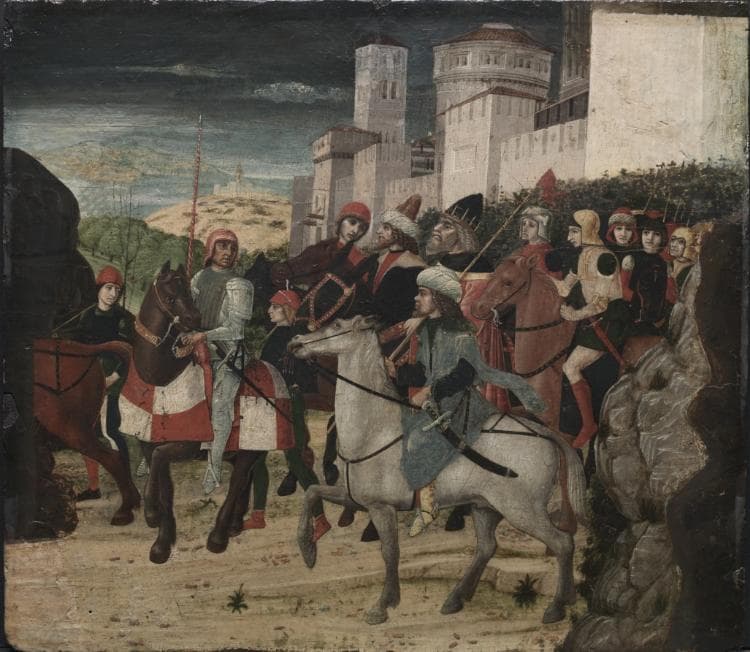
c. 1450–1500 · Italy, Padua, 15th century
Procession of the Magi
Bernardo Parentino (Italian) · tempera on wood
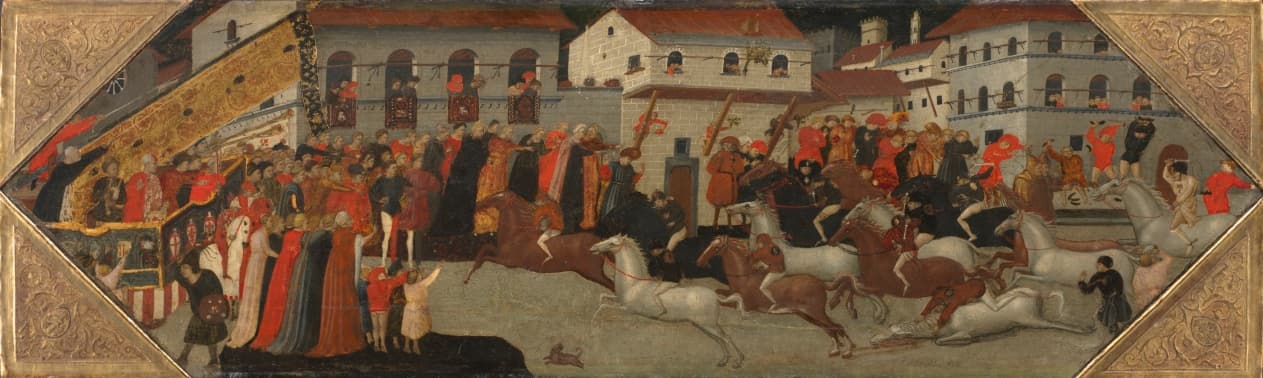
1418 · Italy, Florence
Panel from a Cassone: The Race of the Palio in the Streets of Florence
Giovanni Francesco Toscani (Italian, c. 1380–1430) · tempera and gold on wood
c. 1460 · Italy, Florence
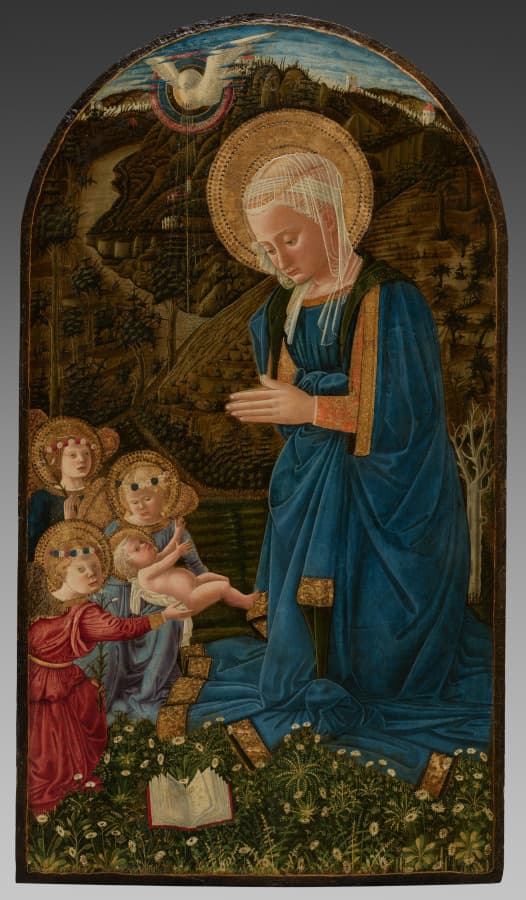
Virgin and Child with Angels
Fra Filippo Lippi (Italian, c. 1406–1469) · tempera and gold on wood panel
Ready to describe what you want in your own space?
Start an artwork inquiry ↗