Painting study · Tempera
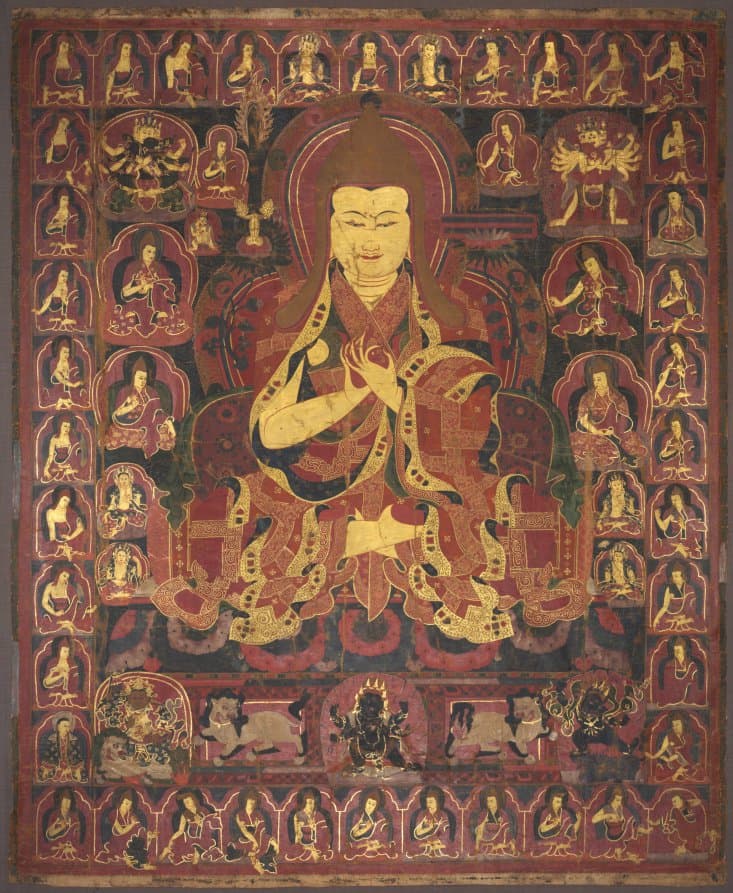
Tsong Khapa, Founder of the Geluk Orderc. 1440–70 · Study 1981.33
Artist not recorded
c. 1440–70
Recorded as Gum tempera and gold on cotton, this vertical work measures 75 × 91.5 cm using the museum’s overall dimensions. Explore the museum’s context and compare the format with a wall of your choice.
Museum collection reference. This work is not offered for sale by Physical Art For Crypto. Museum attribution does not imply a partnership or endorsement.
Context from the museum
The Buddhist order to which the Dalai Lamas belong was founded by Tsong Khapa (1357–1419), whose image is seen here as the large central figure holding his hands in the teaching mudra. He wears the pointed golden hat that is the insignia for monks of the Geluk order. At the level of his ears are the sword and book, emblems of Manjushri, the bodhisattva of wisdom. These emblems allude to the Tibetan Buddhist tradition that accorded Tsong Khapa the status of being an emanation of Manjushri. This extraordinary, sumptuously rendered painting, made only decades after his death, retains elements of portraiture in the facial features that become formalized in later works, especially from the mid-1600s onward, when the Geluk monks dominated the Tibetan theocracy. He is surrounded by lineage masters, many in lively gestures of debate, whose analyses of doctrines and practices led to Tsong Khapa's final formulation of the Lam Rim text on the stages of the path to enlightenment, which is foundational to the Geluk order.
Museum description reproduced from its CC0 open-access record. Read the original catalog entry.
Read the dimensions before the image
The selected overall measurement for Tsong Khapa, Founder of the Geluk Order is 75 cm wide and 91.5 cm high, equivalent to approximately 29.5 × 36.0 inches. Dividing width by height gives a format ratio of 0.82:1. The rectangular bounding area is 0.69 square meters; it describes the measured footprint, not the amount of paint or the monetary value.
On an illustrative 300 cm wall, the recorded width occupies 25.0% of the span before adding a frame. A centered placement leaves approximately 112.5 cm on each side before adding a frame. These are calculations by Physical Art For Crypto using museum measurements. They are not the museum’s display recommendations.
Questions to bring to your own collection
With Tsong Khapa, Founder of the Geluk Order in view, identify one feature you can point to, then distinguish what the museum records from your personal response. Keep its medium, Gum tempera and gold on cotton, in your notes when comparing contemporary works.
- Which part of this vertical composition catches your eye first?
- Would a 75 cm width still suit the space after allowing for furniture and a frame?
- What surface detail would you need to see in person or in a close photograph?
Explore physical scale
How large would this format feel on your wall?
Use this museum work’s recorded format as a reference. Adjust a blank wall and optional frame allowance to compare proportions. The museum painting is an educational reference and is not for sale here.
Calculation: outside width = recorded width + twice your frame allowance. This is a proportion study, not an installation assessment. It excludes furniture, hardware, load capacity, depth and delivery clearance. The display image may include margins absent from the recorded measurement.
Compare formats with the studio collection
These Lei-Kol works have the closest width-to-height ratios in the current catalog. This is a geometry comparison, not a claim of artistic similarity, equivalent value, or association with the museum artist.
| Painting | Width × height | Format ratio | USD catalog price |
|---|---|---|---|
| Blood Moon | 30 × 40 in | 0.75:1 | $1,199 |
| Blue Denim | 48 × 48 in | 1.00:1 | $1,699 |
| Mushrooms | 48 × 48 in | 1.00:1 | $2,399 |
Availability and delivery costs must be confirmed for the individual order.
Related studies
c. 1236–1310 · Central Tibet
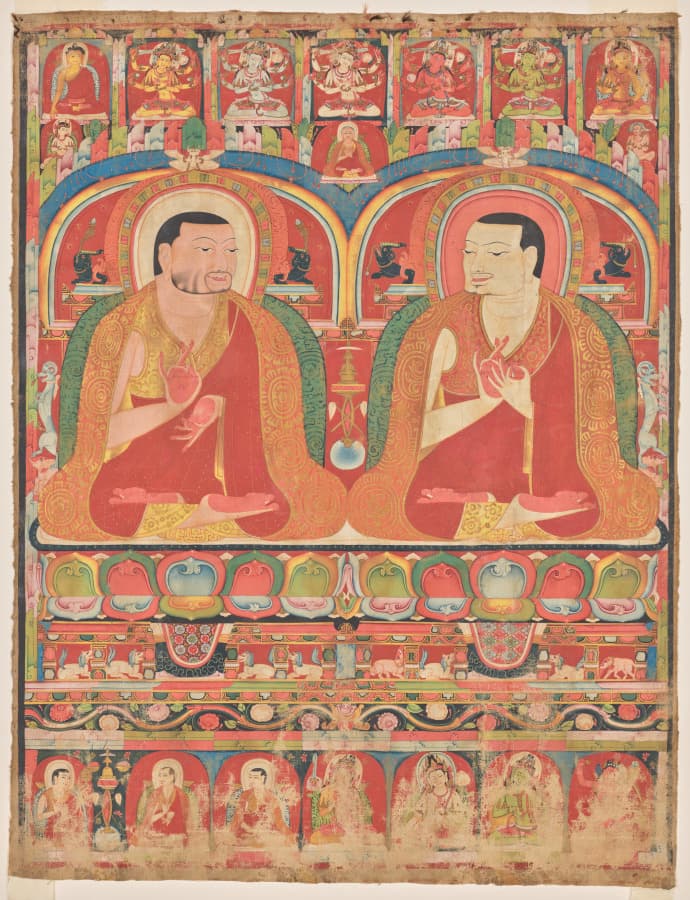
Portraits of Two Lineage Masters of the Kagyu Order: Phagmo Drupa (1110–1170) and Tashipel (1142–1210)
Artist not recorded · Gum tempera on sized cotton
c. 1430 · Italy
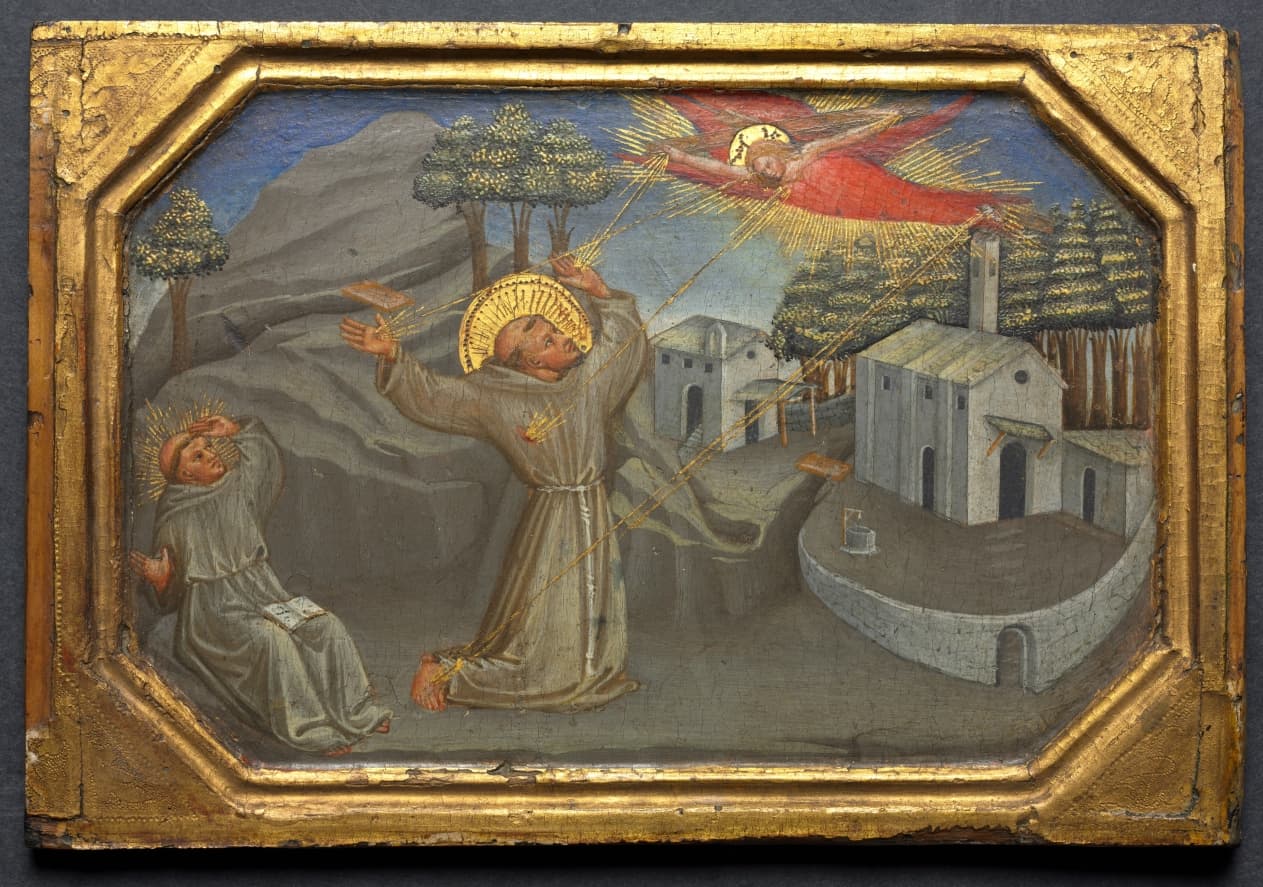
St. Francis of Assisi Receiving the Stigmata
Bicci di Lorenzo (Italian, 1373–1452) · tempera and gold on wood
c. 1450–1500 · Italy, Padua, 15th century
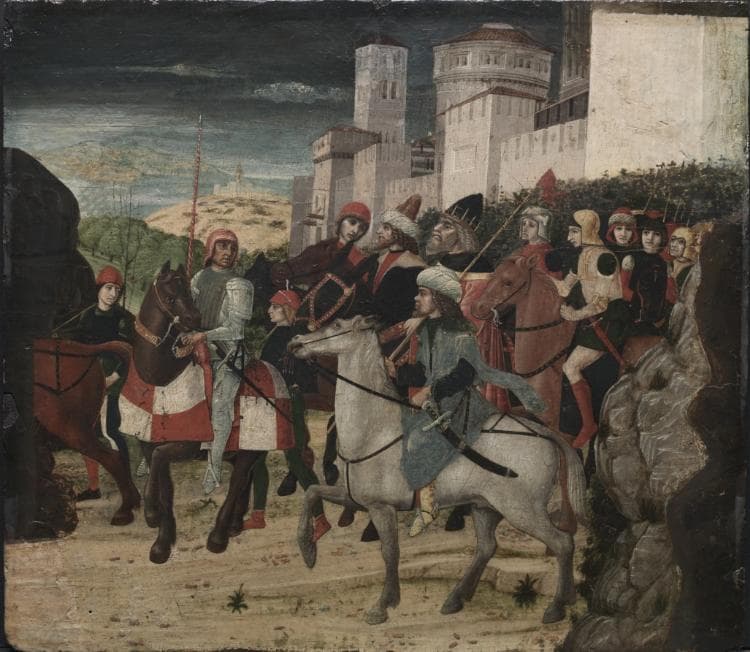
Procession of the Magi
Bernardo Parentino (Italian) · tempera on wood
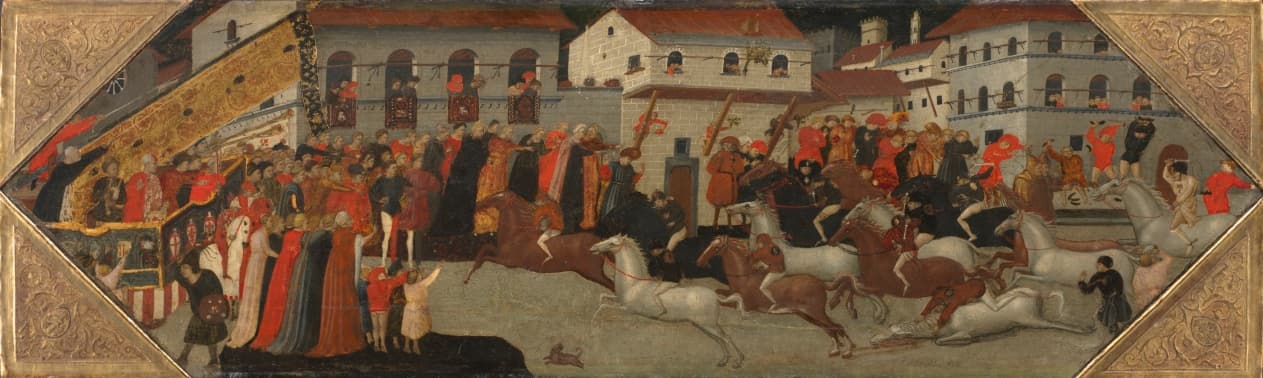
1418 · Italy, Florence
Panel from a Cassone: The Race of the Palio in the Streets of Florence
Giovanni Francesco Toscani (Italian, c. 1380–1430) · tempera and gold on wood
Ready to describe what you want in your own space?
Start an artwork inquiry ↗