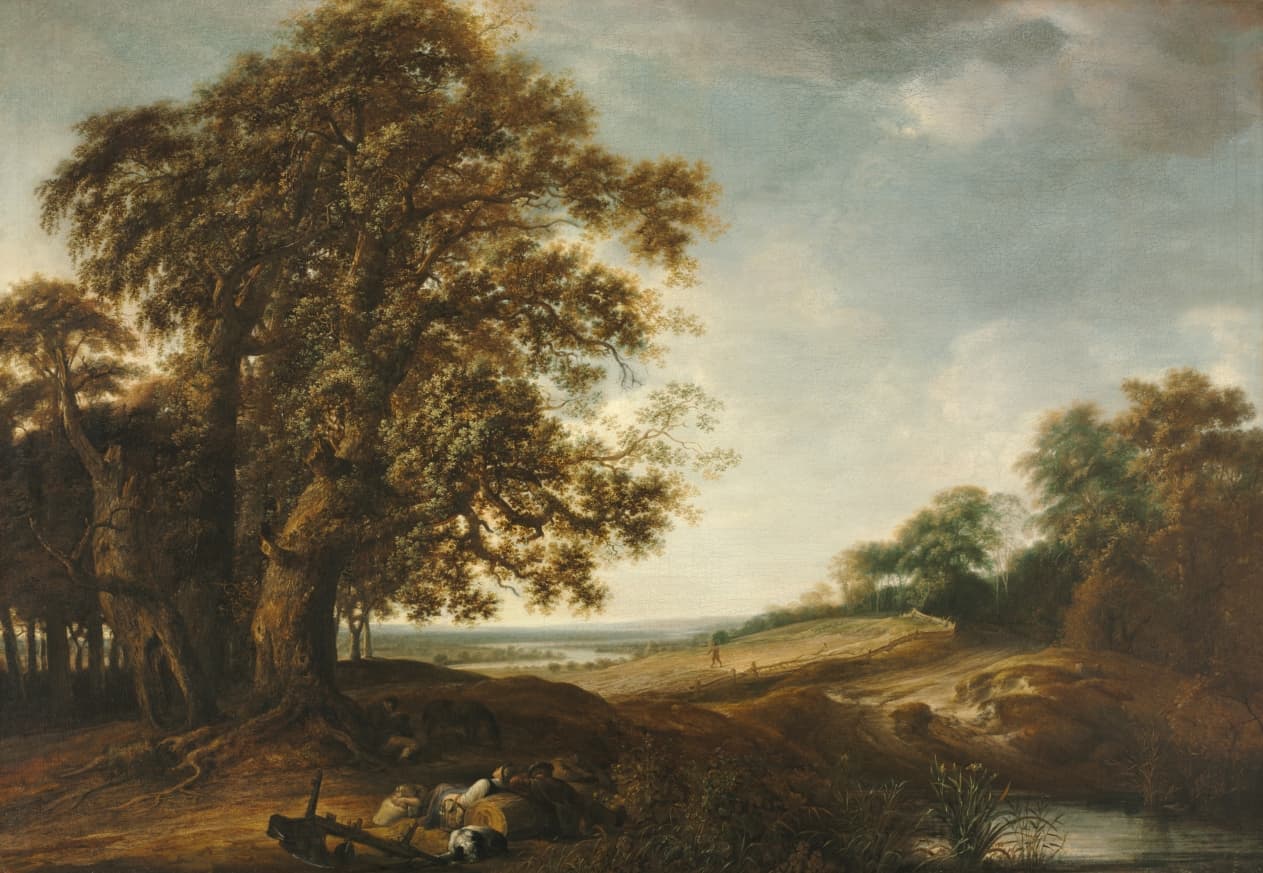
Painting study · Oil painting
Sleeping Peasants near Fields (Parable of the Weeds)1650–53 · Study 1975.76
Simon de Vlieger (Dutch, 1601–1653)
1650–53
Recorded as oil on canvas, this horizontal work measures 130.4 × 90.4 cm using the museum’s unframed dimensions. Explore the museum’s context and compare the format with a wall of your choice.
Museum collection reference. This work is not offered for sale by Physical Art For Crypto. Museum attribution does not imply a partnership or endorsement.
Context from the museum
During the 1600s Protestant leaders denounced visual representations, in a belief that a strict understanding of the scriptures was the only way to achieve salvation. As a result, Protestants did not generally commission religious images. However, where religious painting did appear, they often depicted verses from the Bible with strict didactic values, such as Sleeping Peasants near Fields (Parable of the Weeds). The subject of this painting is the Parable of the Weeds from Matthew 13:24-30. Simon de Vlieger has illustrated the point in the story where the peasants sleep after sowing good seeds, and the enemy, depicted here as a satyr, mixes in bad seeds in the fields as well. When the weeds begin to grow, confused, the peasants ask the farmer if they should remove the seeds. The farmer replies that they should let the weeds and wheat grow together, and he will destroy the weeds after the harvest. The lesson of the story is that good and evil people often mix together; but in the end the pious will prevail and the wicked will be destroyed.
Museum description reproduced from its CC0 open-access record. Read the original catalog entry.
Read the dimensions before the image
The selected unframed measurement for Sleeping Peasants near Fields (Parable of the Weeds) is 130.4 cm wide and 90.4 cm high, equivalent to approximately 51.3 × 35.6 inches. Dividing width by height gives a format ratio of 1.44:1. The rectangular bounding area is 1.18 square meters; it describes the measured footprint, not the amount of paint or the monetary value.
On an illustrative 300 cm wall, the recorded width occupies 43.5% of the span before adding a frame. A centered placement leaves approximately 84.8 cm on each side before adding a frame. These are calculations by Physical Art For Crypto using museum measurements. They are not the museum’s display recommendations.
Questions to bring to your own collection
With Sleeping Peasants near Fields (Parable of the Weeds) in view, identify one feature you can point to, then distinguish what the museum records from your personal response. Keep its medium, oil on canvas, in your notes when comparing contemporary works.
- Which part of this horizontal composition catches your eye first?
- Would a 130.4 cm width still suit the space after allowing for furniture and a frame?
- What surface detail would you need to see in person or in a close photograph?
Explore physical scale
How large would this format feel on your wall?
Use this museum work’s recorded format as a reference. Adjust a blank wall and optional frame allowance to compare proportions. The museum painting is an educational reference and is not for sale here.
Calculation: outside width = recorded width + twice your frame allowance. This is a proportion study, not an installation assessment. It excludes furniture, hardware, load capacity, depth and delivery clearance. The display image may include margins absent from the recorded measurement.
Compare formats with the studio collection
These Lei-Kol works have the closest width-to-height ratios in the current catalog. This is a geometry comparison, not a claim of artistic similarity, equivalent value, or association with the museum artist.
| Painting | Width × height | Format ratio | USD catalog price |
|---|---|---|---|
| Bipolar | 60 × 48 in | 1.25:1 | $3,499 |
| Brick and Mortar | 60 × 48 in | 1.25:1 | $3,499 |
| Dominion | 60 × 48 in | 1.25:1 | $3,499 |
Availability and delivery costs must be confirmed for the individual order.
Related studies
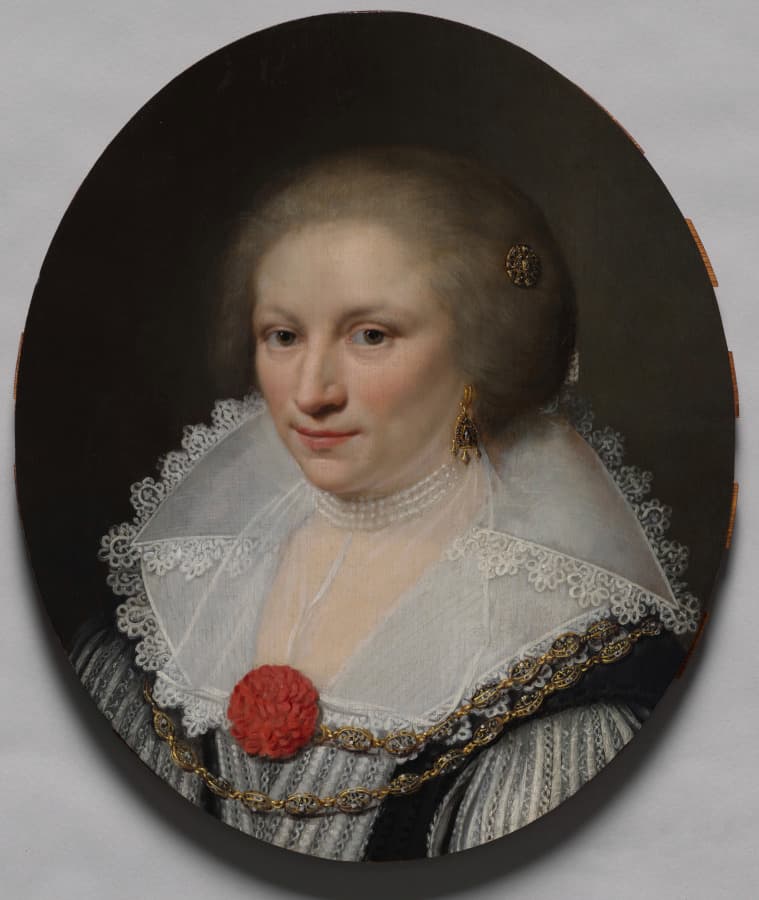
1620s · Netherlands
Portrait of a Woman
Jan Anthonisz. van Ravesteyn (Dutch, c. 1570–1657) · oil on wood
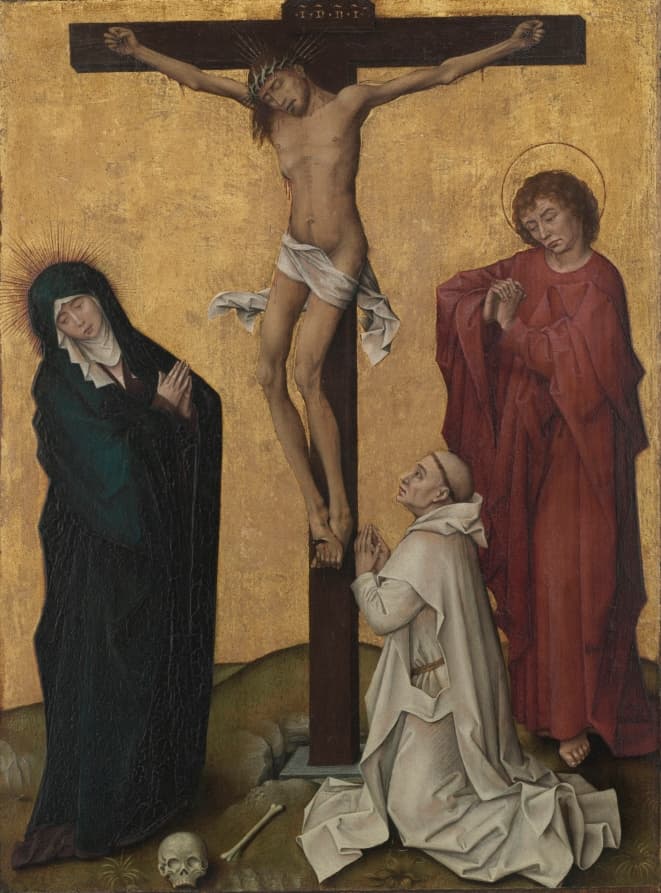
1460 · Netherlands
The Crucifixion with a Carthusian Monk
Rogier van der Weyden (Flemish, c. 1399–1464) · oil and gold on wood
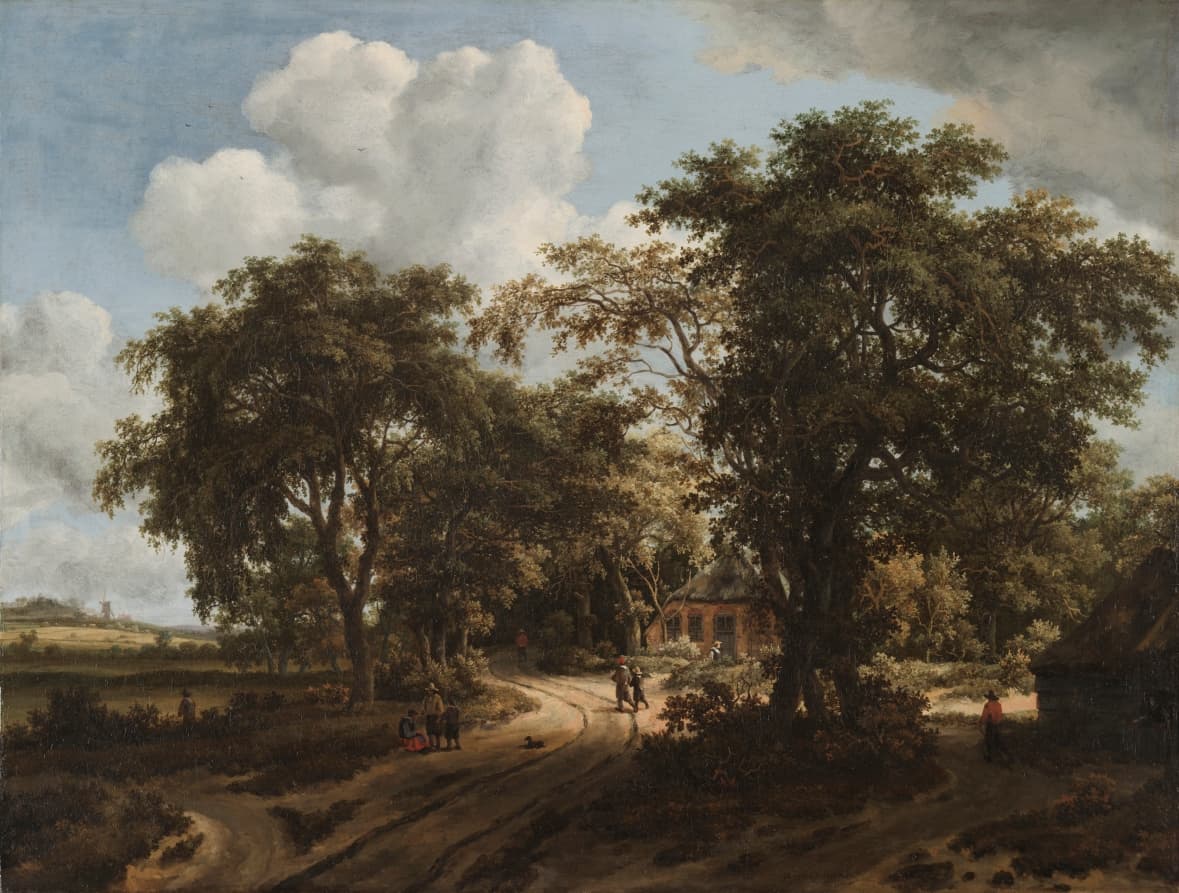
c. 1662 · Netherlands
A Cottage in the Woods
Meindert Hobbema (Dutch, 1638–1709) · oil on canvas
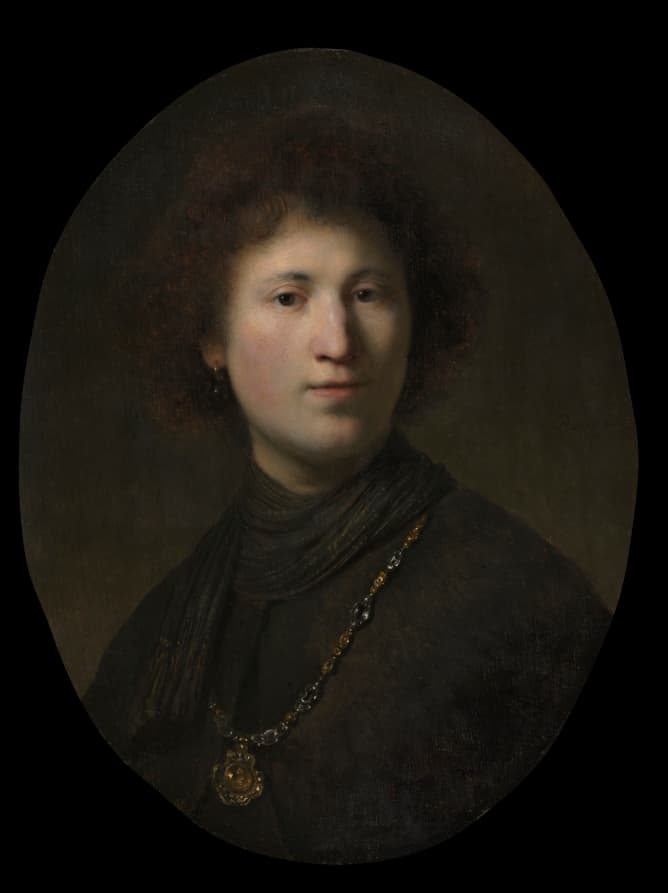
c. 1629 or 1632 · Netherlands
A Young Man with a Chain
Rembrandt van Rijn (Dutch, 1606–1669); Studio · oil on wood
Ready to describe what you want in your own space?
Start an artwork inquiry ↗