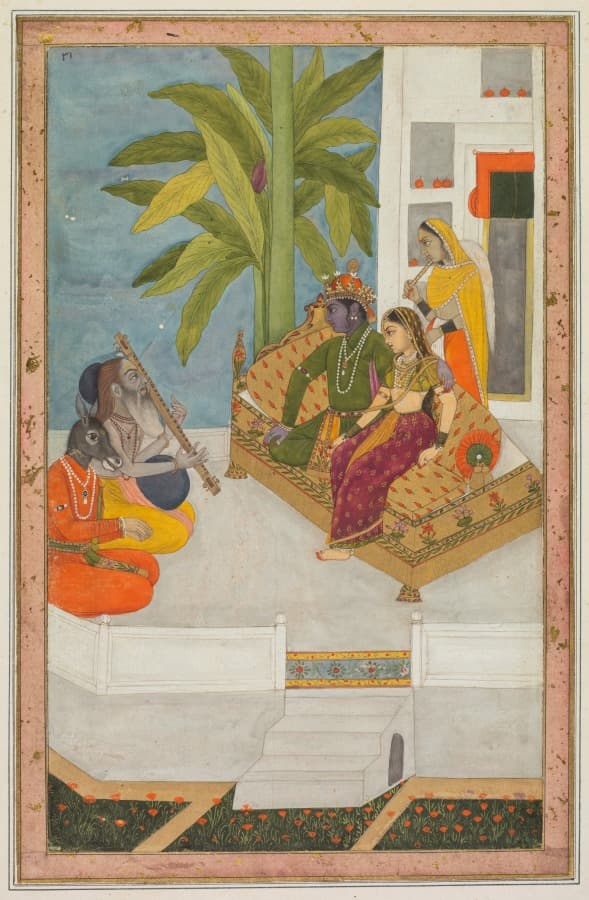
Painting study · Tempera
Shri Raga: An Illustration from a Ragamala Seriesc. 1740 · Study 2013.339
Artist not recorded
c. 1740
Recorded as Gum tempera and gold on paper, this vertical work measures 15 × 24.2 cm using the museum’s painting only dimensions. Explore the museum’s context and compare the format with a wall of your choice.
Museum collection reference. This work is not offered for sale by Physical Art For Crypto. Museum attribution does not imply a partnership or endorsement.
Context from the museum
The verse associated with Shri Raga corresponds closely with this scene: His body, bluish in hue, is marvelously built. He is always graced with the company of auspicious Shri Lakshmi. He sits on a throne of gold, and before him Narada sits playing on his vina. He has decorated himself with garlands of flowers, and also with ornaments set with jewels. Shri raga is thus conceived in sentiment, of whom all learned men sing praises. The horse-headed figure claps his hands and accompanies the sage, wearing saffron garments and playing on the stringed instrument called a vina. He may be derived from the courtly commander of Indra, seen in the Jain manuscripts. Poppies bloom in the formal garden below the pure white terrace, and they are echoed by the oranges set on the windows of the house at the upper right.
Museum description reproduced from its CC0 open-access record. Read the original catalog entry.
Read the dimensions before the image
The selected painting only measurement for Shri Raga: An Illustration from a Ragamala Series is 15 cm wide and 24.2 cm high, equivalent to approximately 5.9 × 9.5 inches. Dividing width by height gives a format ratio of 0.62:1. The rectangular bounding area is 0.04 square meters; it describes the measured footprint, not the amount of paint or the monetary value.
On an illustrative 300 cm wall, the recorded width occupies 5.0% of the span before adding a frame. A centered placement leaves approximately 142.5 cm on each side before adding a frame. These are calculations by Physical Art For Crypto using museum measurements. They are not the museum’s display recommendations.
Questions to bring to your own collection
With Shri Raga: An Illustration from a Ragamala Series in view, identify one feature you can point to, then distinguish what the museum records from your personal response. Keep its medium, Gum tempera and gold on paper, in your notes when comparing contemporary works.
- Which part of this vertical composition catches your eye first?
- Would a 15 cm width still suit the space after allowing for furniture and a frame?
- What surface detail would you need to see in person or in a close photograph?
Explore physical scale
How large would this format feel on your wall?
Use this museum work’s recorded format as a reference. Adjust a blank wall and optional frame allowance to compare proportions. The museum painting is an educational reference and is not for sale here.
Calculation: outside width = recorded width + twice your frame allowance. This is a proportion study, not an installation assessment. It excludes furniture, hardware, load capacity, depth and delivery clearance. The display image may include margins absent from the recorded measurement.
Compare formats with the studio collection
These Lei-Kol works have the closest width-to-height ratios in the current catalog. This is a geometry comparison, not a claim of artistic similarity, equivalent value, or association with the museum artist.
| Painting | Width × height | Format ratio | USD catalog price |
|---|---|---|---|
| Graffiti | 30 × 48 in | 0.63:1 | $2,199 |
| Gray Day | 24 × 36 in | 0.67:1 | $1,199 |
| Waterfalls | 24 × 36 in | 0.67:1 | $999 |
Availability and delivery costs must be confirmed for the individual order.
Related studies
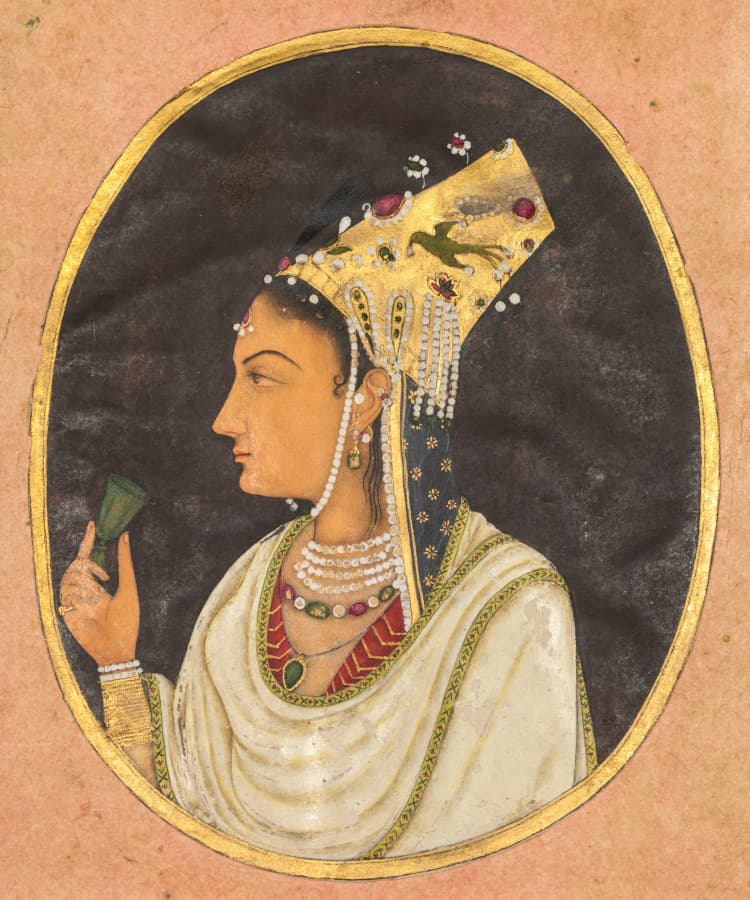
c. 1740–50 · India, Mughal, 18th century
Oval portrait of a woman in a Chaghtai hat
Artist not recorded · Gum tempera and gold on paper
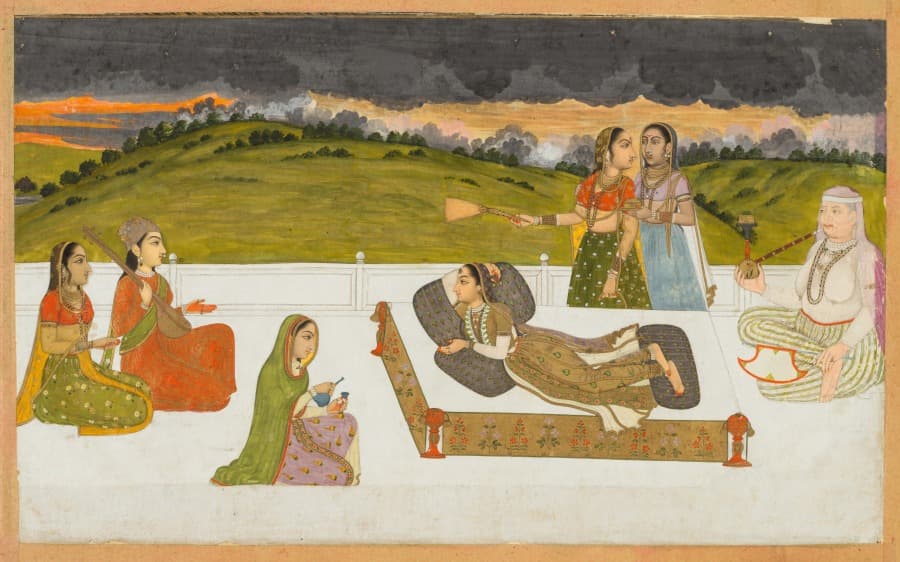
c. 1730–1740 · India, Mughal, 18th century
A princess reclining on a terrace with attendants
Artist not recorded · Gum tempera and gold on paper
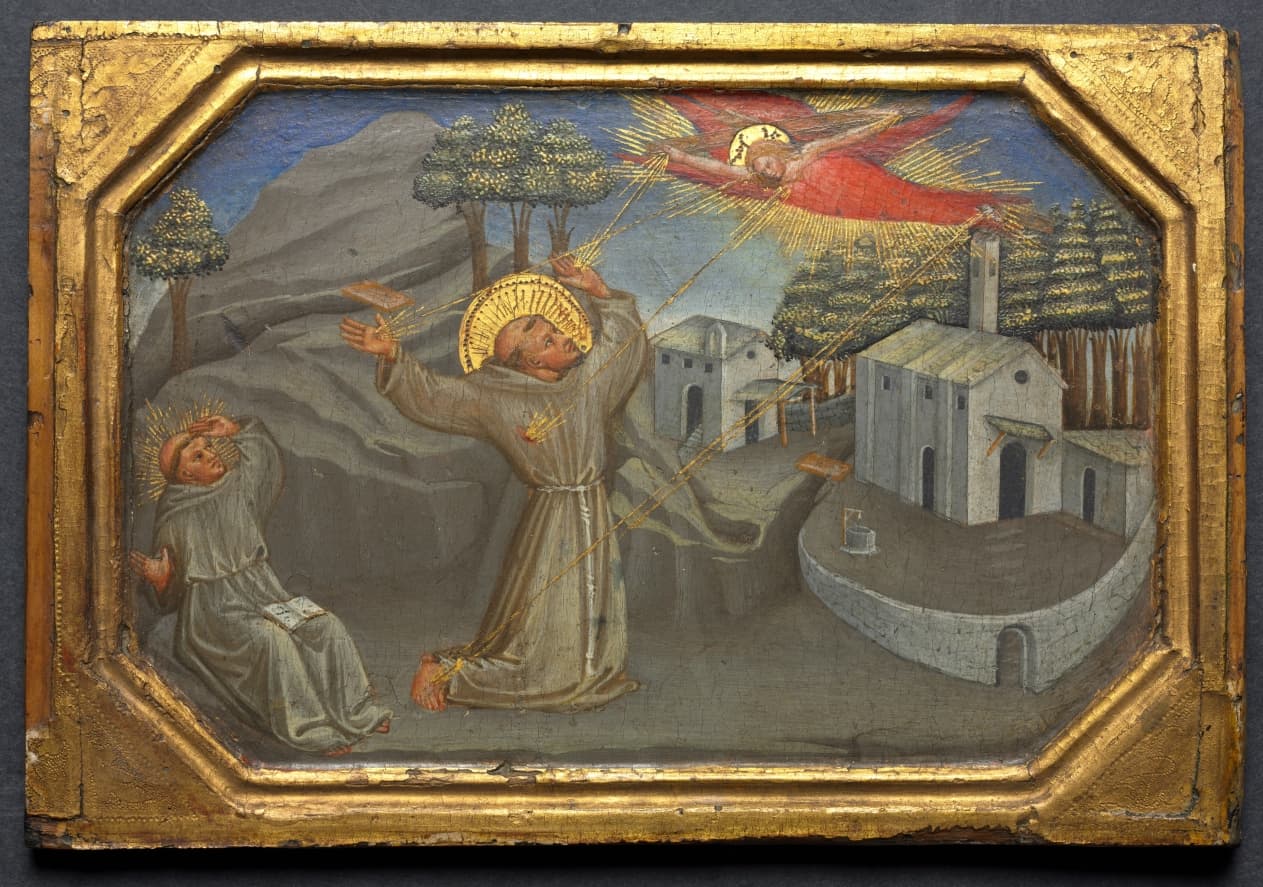
c. 1430 · Italy
St. Francis of Assisi Receiving the Stigmata
Bicci di Lorenzo (Italian, 1373–1452) · tempera and gold on wood
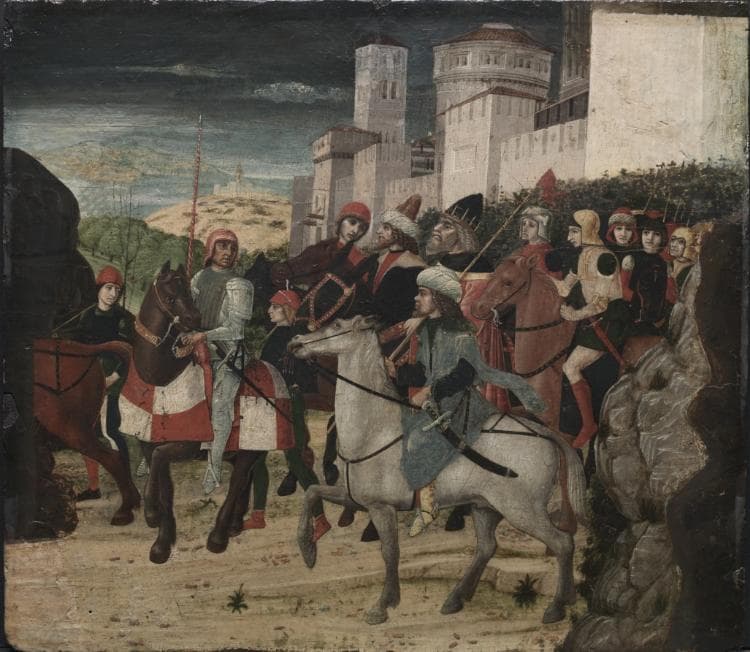
c. 1450–1500 · Italy, Padua, 15th century
Procession of the Magi
Bernardo Parentino (Italian) · tempera on wood
Ready to describe what you want in your own space?
Start an artwork inquiry ↗