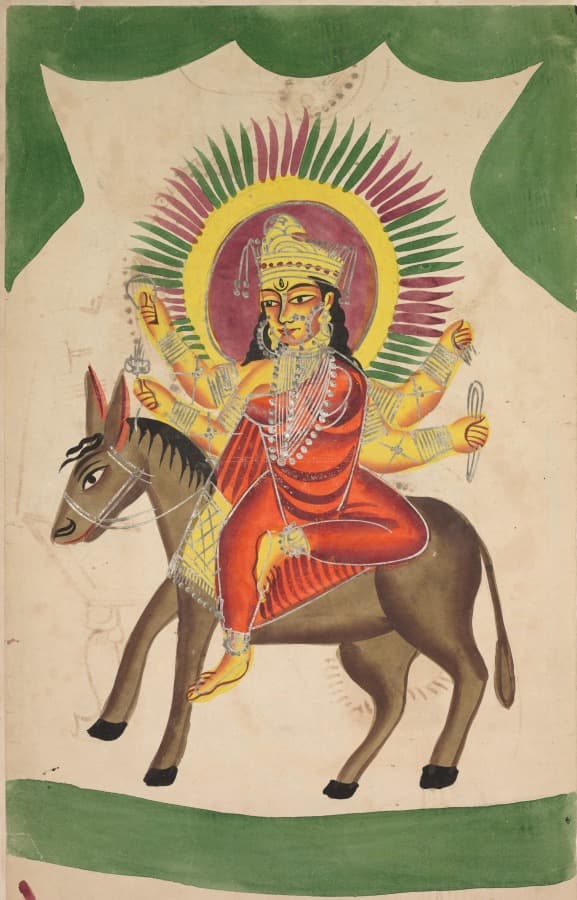
Painting study · Ink painting
Sheetaladevi: The Smallpox Goddess (recto), from a Kalighat albumc. 1890 · Study 2003.157.a
Artist not recorded
c. 1890
Recorded as Gum tempera, graphite, ink, and tin on paper, this vertical work measures 27.7 × 45.5 cm using the museum’s painting only dimensions. Explore the museum’s context and compare the format with a wall of your choice.
Museum collection reference. This work is not offered for sale by Physical Art For Crypto. Museum attribution does not imply a partnership or endorsement.
Context from the museum
Sheetala, the smallpox goddess, is simultaneously benevolent and dangerous: she can both protect and infect, bless and curse devotees with smallpox and other diseases. Persons scarred by smallpox are believed to have been graced by her. She is appeased so that she does not infect her worshippers. Her name, Sheetala, “Cool One,” refers to her birth out of a cooled sacrificial fire. The rippled curtains above her are suggestive of theatrical tableau and Sheetalapala (The Drama of Sheetala) that was performed in Bengal. She sits astride her vehicle ( vahana ), the donkey, regarded as an inauspicious animal.
Museum description reproduced from its CC0 open-access record. Read the original catalog entry.
Read the dimensions before the image
The selected painting only measurement for Sheetaladevi: The Smallpox Goddess (recto), from a Kalighat album is 27.7 cm wide and 45.5 cm high, equivalent to approximately 10.9 × 17.9 inches. Dividing width by height gives a format ratio of 0.61:1. The rectangular bounding area is 0.13 square meters; it describes the measured footprint, not the amount of paint or the monetary value.
On an illustrative 300 cm wall, the recorded width occupies 9.2% of the span before adding a frame. A centered placement leaves approximately 136.2 cm on each side before adding a frame. These are calculations by Physical Art For Crypto using museum measurements. They are not the museum’s display recommendations.
Questions to bring to your own collection
With Sheetaladevi: The Smallpox Goddess (recto), from a Kalighat album in view, identify one feature you can point to, then distinguish what the museum records from your personal response. Keep its medium, Gum tempera, graphite, ink, and tin on paper, in your notes when comparing contemporary works.
- Which part of this vertical composition catches your eye first?
- Would a 27.7 cm width still suit the space after allowing for furniture and a frame?
- What surface detail would you need to see in person or in a close photograph?
Explore physical scale
How large would this format feel on your wall?
Use this museum work’s recorded format as a reference. Adjust a blank wall and optional frame allowance to compare proportions. The museum painting is an educational reference and is not for sale here.
Calculation: outside width = recorded width + twice your frame allowance. This is a proportion study, not an installation assessment. It excludes furniture, hardware, load capacity, depth and delivery clearance. The display image may include margins absent from the recorded measurement.
Compare formats with the studio collection
These Lei-Kol works have the closest width-to-height ratios in the current catalog. This is a geometry comparison, not a claim of artistic similarity, equivalent value, or association with the museum artist.
| Painting | Width × height | Format ratio | USD catalog price |
|---|---|---|---|
| Graffiti | 30 × 48 in | 0.63:1 | $2,199 |
| Gray Day | 24 × 36 in | 0.67:1 | $1,199 |
| Waterfalls | 24 × 36 in | 0.67:1 | $999 |
Availability and delivery costs must be confirmed for the individual order.
Related studies
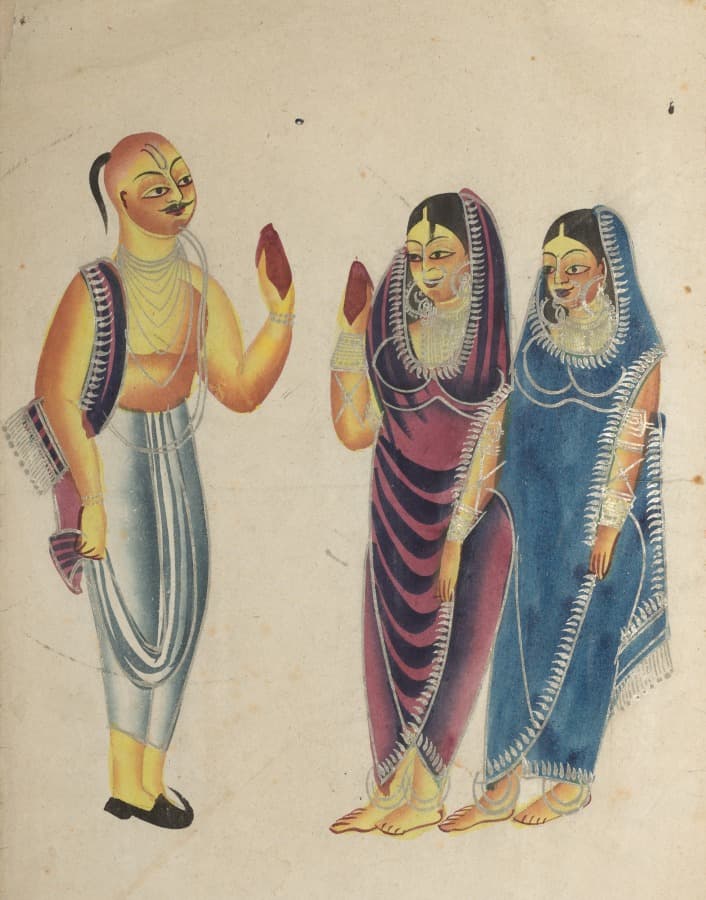
c. 1890 · Eastern India, Bengal, Kolkata, Kalighat
Vaishnava Devotee with Two Women
Artist not recorded · Gum tempera, graphite, ink, and tin on paper
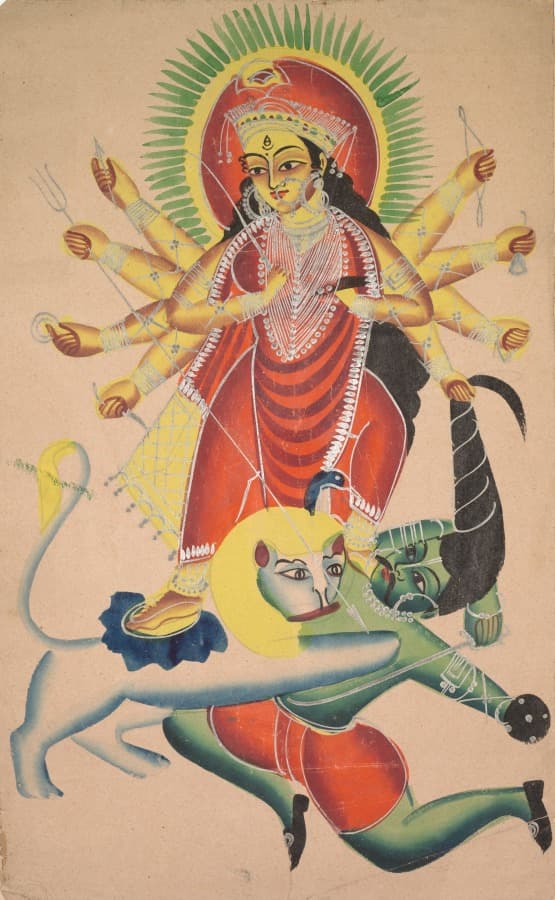
c. 1890 · Eastern India, Bengal, Kolkata, Kalighat
Durga Killing the Demon Mahisha
Artist not recorded · Gum tempera, graphite, ink, and tin on paper
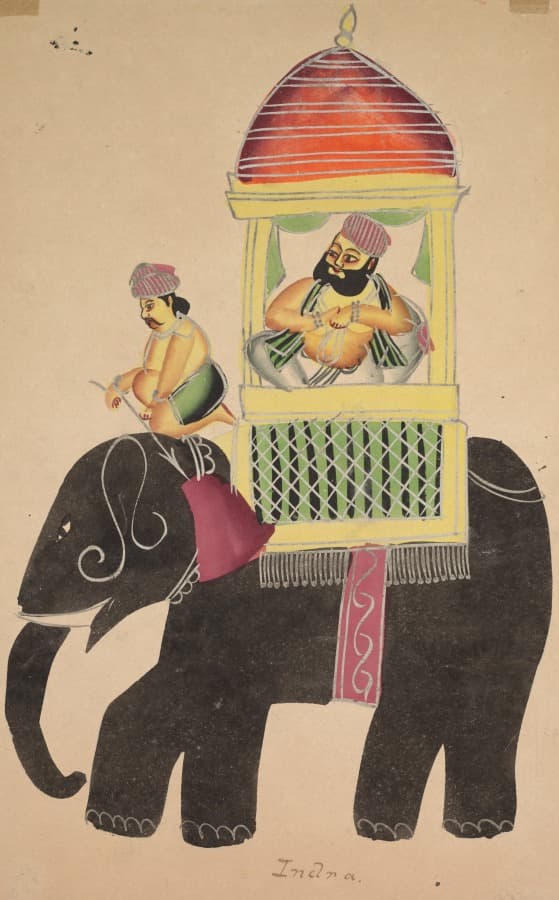
c. 1890 · Eastern India, Bengal, Kolkata, Kalighat
Mahant of Tarakeshwar Rides on an Elephant
Artist not recorded · Gum tempera, graphite, ink, and tin on paper
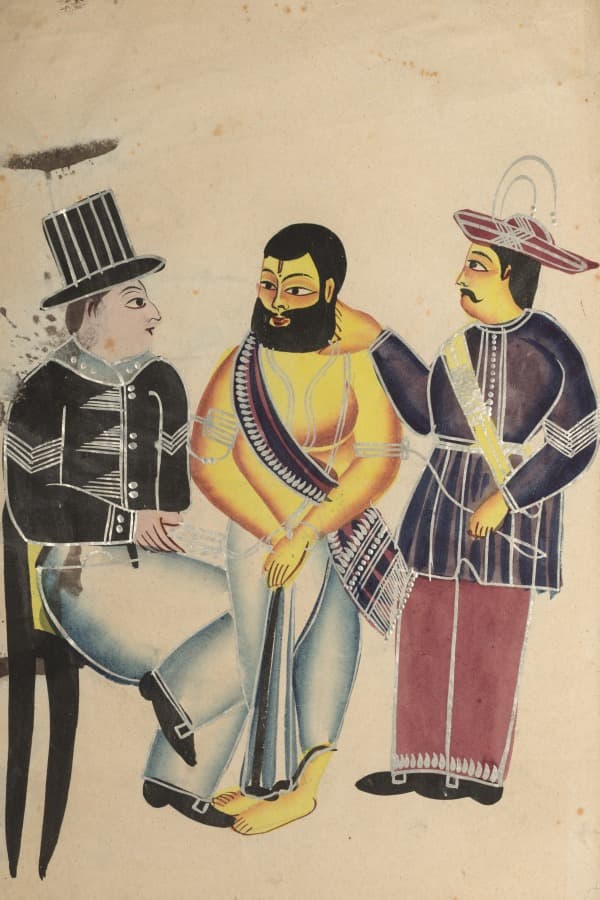
c. 1890 · Eastern India, Bengal, Kolkata, Kalighat
Jailer Receiving the Mahant of Tarakeshwar in Prison
Artist not recorded · Black ink, gum tempera, and tin paint, with graphite underdrawing on paper
Ready to describe what you want in your own space?
Start an artwork inquiry ↗