Painting study · Tempera
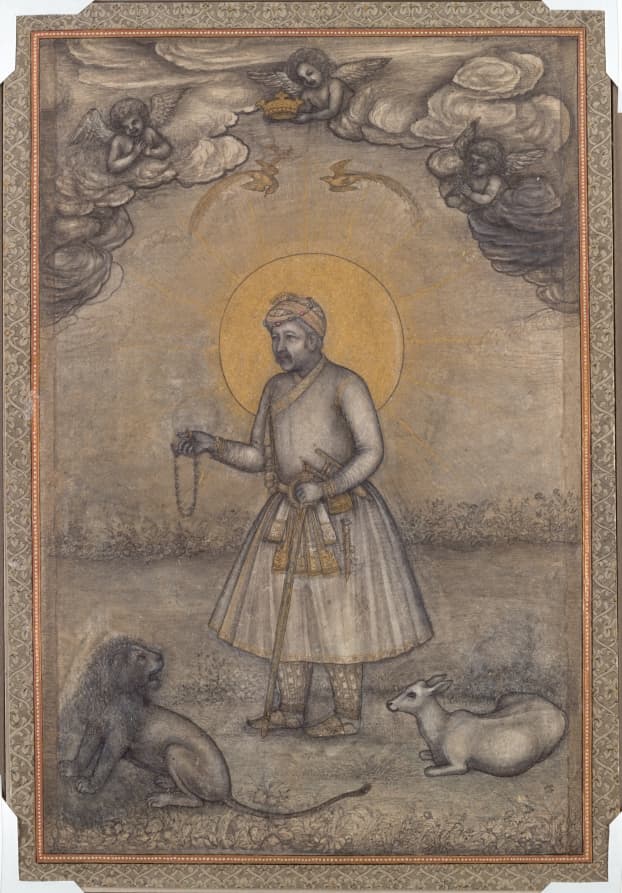
Portrait of the Aged Akbarc. 1640–50 · Study 1971.78
Govardhan (Indian, active c.1596–1645)
c. 1640–50
Recorded as Gum tempera and gold on paper, this vertical work measures 16.8 × 25.2 cm using the museum’s image dimensions. Explore the museum’s context and compare the format with a wall of your choice.
Museum collection reference. This work is not offered for sale by Physical Art For Crypto. Museum attribution does not imply a partnership or endorsement.
Context from the museum
The soulful modeling of Akbar’s aged but dignified face argues strongly in favor of the attribution of this work to the imperial court artist Govardhan. This posthumous portrait of the celebrated third Mughal emperor would have been made at the end of his career for Akbar’s grandson Shah Jahan, who reigned from 1626 to 1648. Shah Jahan glorifies his own august lineage by lionizing Akbar and having him portrayed in a formal, symbolic way that Akbar himself never would have commissioned. Christian angels in European style praise him from the heavens, while mythical birds of paradise swoop at the edge of the radiance emitted from the nimbus of the divine light of his rule. He originally grasped an orb, which was changed to a necklace. The sensitively articulated body of a young cow reclines at ease in the presence of a lion, indicating the harmony and peace of his noble rule. The artist used the dignified nim-qalam style of painted drawing with only touches of gold and hints of color. Heavy outlines were added at a later date, along with pinprick holes used for copying the composition onto another sheet of paper.
Museum description reproduced from its CC0 open-access record. Read the original catalog entry.
Read the dimensions before the image
The selected image measurement for Portrait of the Aged Akbar is 16.8 cm wide and 25.2 cm high, equivalent to approximately 6.6 × 9.9 inches. Dividing width by height gives a format ratio of 0.67:1. The rectangular bounding area is 0.04 square meters; it describes the measured footprint, not the amount of paint or the monetary value.
On an illustrative 300 cm wall, the recorded width occupies 5.6% of the span before adding a frame. A centered placement leaves approximately 141.6 cm on each side before adding a frame. These are calculations by Physical Art For Crypto using museum measurements. They are not the museum’s display recommendations.
Questions to bring to your own collection
With Portrait of the Aged Akbar in view, identify one feature you can point to, then distinguish what the museum records from your personal response. Keep its medium, Gum tempera and gold on paper, in your notes when comparing contemporary works.
- Which part of this vertical composition catches your eye first?
- Would a 16.8 cm width still suit the space after allowing for furniture and a frame?
- What surface detail would you need to see in person or in a close photograph?
Explore physical scale
How large would this format feel on your wall?
Use this museum work’s recorded format as a reference. Adjust a blank wall and optional frame allowance to compare proportions. The museum painting is an educational reference and is not for sale here.
Calculation: outside width = recorded width + twice your frame allowance. This is a proportion study, not an installation assessment. It excludes furniture, hardware, load capacity, depth and delivery clearance. The display image may include margins absent from the recorded measurement.
Compare formats with the studio collection
These Lei-Kol works have the closest width-to-height ratios in the current catalog. This is a geometry comparison, not a claim of artistic similarity, equivalent value, or association with the museum artist.
| Painting | Width × height | Format ratio | USD catalog price |
|---|---|---|---|
| Gray Day | 24 × 36 in | 0.67:1 | $1,199 |
| Waterfalls | 24 × 36 in | 0.67:1 | $999 |
| Graffiti | 30 × 48 in | 0.63:1 | $2,199 |
Availability and delivery costs must be confirmed for the individual order.
Related studies
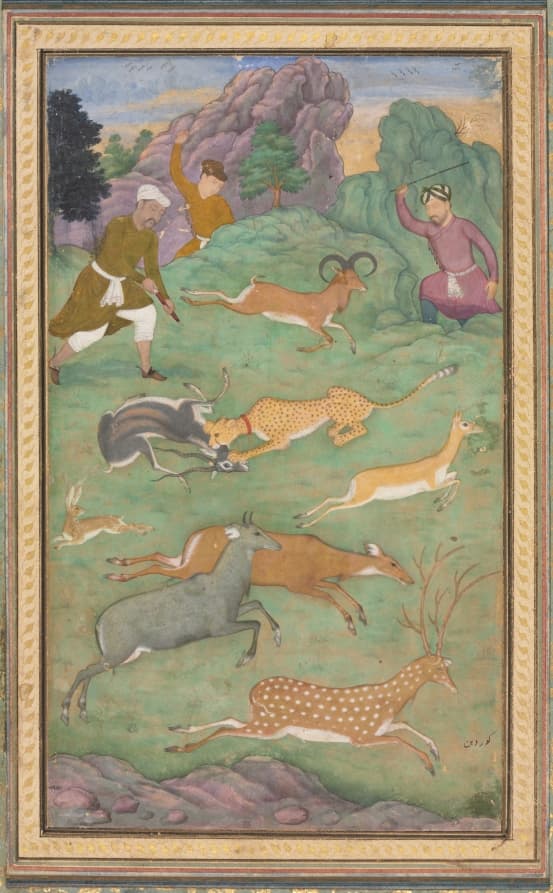
c. 1602–4 · Mughal India, Allahabad, made for Prince Salim (1569–1627)
Antelope and deer hunt
Govardhan (Indian, active c.1596–1645) · Gum tempera and gold on paper
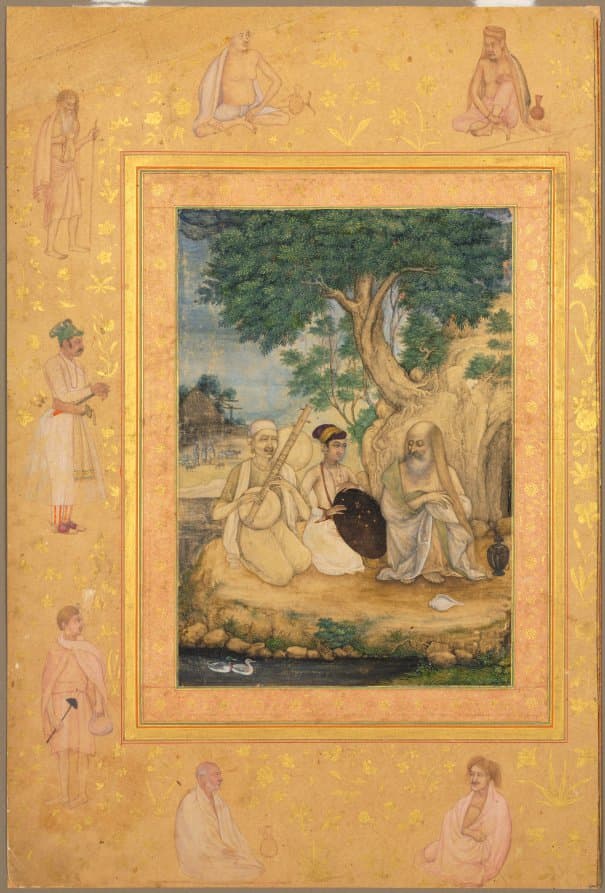
c. 1630 · India, Mughal court, reign of Shah Jahan (1628-1658), Mughal Dynasty (1526-1756)
Prince and ascetics, from the Late Shah Jahan Album
Govardhan (Indian, active c.1596–1645) · Gum tempera, ink, and gold on paper
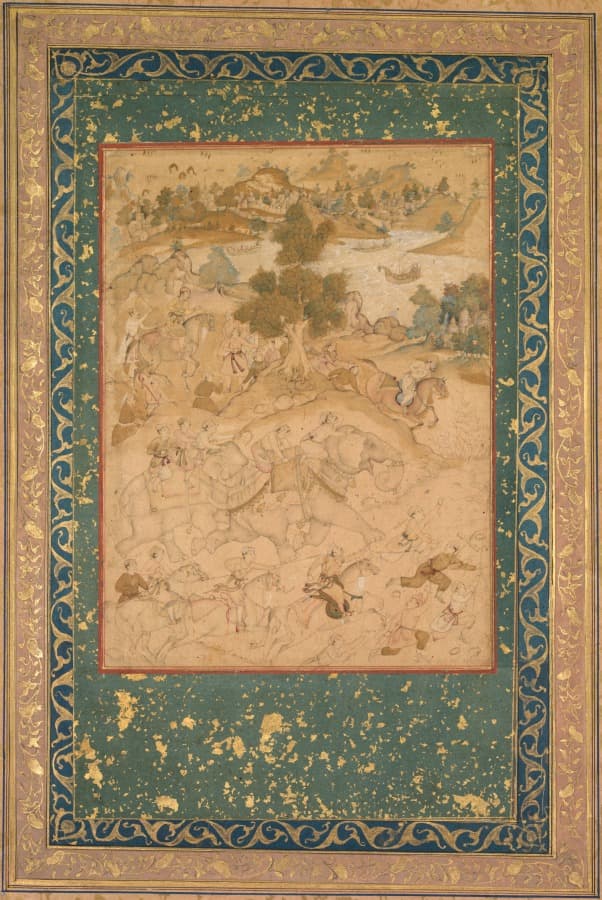
c. 1602–3; borders added c. 1700s · Mughal India
Akbar supervising the capture of wild elephants at Malwa in 1564, painting 90 from an Akbar-nama (Book of Akbar) of Abu’l Fazl (Indian 1551–1602)
Farukh Chela (Indian); Govardhan (Indian, active c.1596–1645); Dhanraj (Indian) · ink with use of colors and gold on paper, mounted on an album page with borders of gold-decorated buff and blue paper (recto); calligraphy by Faqir Ali (verso)
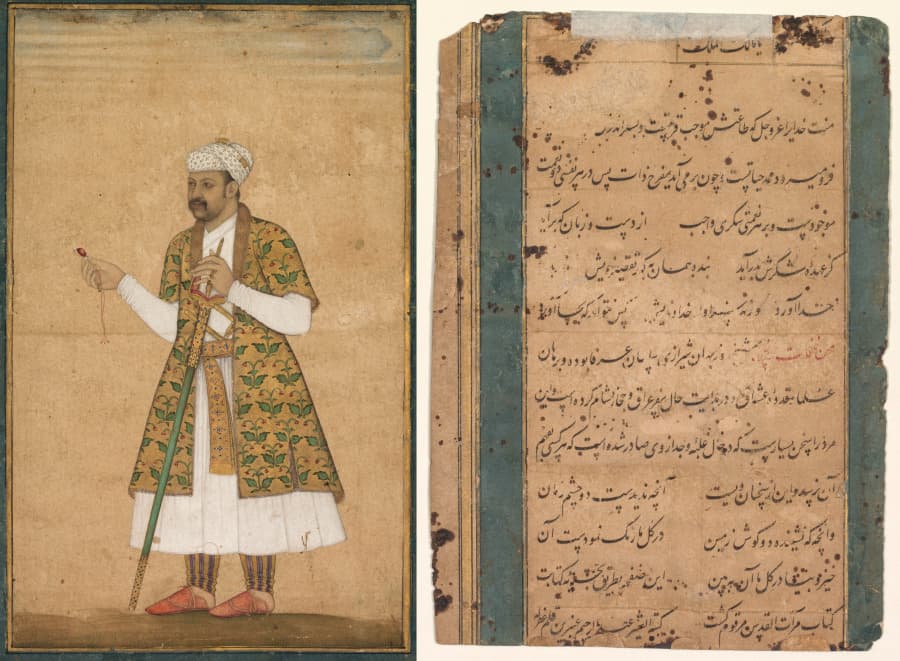
c. 1605–10 · Mughal India
A Courtier, Possibly Khan Alam, Holding a Spinel and a Deccan Sword
Govardhan (Indian, active c.1596–1645); Abd al-Rahim, the Anbarin-Qalam (Indian, active c. 1590–1630) · gum tempera, ink, and gold on paper, text on verso
Ready to describe what you want in your own space?
Start an artwork inquiry ↗