Painting study · Ink painting
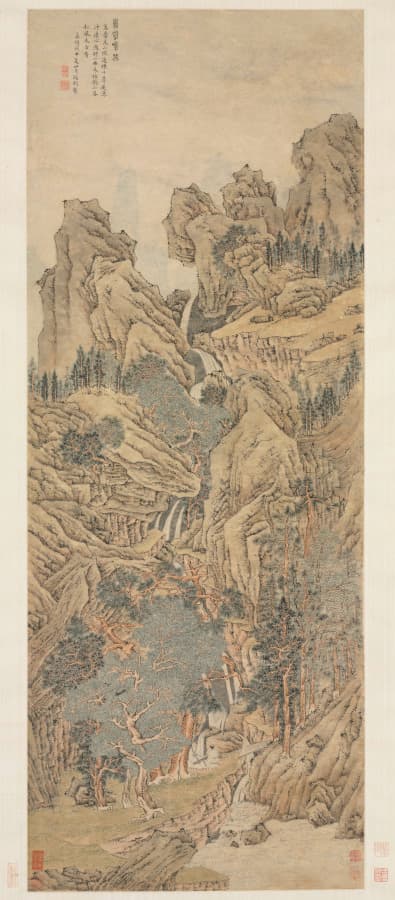
Playing the Qin in a Secluded Valley1548 · Study 1969.60
Wen Zhengming (Chinese, 1470–1559)
1548
Recorded as hanging scroll; ink and light color on paper, this vertical work measures 50.5 × 132 cm using the museum’s overall dimensions. Explore the museum’s context and compare the format with a wall of your choice.
Museum collection reference. This work is not offered for sale by Physical Art For Crypto. Museum attribution does not imply a partnership or endorsement.
Context from the museum
The poem inscribed in this painting reads: "Ten thousand layered lofty mountains are presented to the cultivated eye, A thousand feet of cascading falls cleanse the dusty heart. May the harmonies of my red-stringed tune Be the humble answer to the pine wind's ancient song." Different versions of this painting exist. Scholars have suggested that the solid renderings of the rock masses and the volumetric mountain configurations as seen here appear more characteristic of Lu Zhi 陸治 (1496–1576), Wen Zhengming's pupil.
Museum description reproduced from its CC0 open-access record. Read the original catalog entry.
A detail to notice
In paintings, Chinese literati often play the instrument in a landscape setting, as the sound of the qin symbolizes harmony between man and nature.
Observation supplied by the Cleveland Museum of Art.
Read the dimensions before the image
The selected overall measurement for Playing the Qin in a Secluded Valley is 50.5 cm wide and 132 cm high, equivalent to approximately 19.9 × 52.0 inches. Dividing width by height gives a format ratio of 0.38:1. The rectangular bounding area is 0.67 square meters; it describes the measured footprint, not the amount of paint or the monetary value.
On an illustrative 300 cm wall, the recorded width occupies 16.8% of the span before adding a frame. A centered placement leaves approximately 124.8 cm on each side before adding a frame. These are calculations by Physical Art For Crypto using museum measurements. They are not the museum’s display recommendations.
Questions to bring to your own collection
With Playing the Qin in a Secluded Valley in view, identify one feature you can point to, then distinguish what the museum records from your personal response. Keep its medium, hanging scroll; ink and light color on paper, in your notes when comparing contemporary works.
- Which part of this vertical composition catches your eye first?
- Would a 50.5 cm width still suit the space after allowing for furniture and a frame?
- What surface detail would you need to see in person or in a close photograph?
Explore physical scale
How large would this format feel on your wall?
Use this museum work’s recorded format as a reference. Adjust a blank wall and optional frame allowance to compare proportions. The museum painting is an educational reference and is not for sale here.
Calculation: outside width = recorded width + twice your frame allowance. This is a proportion study, not an installation assessment. It excludes furniture, hardware, load capacity, depth and delivery clearance. The display image may include margins absent from the recorded measurement.
Compare formats with the studio collection
These Lei-Kol works have the closest width-to-height ratios in the current catalog. This is a geometry comparison, not a claim of artistic similarity, equivalent value, or association with the museum artist.
| Painting | Width × height | Format ratio | USD catalog price |
|---|---|---|---|
| Cheesecake | 24 × 48 in | 0.50:1 | $1,099 |
| Riptide | 24 × 48 in | 0.50:1 | $1,199 |
| Graffiti | 30 × 48 in | 0.63:1 | $2,199 |
Availability and delivery costs must be confirmed for the individual order.
Related studies
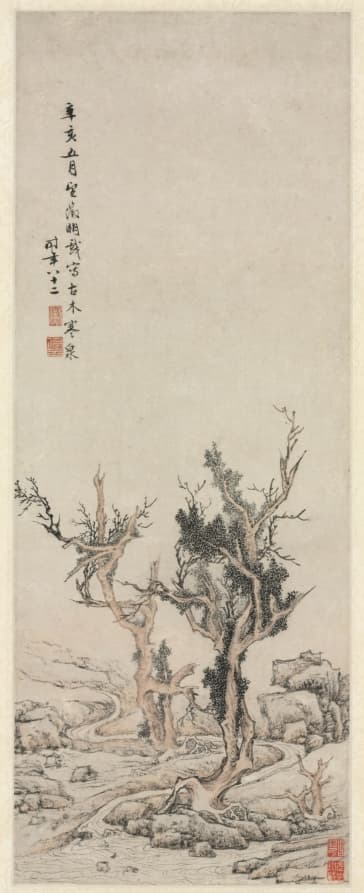
1551 · China, Ming dynasty (1368–1644)
Old Trees by a Wintry Brook
Wen Zhengming (Chinese, 1470–1559) · hanging scroll, ink and light color on paper
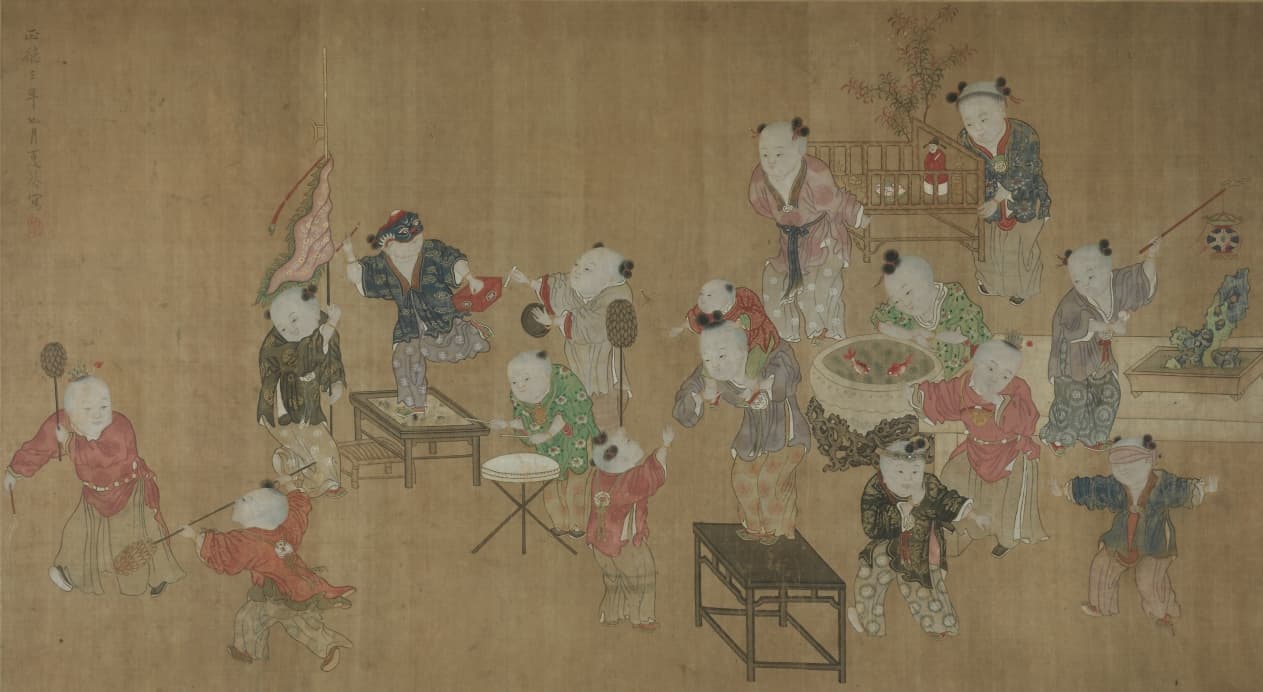
1508 · China, Ming dynasty (1368–1644)
Children at Play
Xia Kui (Chinese, active c. 1405–1445) · hanging scroll; ink and color on silk

1368–1644 · China, Ming dynasty (1368–1644)
Landscape
Artist not recorded · handscroll; ink and slight color on silk
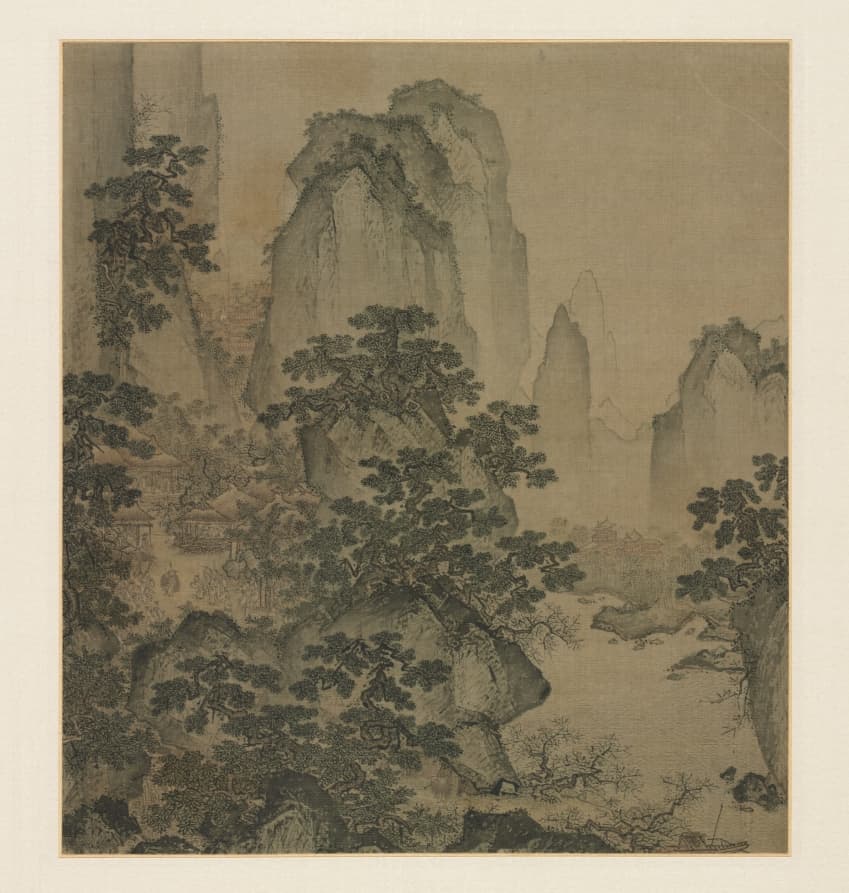
mid-1400s · China, Ming dynasty (1368–1644)
The Haven of the Peach-Blossom Spring
Shi Rui (Chinese, c. 1400-c. 1470) · Album leaf; ink and slight color on silk
Ready to describe what you want in your own space?
Start an artwork inquiry ↗