Painting study · Ink painting
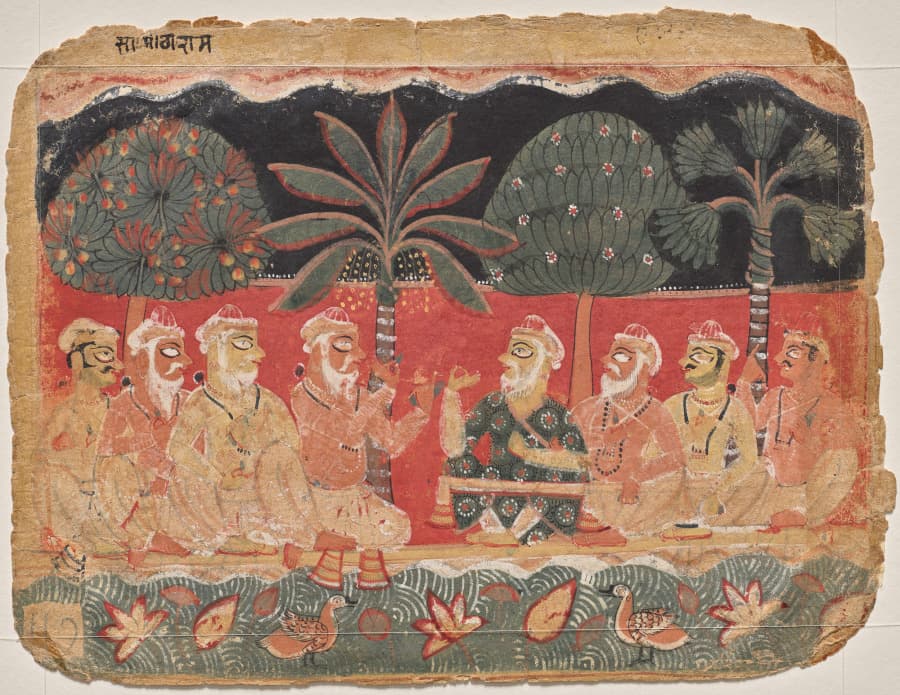
Nanda and the elders, page from a Bhagavata Puranac. 1525–40 · Study 1960.53
Artist not recorded
c. 1525–40
Recorded as Gum tempera and ink on paper, this horizontal work measures 21.5 × 16.3 cm using the museum’s overall dimensions. Explore the museum’s context and compare the format with a wall of your choice.
Museum collection reference. This work is not offered for sale by Physical Art For Crypto. Museum attribution does not imply a partnership or endorsement.
Context from the museum
In a page from a manuscript about the life of the Hindu god Krishna, Krishna’s foster father, wearing green, confers about moving their community to a new location. Their current village has been beset by demons sent by the evil king to kill Krishna. Typical of South Asian compositions of the early 1500s, figures and other elements are arranged in horizontal rows. Above, in the story of an encounter between a gardener and a merchant’s daughter who wants a rose, we see use of the same Mughal convention, shown with a more natural conceptualization of space. Mughal compositions were often based on earlier illustrations.
Museum description reproduced from its CC0 open-access record. Read the original catalog entry.
Read the dimensions before the image
The selected overall measurement for Nanda and the elders, page from a Bhagavata Purana is 21.5 cm wide and 16.3 cm high, equivalent to approximately 8.5 × 6.4 inches. Dividing width by height gives a format ratio of 1.32:1. The rectangular bounding area is 0.04 square meters; it describes the measured footprint, not the amount of paint or the monetary value.
On an illustrative 300 cm wall, the recorded width occupies 7.2% of the span before adding a frame. A centered placement leaves approximately 139.3 cm on each side before adding a frame. These are calculations by Physical Art For Crypto using museum measurements. They are not the museum’s display recommendations.
Questions to bring to your own collection
With Nanda and the elders, page from a Bhagavata Purana in view, identify one feature you can point to, then distinguish what the museum records from your personal response. Keep its medium, Gum tempera and ink on paper, in your notes when comparing contemporary works.
- Which part of this horizontal composition catches your eye first?
- Would a 21.5 cm width still suit the space after allowing for furniture and a frame?
- What surface detail would you need to see in person or in a close photograph?
Explore physical scale
How large would this format feel on your wall?
Use this museum work’s recorded format as a reference. Adjust a blank wall and optional frame allowance to compare proportions. The museum painting is an educational reference and is not for sale here.
Calculation: outside width = recorded width + twice your frame allowance. This is a proportion study, not an installation assessment. It excludes furniture, hardware, load capacity, depth and delivery clearance. The display image may include margins absent from the recorded measurement.
Compare formats with the studio collection
These Lei-Kol works have the closest width-to-height ratios in the current catalog. This is a geometry comparison, not a claim of artistic similarity, equivalent value, or association with the museum artist.
| Painting | Width × height | Format ratio | USD catalog price |
|---|---|---|---|
| Bipolar | 60 × 48 in | 1.25:1 | $3,499 |
| Brick and Mortar | 60 × 48 in | 1.25:1 | $3,499 |
| Dominion | 60 × 48 in | 1.25:1 | $3,499 |
Availability and delivery costs must be confirmed for the individual order.
Related studies
c. 1525–40 · Northern India
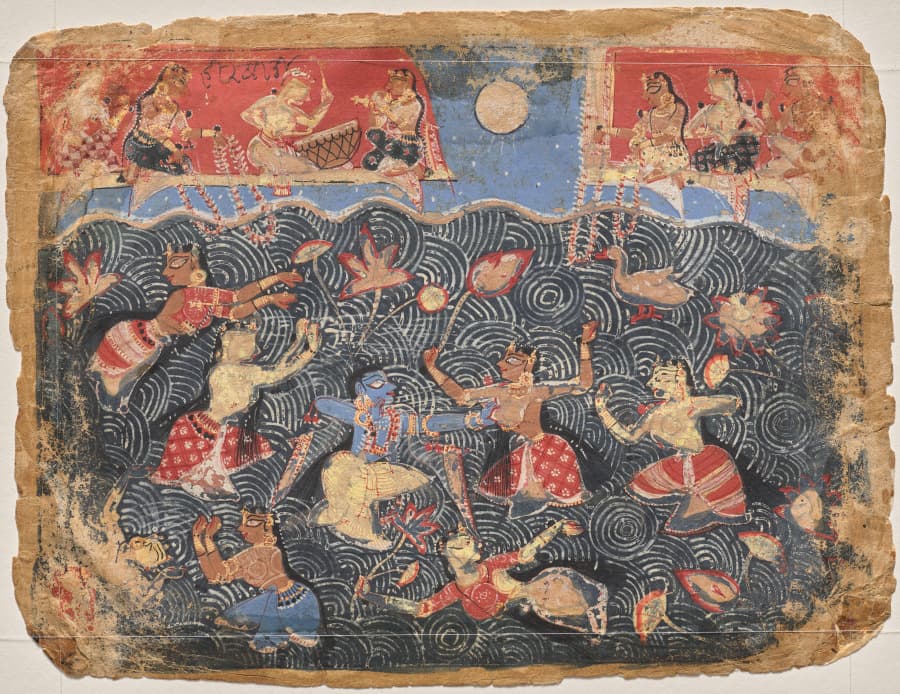
Krishna sporting with the gopis in the Jumna River, from a Bhagavata Purana
Artist not recorded · Gum tempera and ink on paper
c. 1525–40 · Northern India
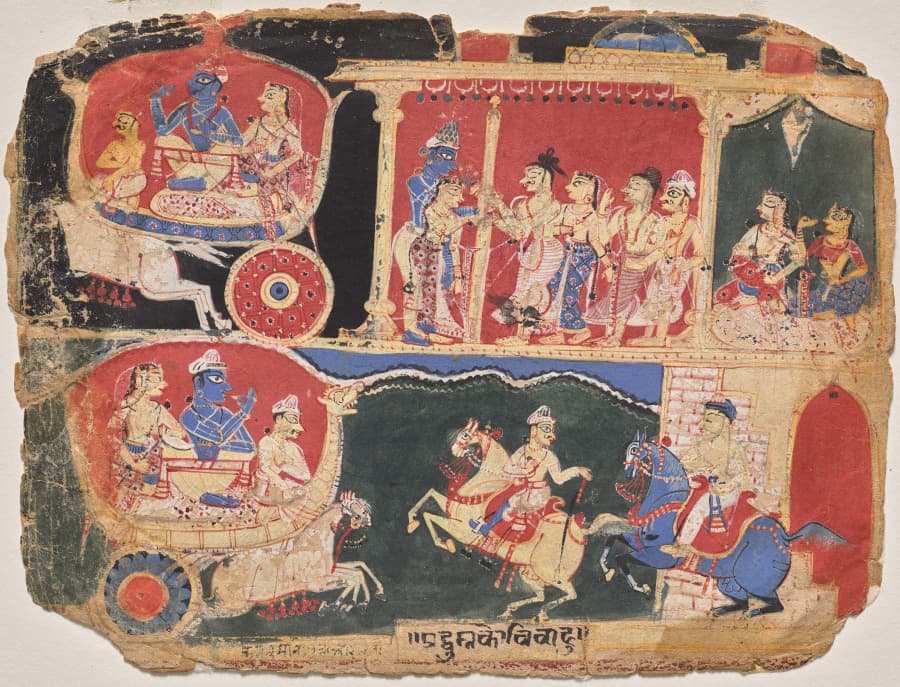
The Marriage of Pradyumna and Rukmavati, page from a Bhagavata Purana
Artist not recorded · Gum tempera and ink on paper
1314–17 · Japan, Kamakura period (1185–1333)
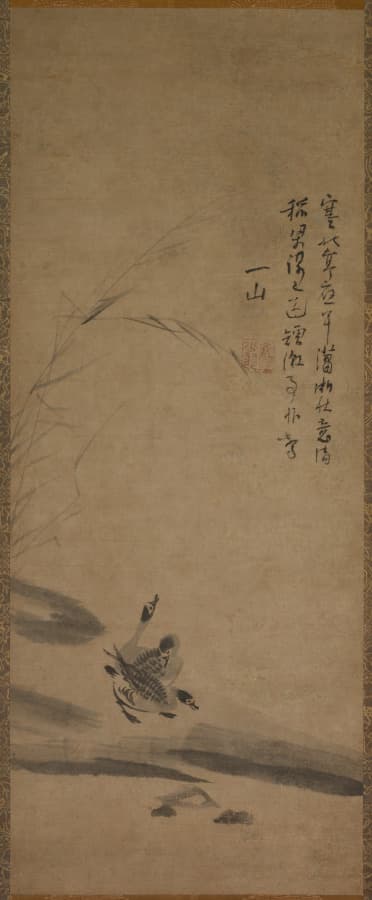
Reeds and Geese
Yishan Yining [Issan Ichinei] (Chinese, 1247–1317) · hanging scroll; ink on paper
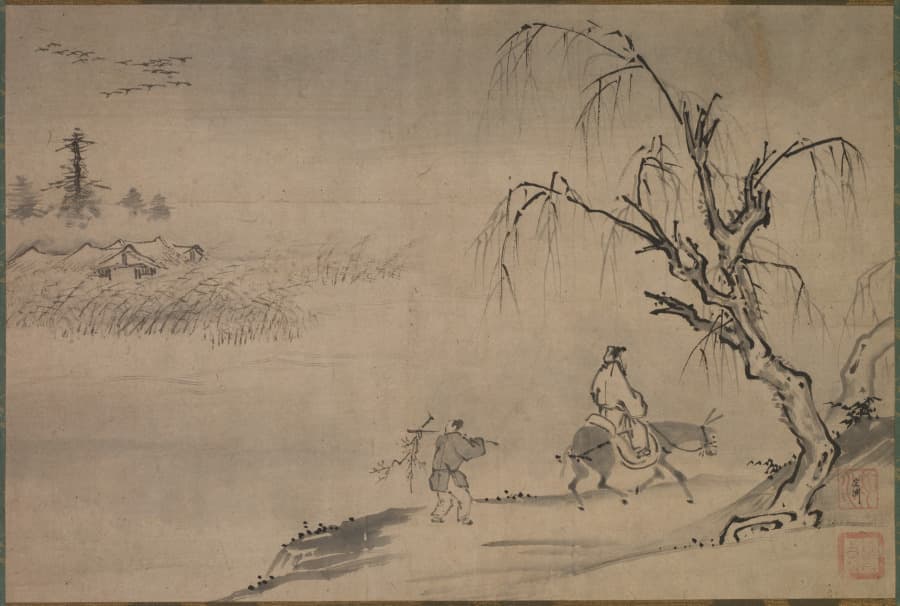
late 1400s · Japan, Muromachi period (1392–1573)
Chinese Literatus in an Autumn Landscape
Josui Sōen (Japanese, active c. 1489–1500) · hanging scroll; ink on paper
Ready to describe what you want in your own space?
Start an artwork inquiry ↗