Painting study · Tempera
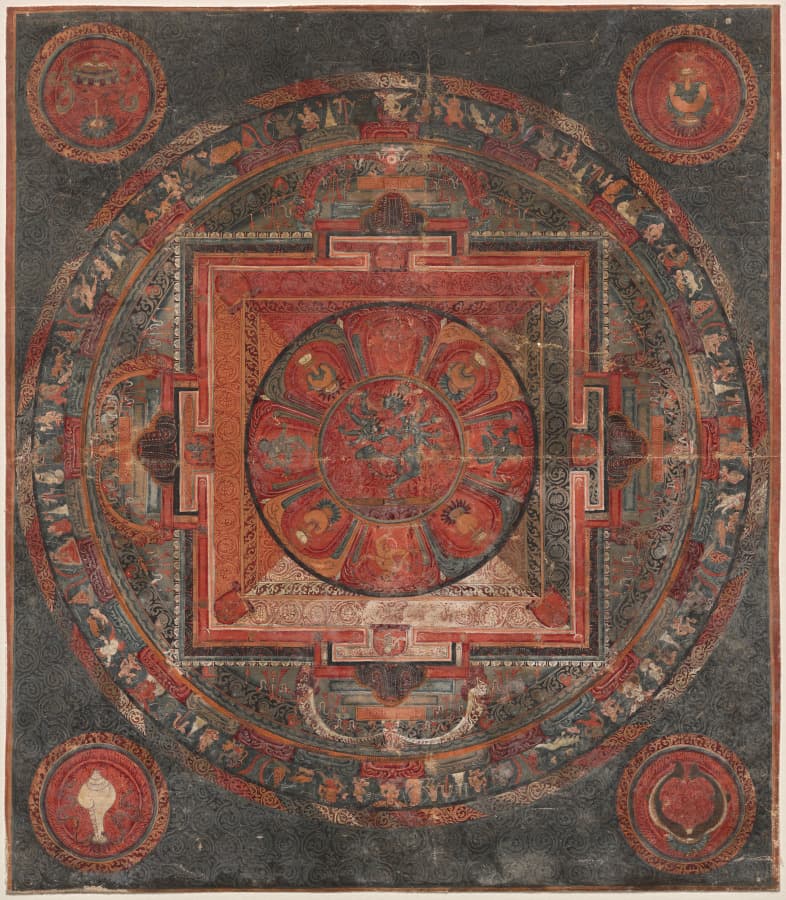
Mandala of Chakrasamvara and Vajravarahilate 1400s · Study 1960.211
Artist not recorded
late 1400s
Recorded as Gum tempera on cloth, this vertical work measures 35.6 × 40.6 cm using the museum’s overall dimensions. Explore the museum’s context and compare the format with a wall of your choice.
Museum collection reference. This work is not offered for sale by Physical Art For Crypto. Museum attribution does not imply a partnership or endorsement.
Context from the museum
A mandala is a two-dimensional diagram of a palace-like structure, viewed from above. This mandala depicts the abode of a 4-headed, 12-armed figure who personifies a major tantric Buddhist text, the Chakrasamvara-tantra . He dances in the bliss of sexual union with his consort, the red Vajravarahi, in the central circle, which is equivalent to the penthouse of their palace. Through guided meditation, practitioners can visualize entering through each of the four gates to experience the beauty of the enlightened realm. The outermost ring of cremation grounds indicates that one must overcome fear of death before reaching the realm of enlightenment.
Museum description reproduced from its CC0 open-access record. Read the original catalog entry.
A detail to notice
In the corners are four auspicious symbols (clockwise from top left): umbrella (an emblem of royalty), pot (referencing abundance), pair of fish (symbol of productivity), and conch shell (indicating the eradication of obstacles).
Observation supplied by the Cleveland Museum of Art.
Read the dimensions before the image
The selected overall measurement for Mandala of Chakrasamvara and Vajravarahi is 35.6 cm wide and 40.6 cm high, equivalent to approximately 14.0 × 16.0 inches. Dividing width by height gives a format ratio of 0.88:1. The rectangular bounding area is 0.14 square meters; it describes the measured footprint, not the amount of paint or the monetary value.
On an illustrative 300 cm wall, the recorded width occupies 11.9% of the span before adding a frame. A centered placement leaves approximately 132.2 cm on each side before adding a frame. These are calculations by Physical Art For Crypto using museum measurements. They are not the museum’s display recommendations.
Questions to bring to your own collection
With Mandala of Chakrasamvara and Vajravarahi in view, identify one feature you can point to, then distinguish what the museum records from your personal response. Keep its medium, Gum tempera on cloth, in your notes when comparing contemporary works.
- Which part of this vertical composition catches your eye first?
- Would a 35.6 cm width still suit the space after allowing for furniture and a frame?
- What surface detail would you need to see in person or in a close photograph?
Explore physical scale
How large would this format feel on your wall?
Use this museum work’s recorded format as a reference. Adjust a blank wall and optional frame allowance to compare proportions. The museum painting is an educational reference and is not for sale here.
Calculation: outside width = recorded width + twice your frame allowance. This is a proportion study, not an installation assessment. It excludes furniture, hardware, load capacity, depth and delivery clearance. The display image may include margins absent from the recorded measurement.
Compare formats with the studio collection
These Lei-Kol works have the closest width-to-height ratios in the current catalog. This is a geometry comparison, not a claim of artistic similarity, equivalent value, or association with the museum artist.
| Painting | Width × height | Format ratio | USD catalog price |
|---|---|---|---|
| Blue Denim | 48 × 48 in | 1.00:1 | $1,699 |
| Mushrooms | 48 × 48 in | 1.00:1 | $2,399 |
| Stardust | 48 × 48 in | 1.00:1 | $2,199 |
Availability and delivery costs must be confirmed for the individual order.
Related studies
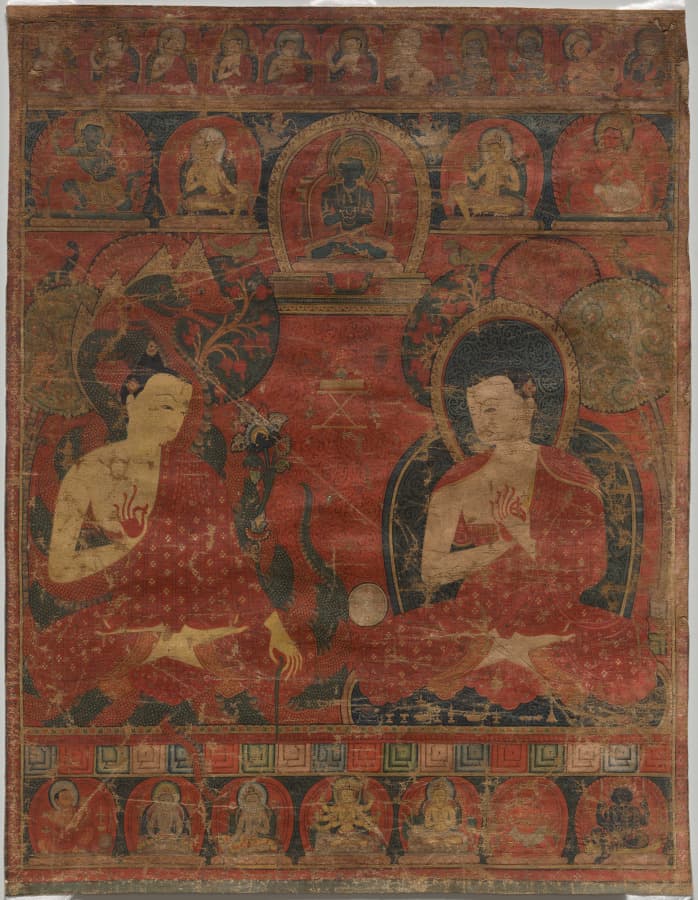
c. 1300s · Nepal
Nagarjuna (c. 150–250 CE) with a Buddhist Master
Artist not recorded · gum tempera on sized cotton
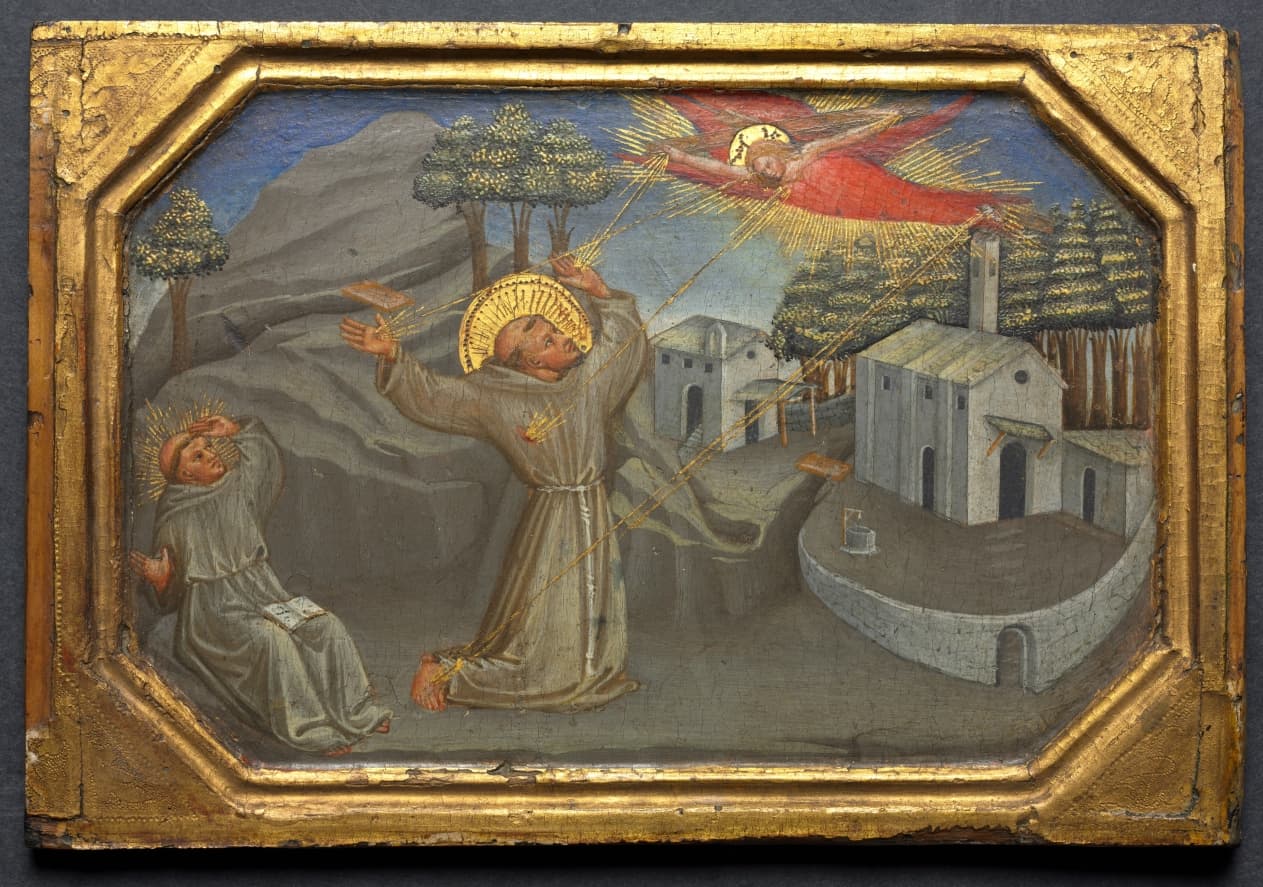
c. 1430 · Italy
St. Francis of Assisi Receiving the Stigmata
Bicci di Lorenzo (Italian, 1373–1452) · tempera and gold on wood
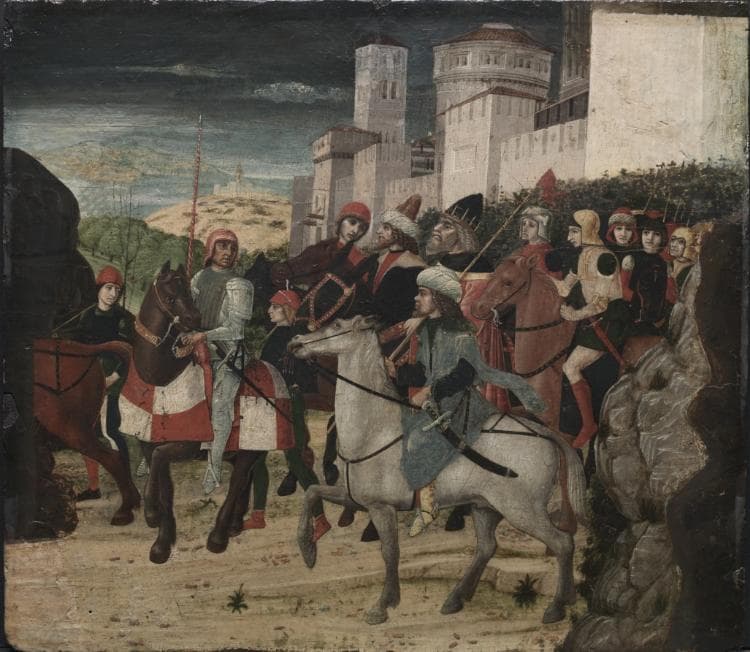
c. 1450–1500 · Italy, Padua, 15th century
Procession of the Magi
Bernardo Parentino (Italian) · tempera on wood
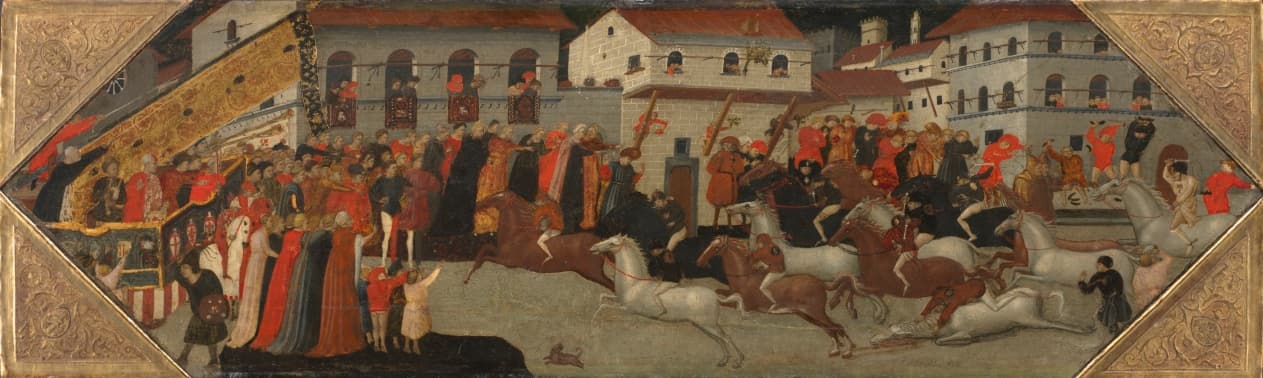
1418 · Italy, Florence
Panel from a Cassone: The Race of the Palio in the Streets of Florence
Giovanni Francesco Toscani (Italian, c. 1380–1430) · tempera and gold on wood
Ready to describe what you want in your own space?
Start an artwork inquiry ↗