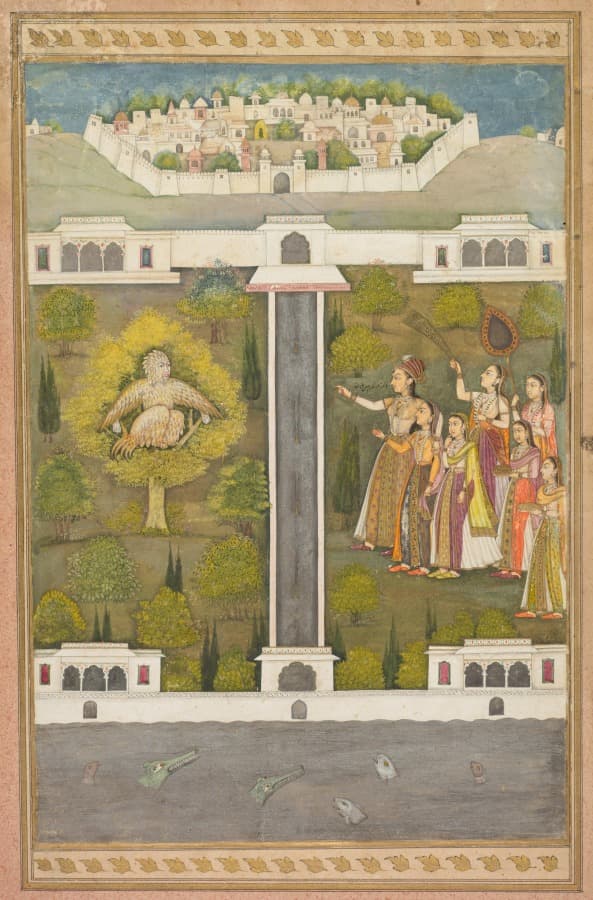
Painting study · Ink painting
Mahliqa, Daughter of the Emperor of China, Pointing at the Bird-Man Khwaja Mubarak: A Leaf from a Poetical Romance Relating to Shah Alam I (verso); Stenciled Scenes of Lion and Gazelle (verso)c. 1710 · Study 2013.336
Artist not recorded
c. 1710
Recorded as Gum tempera, ink, and gold on paper, this vertical work measures 18.9 × 27.2 cm using the museum’s painting only dimensions. Explore the museum’s context and compare the format with a wall of your choice.
Museum collection reference. This work is not offered for sale by Physical Art For Crypto. Museum attribution does not imply a partnership or endorsement.
Context from the museum
A Persian inscription identifies the bird-man in the tree by name, but the text in which he appears remains unidentified. Also unknown is the Chinese princess Mahliqa (“she who has a face like the moon”), named in a Persian inscription written in front of her face. The artist depicts her in the dress of a Mughal court lady, except for the addition of an unusual headdress, and her handmaidens all look Indian. They gesture to the bird-man from the opposite side of a formal garden canal with fountains. A fortified city lies in the distance behind the walled garden, while creatures peer up at the fabulous composite figure from the water below.
Museum description reproduced from its CC0 open-access record. Read the original catalog entry.
Read the dimensions before the image
The selected painting only measurement for Mahliqa, Daughter of the Emperor of China, Pointing at the Bird-Man Khwaja Mubarak: A Leaf from a Poetical Romance Relating to Shah Alam I (verso); Stenciled Scenes of Lion and Gazelle (verso) is 18.9 cm wide and 27.2 cm high, equivalent to approximately 7.4 × 10.7 inches. Dividing width by height gives a format ratio of 0.69:1. The rectangular bounding area is 0.05 square meters; it describes the measured footprint, not the amount of paint or the monetary value.
On an illustrative 300 cm wall, the recorded width occupies 6.3% of the span before adding a frame. A centered placement leaves approximately 140.6 cm on each side before adding a frame. These are calculations by Physical Art For Crypto using museum measurements. They are not the museum’s display recommendations.
Questions to bring to your own collection
With Mahliqa, Daughter of the Emperor of China, Pointing at the Bird-Man Khwaja Mubarak: A Leaf from a Poetical Romance Relating to Shah Alam I (verso); Stenciled Scenes of Lion and Gazelle (verso) in view, identify one feature you can point to, then distinguish what the museum records from your personal response. Keep its medium, Gum tempera, ink, and gold on paper, in your notes when comparing contemporary works.
- Which part of this vertical composition catches your eye first?
- Would a 18.9 cm width still suit the space after allowing for furniture and a frame?
- What surface detail would you need to see in person or in a close photograph?
Explore physical scale
How large would this format feel on your wall?
Use this museum work’s recorded format as a reference. Adjust a blank wall and optional frame allowance to compare proportions. The museum painting is an educational reference and is not for sale here.
Calculation: outside width = recorded width + twice your frame allowance. This is a proportion study, not an installation assessment. It excludes furniture, hardware, load capacity, depth and delivery clearance. The display image may include margins absent from the recorded measurement.
Compare formats with the studio collection
These Lei-Kol works have the closest width-to-height ratios in the current catalog. This is a geometry comparison, not a claim of artistic similarity, equivalent value, or association with the museum artist.
| Painting | Width × height | Format ratio | USD catalog price |
|---|---|---|---|
| Gray Day | 24 × 36 in | 0.67:1 | $1,199 |
| Waterfalls | 24 × 36 in | 0.67:1 | $999 |
| Blood Moon | 30 × 40 in | 0.75:1 | $1,199 |
Availability and delivery costs must be confirmed for the individual order.
Related studies
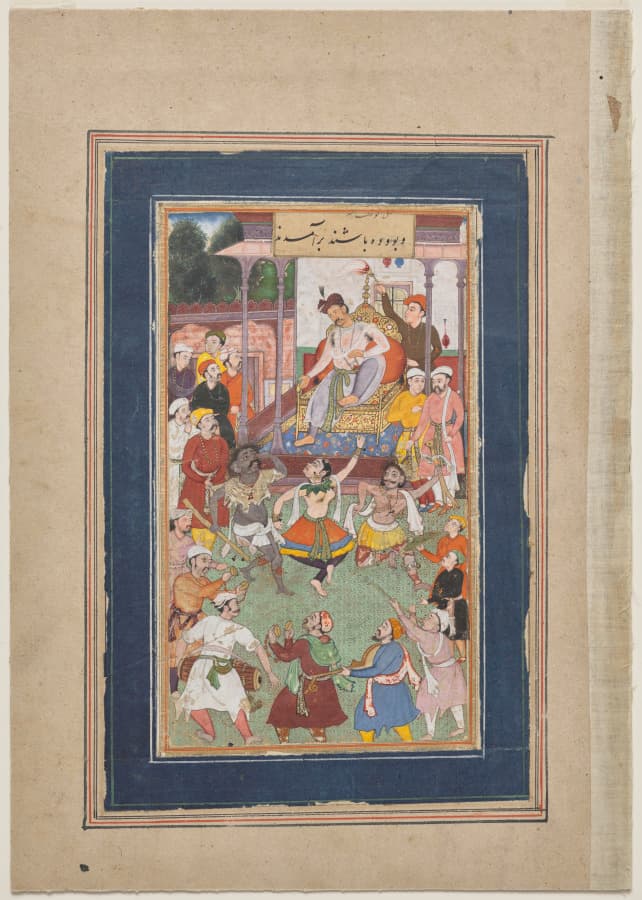
c. 1600 · Mughal India
Grotesque Dancers Performing
Artist not recorded · gum tempera, ink, and gold on paper
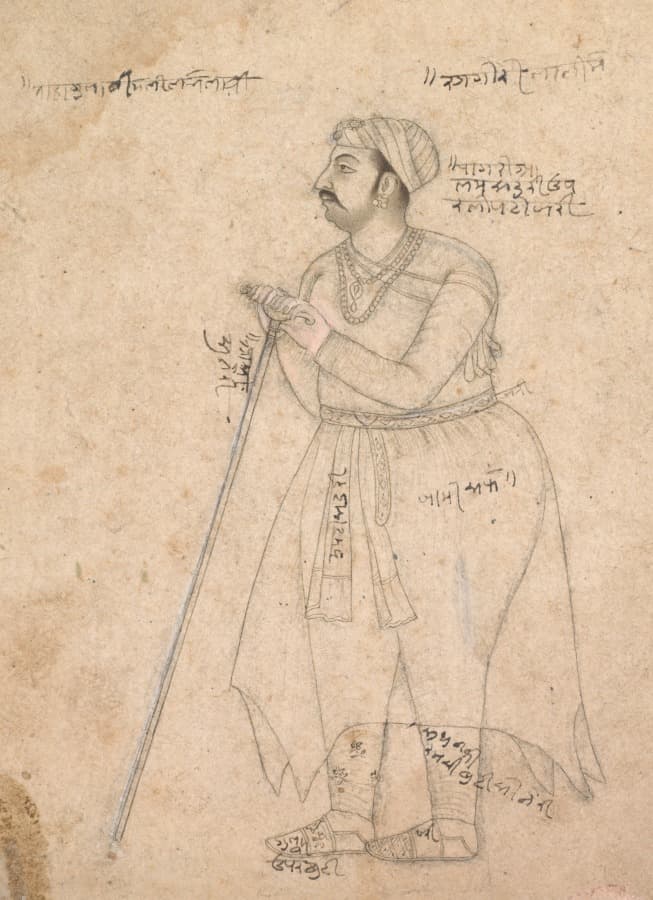
c. 1590 · Mughal India
Portrait of Maharaja Rai Singh of Bikaner (reigned 1574-1612)
Nur Muhammad (Indian, active c. 1580–1630) · Ink and gum tempera on paper
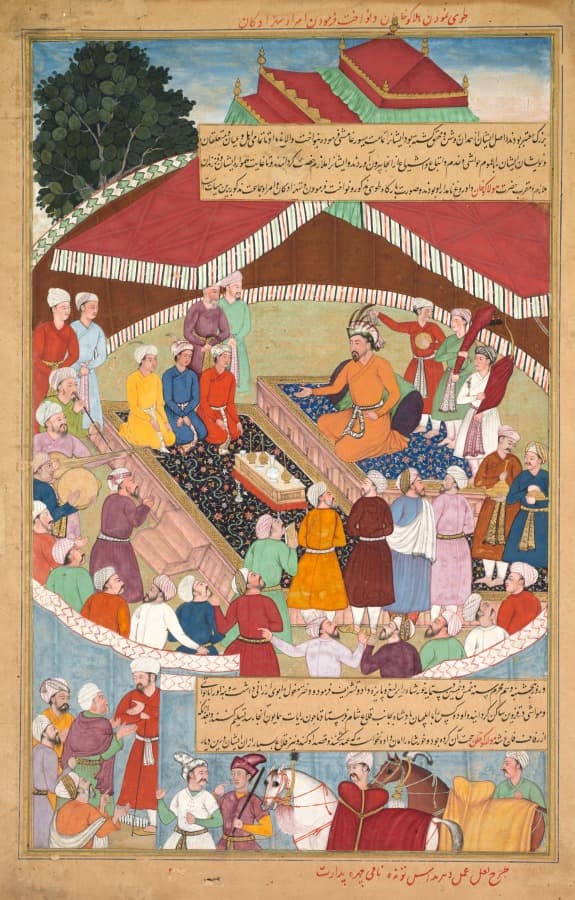
c. 1596–1600 · Mughal India
Hulagu Khan giving a feast and dispensing favor upon the amirs and princes, from a Chingiz-nama (Book of Chingiz Khan) of the Jami al-tavarikh (Compendium of Chronicles)
Lal (Indian, active c. 1555–1600); Dharam Das (Indian, active c. 1580–1605); Padarath (Indian, active late 1500s) · Gum tempera, ink, and gold on paper
1598 · Mughal India
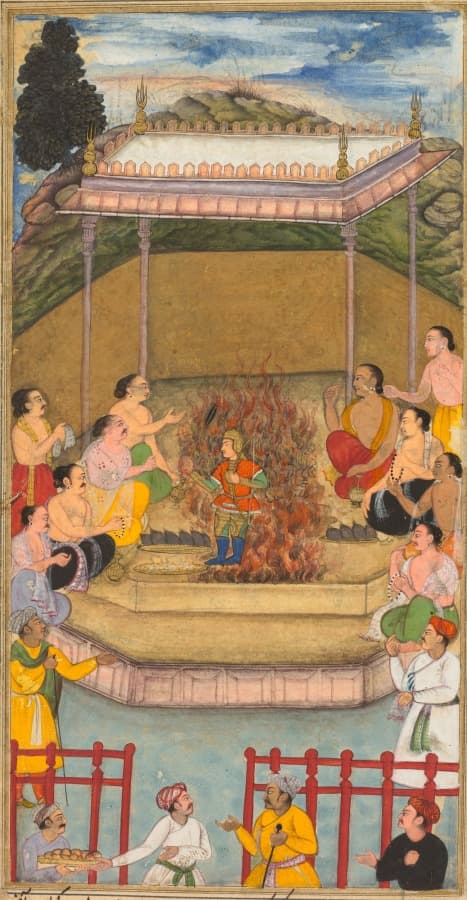
Yaja and Upayaja perform a sacrifice for the emergence of Dhrishtadyumna from the fire, from Adi-parva (volume one) of the Razm-nama (Book of Wars) adapted and translated into Persian by Mir Ghiyath al-Din Ali Qazvini, known as Naqib Khan (Persian, d. 1614) from the Sanskrit Mahabharata
Bilal Habshi (probably Ethiopian, active late 1500s) · Gum tempera, ink, and gold on paper
Ready to describe what you want in your own space?
Start an artwork inquiry ↗