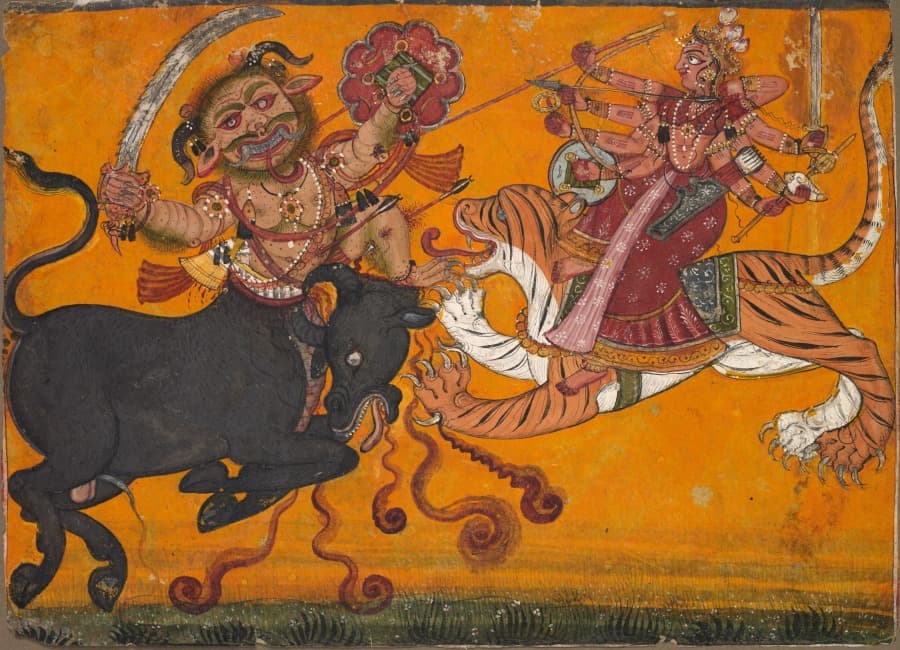
Painting study · Tempera
Durga Slaying Mahishac. 1700–1710 · Study 1960.51
Artist not recorded
c. 1700–1710
Recorded as Gum tempera and gold on paper, this horizontal work measures 21.2 × 15.5 cm using the museum’s overall dimensions. Explore the museum’s context and compare the format with a wall of your choice.
Museum collection reference. This work is not offered for sale by Physical Art For Crypto. Museum attribution does not imply a partnership or endorsement.
Context from the museum
Durga is the name of the goddess who personifies the sum total of the powers of all the male gods combined. When she vanquishes the fierce buffalo demon named Mahisha, she is described as having many arms, each holding a different weapon: bow and arrow, trident, discus, shield, sword, mace, and the conch shell that sounds the start of battle. The horizontal lines on her arms are sectarian markings. At the moment depicted in this painting, she has succeeded in beheading the buffalo demon and shooting arrows into his true form that climbs from its neck. Artists in the foothills of the western Himalayas, where this work was made, depicted Durga’s mount as a tiger—lions and tigers had synonymous meaning throughout India as emblems of shakti, or divine creative energy.
Museum description reproduced from its CC0 open-access record. Read the original catalog entry.
Read the dimensions before the image
The selected overall measurement for Durga Slaying Mahisha is 21.2 cm wide and 15.5 cm high, equivalent to approximately 8.3 × 6.1 inches. Dividing width by height gives a format ratio of 1.37:1. The rectangular bounding area is 0.03 square meters; it describes the measured footprint, not the amount of paint or the monetary value.
On an illustrative 300 cm wall, the recorded width occupies 7.1% of the span before adding a frame. A centered placement leaves approximately 139.4 cm on each side before adding a frame. These are calculations by Physical Art For Crypto using museum measurements. They are not the museum’s display recommendations.
Questions to bring to your own collection
With Durga Slaying Mahisha in view, identify one feature you can point to, then distinguish what the museum records from your personal response. Keep its medium, Gum tempera and gold on paper, in your notes when comparing contemporary works.
- Which part of this horizontal composition catches your eye first?
- Would a 21.2 cm width still suit the space after allowing for furniture and a frame?
- What surface detail would you need to see in person or in a close photograph?
Explore physical scale
How large would this format feel on your wall?
Use this museum work’s recorded format as a reference. Adjust a blank wall and optional frame allowance to compare proportions. The museum painting is an educational reference and is not for sale here.
Calculation: outside width = recorded width + twice your frame allowance. This is a proportion study, not an installation assessment. It excludes furniture, hardware, load capacity, depth and delivery clearance. The display image may include margins absent from the recorded measurement.
Compare formats with the studio collection
These Lei-Kol works have the closest width-to-height ratios in the current catalog. This is a geometry comparison, not a claim of artistic similarity, equivalent value, or association with the museum artist.
| Painting | Width × height | Format ratio | USD catalog price |
|---|---|---|---|
| Bipolar | 60 × 48 in | 1.25:1 | $3,499 |
| Brick and Mortar | 60 × 48 in | 1.25:1 | $3,499 |
| Dominion | 60 × 48 in | 1.25:1 | $3,499 |
Availability and delivery costs must be confirmed for the individual order.
Related studies
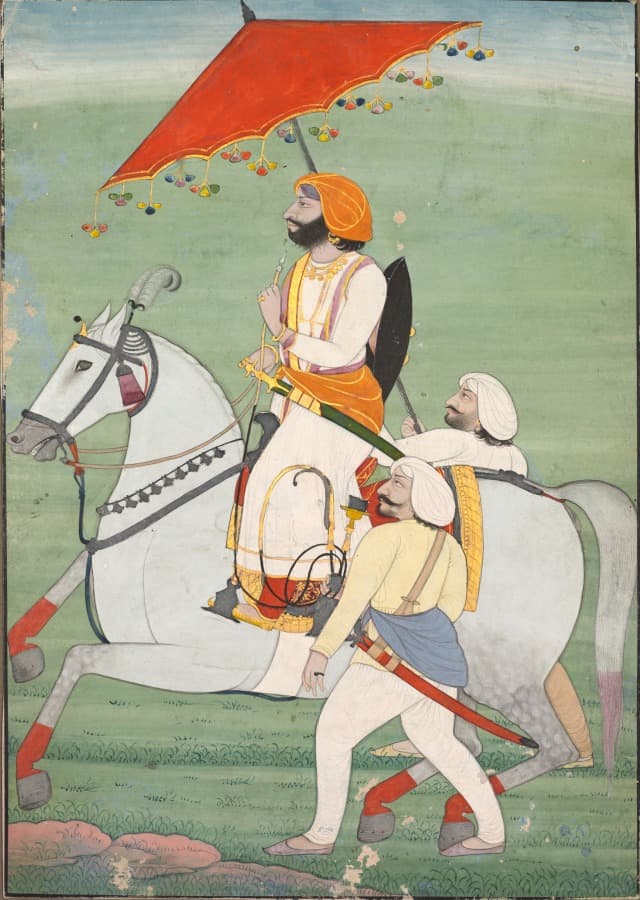
c. 1830–40 · Northern India, Pahari kingdoms
Raja Gulab Singh (1792–1857) of Jammu and Kashmir
Artist not recorded · Gum tempera, gold, and silver on paper
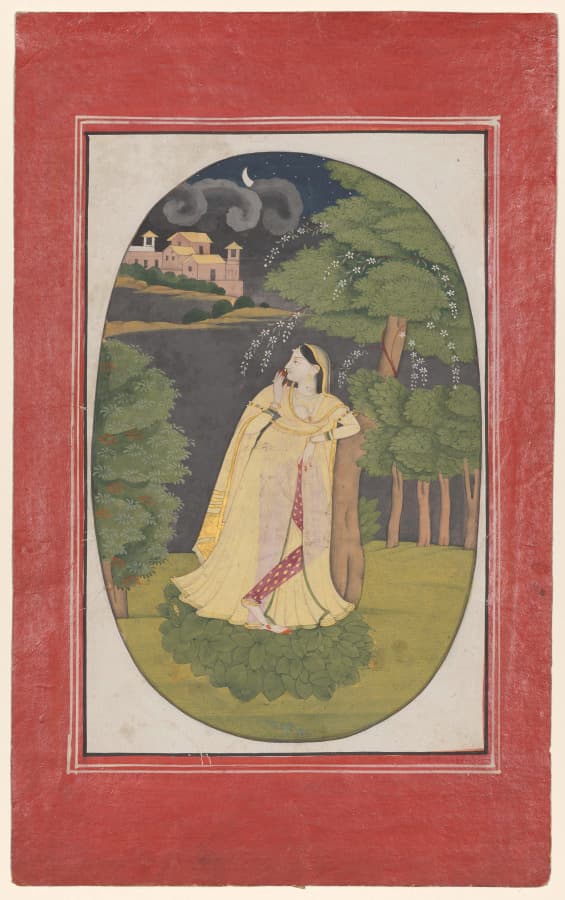
c. 1800 · Northern India, Pahari kingdoms
The heroine who waits anxiously for her absent lover (Utka Nayika)
Artist not recorded · Gum tempera on paper
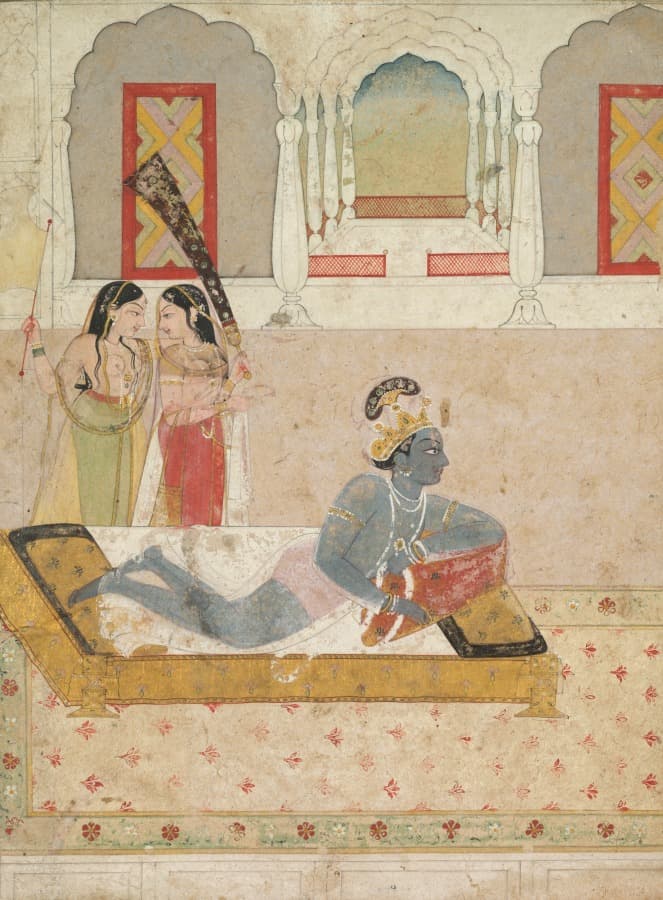
c. 1750–60 · Northern India, Pahari kingdoms
Krishna Awaiting Radha
Artist not recorded · Gum tempera and gold on paper
c. 1675–80 · Northern India, Pahari kingdoms
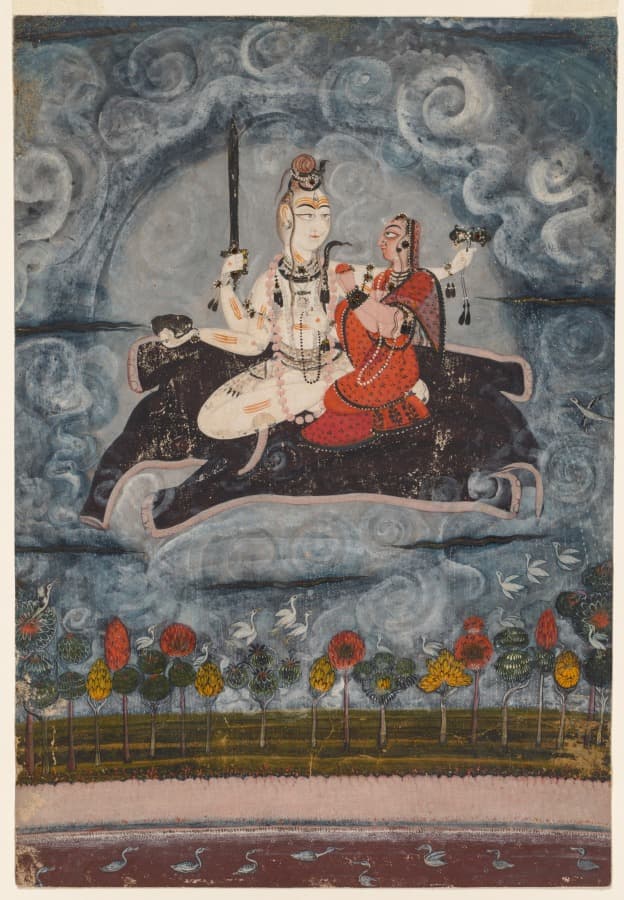
Shiva and Devi on Gajasura's hide
Artist not recorded · Gum tempera and silver on paper
Ready to describe what you want in your own space?
Start an artwork inquiry ↗