Painting study · Ink painting
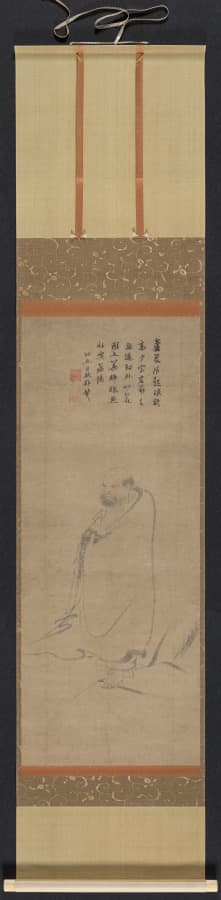
Bodhidharma Crossing the Yangzi on a Reed1300s · Study 1964.44
Artist not recorded
1300s
Recorded as hanging scroll; ink on paper, this vertical work measures 36.5 × 91.1 cm using the museum’s painting only dimensions. Explore the museum’s context and compare the format with a wall of your choice.
Museum collection reference. This work is not offered for sale by Physical Art For Crypto. Museum attribution does not imply a partnership or endorsement.
Context from the museum
Chan Buddhism was introduced to China in the early 500s by the Indian monk Bodhidharma, or Puti Damo (died before 534). Upon his arrival in China, Bodhidharma was allegedly granted an audience with the Liang dynasty emperor Wu (reigned 502–49). Realizing the emperor did not understand his mission, the monk left Nanjing, crossed the Yangzi on a reed, and settled north in Henan province’s Shaolin monastery. Here, Bodhidharma is sketched in few pale brushstrokes. The diluted and swift lines on an empty ground emphasize the Chan idea that all things are illusionary. The inscription reads: Wind rises from the reed flowers, the waves are high; It’s a long way to go beyond the cliff of the Shaoshi mountain; Above the worlds of kalpas a flower is opening into five petals; So that your barefoot heels are just fine for the whipping rattans. —translated by Wai-Kam Ho
Museum description reproduced from its CC0 open-access record. Read the original catalog entry.
A detail to notice
Barefooted Bodhidharma sails across the Yangzi River balanced on a thin stalk of reed.
Observation supplied by the Cleveland Museum of Art.
Read the dimensions before the image
The selected painting only measurement for Bodhidharma Crossing the Yangzi on a Reed is 36.5 cm wide and 91.1 cm high, equivalent to approximately 14.4 × 35.9 inches. Dividing width by height gives a format ratio of 0.40:1. The rectangular bounding area is 0.33 square meters; it describes the measured footprint, not the amount of paint or the monetary value.
On an illustrative 300 cm wall, the recorded width occupies 12.2% of the span before adding a frame. A centered placement leaves approximately 131.8 cm on each side before adding a frame. These are calculations by Physical Art For Crypto using museum measurements. They are not the museum’s display recommendations.
Questions to bring to your own collection
With Bodhidharma Crossing the Yangzi on a Reed in view, identify one feature you can point to, then distinguish what the museum records from your personal response. Keep its medium, hanging scroll; ink on paper, in your notes when comparing contemporary works.
- Which part of this vertical composition catches your eye first?
- Would a 36.5 cm width still suit the space after allowing for furniture and a frame?
- What surface detail would you need to see in person or in a close photograph?
Explore physical scale
How large would this format feel on your wall?
Use this museum work’s recorded format as a reference. Adjust a blank wall and optional frame allowance to compare proportions. The museum painting is an educational reference and is not for sale here.
Calculation: outside width = recorded width + twice your frame allowance. This is a proportion study, not an installation assessment. It excludes furniture, hardware, load capacity, depth and delivery clearance. The display image may include margins absent from the recorded measurement.
Compare formats with the studio collection
These Lei-Kol works have the closest width-to-height ratios in the current catalog. This is a geometry comparison, not a claim of artistic similarity, equivalent value, or association with the museum artist.
| Painting | Width × height | Format ratio | USD catalog price |
|---|---|---|---|
| Cheesecake | 24 × 48 in | 0.50:1 | $1,099 |
| Riptide | 24 × 48 in | 0.50:1 | $1,199 |
| Graffiti | 30 × 48 in | 0.63:1 | $2,199 |
Availability and delivery costs must be confirmed for the individual order.
Related studies
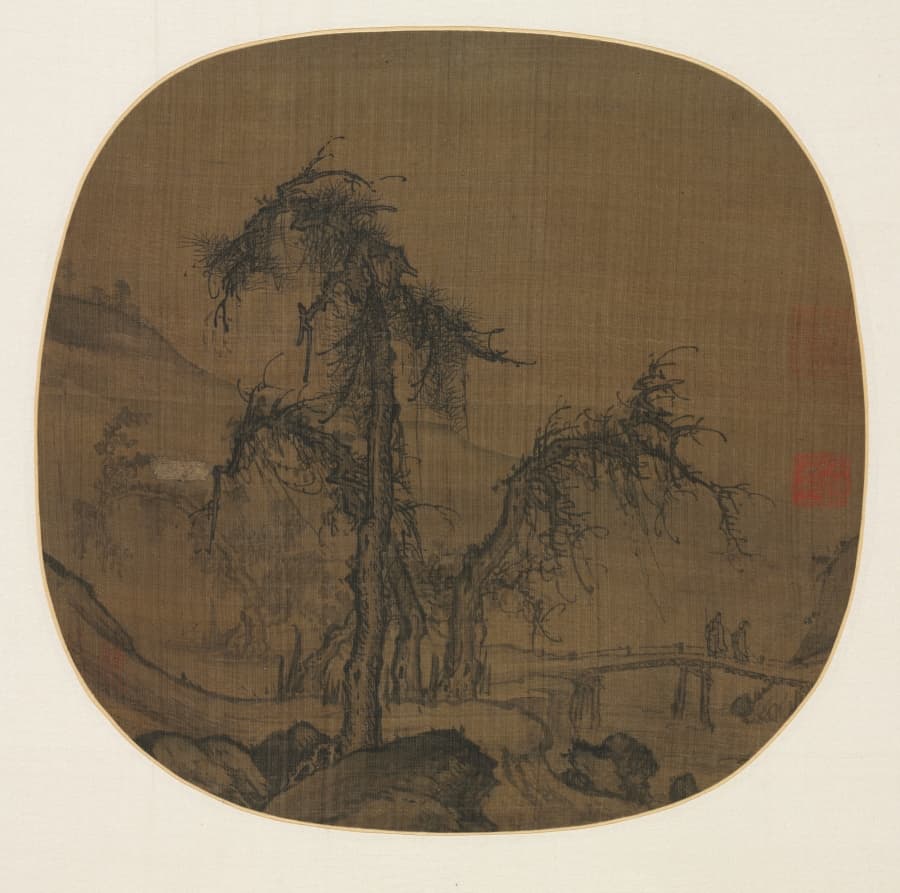
before 1330 · China, Yuan dynasty (1271-1368)
Ramblers over a Winding Stream
Luo Zhichuan (Chinese, active 1280s–1320s) · Album leaf; ink on silk
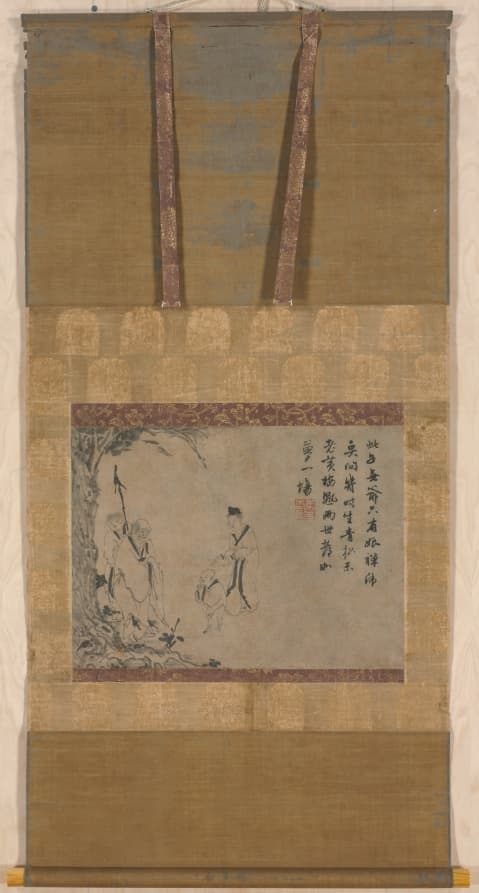
c. mid-1300s · China, Yuan dynasty (1271-1368)
The Second Coming of the Fifth Patriarch
Yintuoluo (Chinese, c. 1285-c. 1355) · section of a handscroll mounted as a hanging scroll, ink on paper
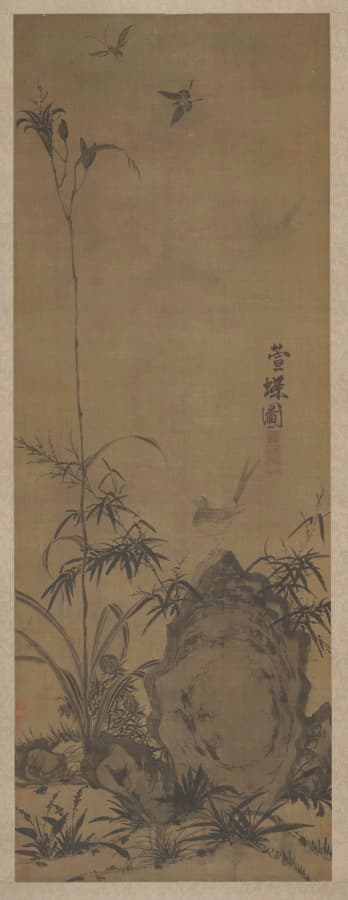
1300s · China, Yuan dynasty (1271-1368)
Lily and Butterflies
Liu Shanshou (Chinese, active 1300s) · Hanging scroll; ink on silk
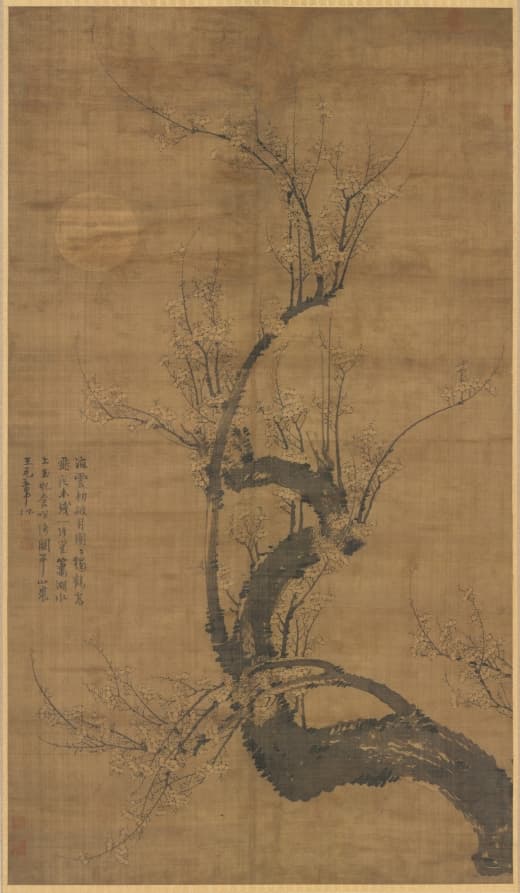
1300s · China, Yuan dynasty (1271-1368)
A Prunus in the Moonlight
Wang Mian (Chinese, 1287–1359) · Hanging scroll; ink on silk
Ready to describe what you want in your own space?
Start an artwork inquiry ↗