Painting study · Ink painting
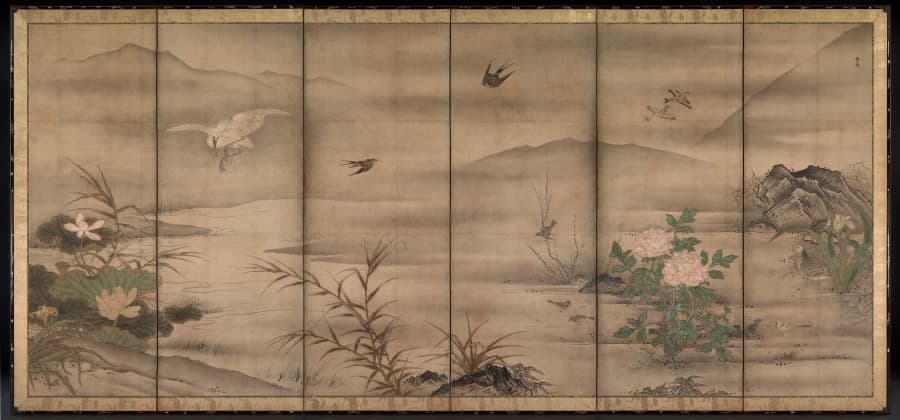
Birds and Flowers in a Landscape of the Four Seasonssecond half of the 1500s · Study 1960.173
Sesshū Tōyō (Japanese, 1420–1506)
second half of the 1500s
Recorded as Six-panel folding screen, ink and color on paper, this horizontal work measures 359.4 × 158.5 cm using the museum’s image dimensions. Explore the museum’s context and compare the format with a wall of your choice.
Museum collection reference. This work is not offered for sale by Physical Art For Crypto. Museum attribution does not imply a partnership or endorsement.
Context from the museum
The monk-painter Sesshū is revered today, as he was in his own time. While he left Kyoto's sophisticated intellectual and cultural environment to live in a provincial village in a far western province, he seems never to have severed contacts with the monastic communities of his young adulthood. His residence in Yamaguchi proved fortuitous because his patron, the region's military lord, enjoyed considerable freedom in conducting trade missions overseas with Korea and China. Sesshū went to China in 1467 and traveled about the country, visiting well-known historical sites and Chan (Zen) temples before returning two years later. Thus he became familiar with contemporary painting practices, materials, formats, and subject matter. His assimilation and then transmission of these elements had a profound impact on the following generations of ink painters, patrons, and Zen communities throughout Japan. Despite the presence on these byōbu of the name "Sesshū," they are from the hand of another accomplished but as yet anonymous follower active in the middle of the sixteenth century. Sesshū's name here, as on a handful of similar bird-and-flower byōbu, attests to the master's identification at that time with the colorful mural paintings on the same theme emanating from Ming dynasty China. This genre had heretofore been relegated to hanging scroll compositions, so the intro-duction into temple and daimyo residences of such an attractive theme surely caused considerable excitement in the later fifteenth century, when in all likelihood Sesshū introduced it into the Japanese painting repertoire. Subsequently, artists of varying backgrounds and training tried their hands at these large, dramatic scenes. From right to left the composition portrays an array of flowering plants in the near distance that indicate the passage of the seasons. Birds, usually paired, occupy this setting, engaged in various activities that lend naturalism and an air of peacefulness. The world they inhabit may be characterized pictorially by expansive middle-ground waterscapes that end where the far distant mountains rise as backdrops. These features appear consistently in other bird-and-flower byōbu attributed to Sesshū. Also noteworthy is the absence of any birds of prey such as the samurai's beloved hawks, emblems of fierceness and graceful strength that appear often in the byōbu of sixteenth-century Kano and Soga school painters.
Museum description reproduced from its CC0 open-access record. Read the original catalog entry.
Read the dimensions before the image
The selected image measurement for Birds and Flowers in a Landscape of the Four Seasons is 359.4 cm wide and 158.5 cm high, equivalent to approximately 141.5 × 62.4 inches. Dividing width by height gives a format ratio of 2.27:1. The rectangular bounding area is 5.70 square meters; it describes the measured footprint, not the amount of paint or the monetary value.
On an illustrative 300 cm wall, the recorded width occupies 119.8% of the span before adding a frame. That exceeds the example wall width, so a smaller reference wall would not reproduce the recorded scale. These are calculations by Physical Art For Crypto using museum measurements. They are not the museum’s display recommendations.
Questions to bring to your own collection
With Birds and Flowers in a Landscape of the Four Seasons in view, identify one feature you can point to, then distinguish what the museum records from your personal response. Keep its medium, Six-panel folding screen, ink and color on paper, in your notes when comparing contemporary works.
- Which part of this horizontal composition catches your eye first?
- Would a 359.4 cm width still suit the space after allowing for furniture and a frame?
- What surface detail would you need to see in person or in a close photograph?
Explore physical scale
How large would this format feel on your wall?
Use this museum work’s recorded format as a reference. Adjust a blank wall and optional frame allowance to compare proportions. The museum painting is an educational reference and is not for sale here.
Calculation: outside width = recorded width + twice your frame allowance. This is a proportion study, not an installation assessment. It excludes furniture, hardware, load capacity, depth and delivery clearance. The display image may include margins absent from the recorded measurement.
Compare formats with the studio collection
These Lei-Kol works have the closest width-to-height ratios in the current catalog. This is a geometry comparison, not a claim of artistic similarity, equivalent value, or association with the museum artist.
| Painting | Width × height | Format ratio | USD catalog price |
|---|---|---|---|
| Bipolar | 60 × 48 in | 1.25:1 | $3,499 |
| Brick and Mortar | 60 × 48 in | 1.25:1 | $3,499 |
| Dominion | 60 × 48 in | 1.25:1 | $3,499 |
Availability and delivery costs must be confirmed for the individual order.
Related studies
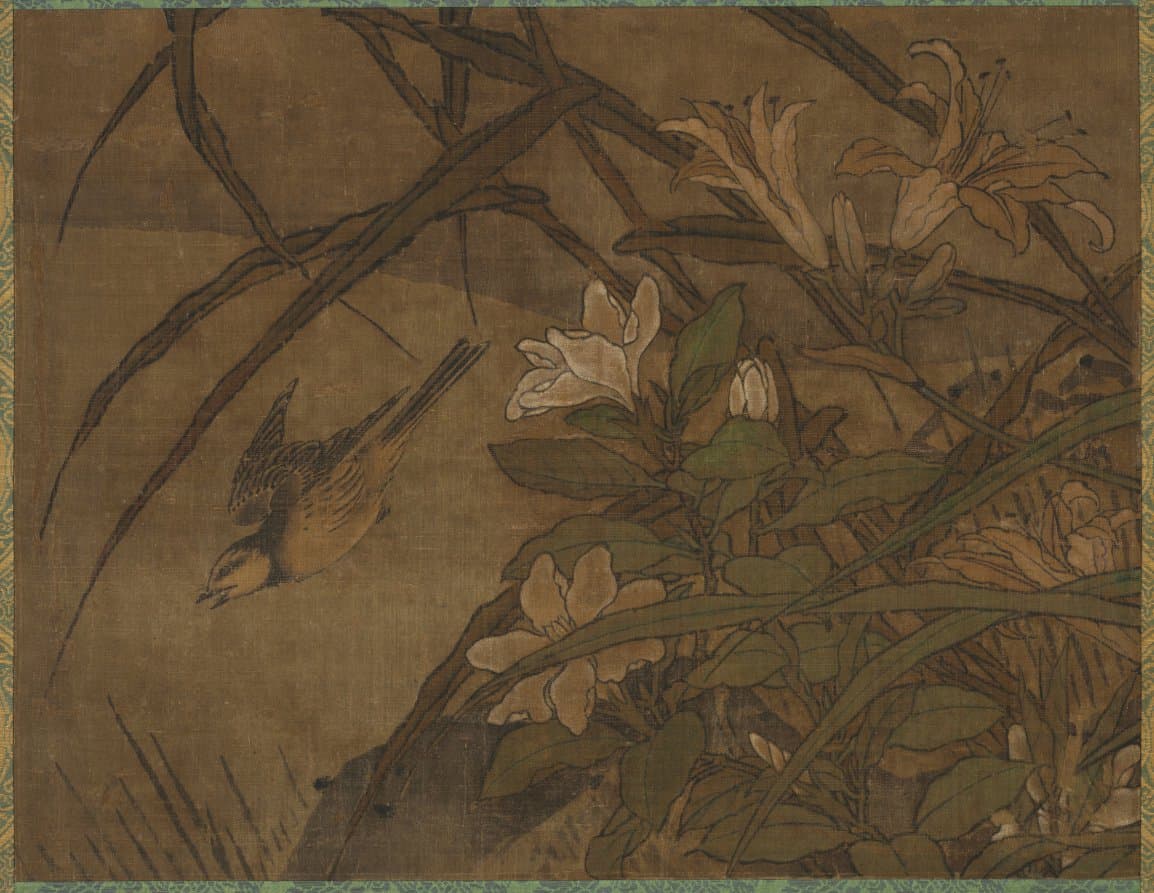
mid-1400s-early 1500s · Japan, Muromachi period (1392–1573)
Birds and Flowers
Sesshū Tōyō (Japanese, 1420–1506) · Hanging scroll from a triptych; ink and color on silk
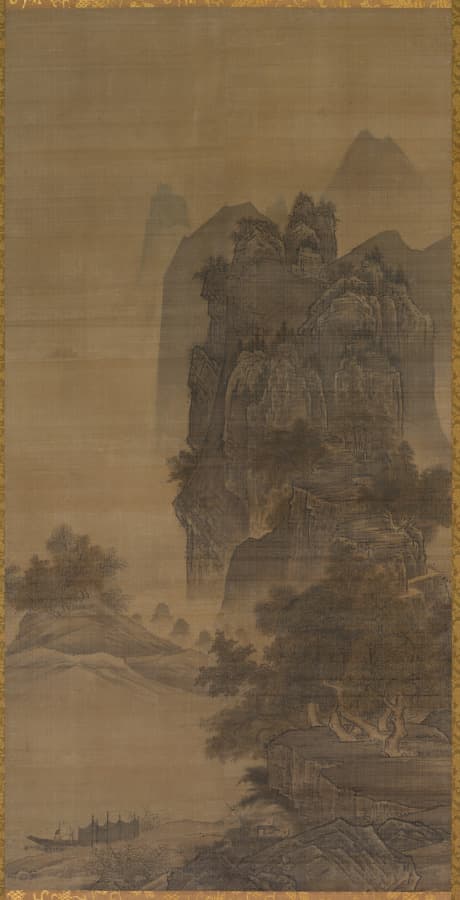
1460s–1550s · Museum collection
Sunset Glow over a Fishing Village, from Eight Views of Xiao-Xiang
Sesshū Tōyō (Japanese, 1420–1506) · Hanging scroll from a set of eight; ink and color on silk
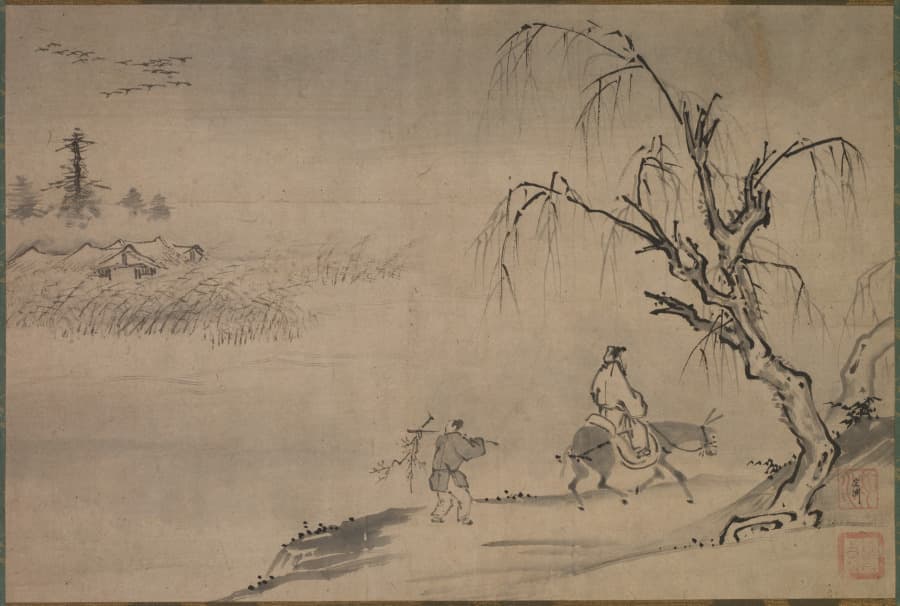
late 1400s · Japan, Muromachi period (1392–1573)
Chinese Literatus in an Autumn Landscape
Josui Sōen (Japanese, active c. 1489–1500) · hanging scroll; ink on paper
1500s · Japan, Muromachi period (1392–1573)
Landscape
Narihide (Japanese, active 1500s) · hanging scroll; ink on paper
Ready to describe what you want in your own space?
Start an artwork inquiry ↗