Painting study · Ink painting
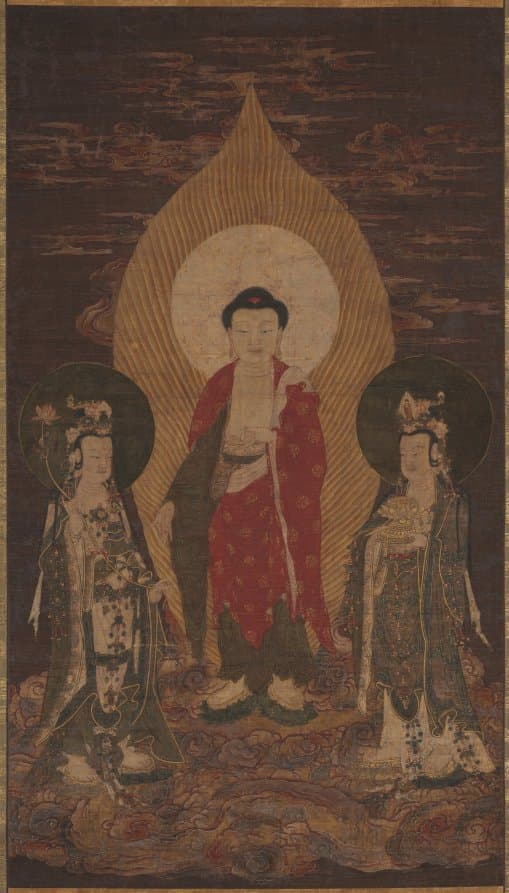
Amitābha Triadpossibly 1400s · Study 1961.135
Artist not recorded
possibly 1400s
Recorded as Hanging scroll; ink and color on silk, this vertical work measures 50.2 × 95.3 cm using the museum’s painting dimensions. Explore the museum’s context and compare the format with a wall of your choice.
Museum collection reference. This work is not offered for sale by Physical Art For Crypto. Museum attribution does not imply a partnership or endorsement.
Context from the museum
This hanging scroll illustrates an apparition of Buddha Amitābha (阿彌陀 in Chinese) and two attendant bodhisattvas, in the midst of colorful light and swirling clouds. The one who carries a miniature image of Amitābha in its jeweled crown is Avalokiteśvara (觀音 in Chinese); the other who carries a flower vase is Mahāsthāmaprāpta (大勢至 in Chinese). Previously, this work was identified as a rare example of a Korean Buddhist painting from the early Joseon period. In contrast to surviving Korean works from this time the scroll stands out for its fine details. However, other elements such as the striped almond-shaped halo that encircles the main Buddha, firm red lines that define each deity’s facial features, and the flowing garments may identify it as an early Ming period Chinese Buddhist painting.
Museum description reproduced from its CC0 open-access record. Read the original catalog entry.
A detail to notice
Amita is flanked by a pair of bodhisattvas, compassionate beings who aid others to reach enlightenment.
Observation supplied by the Cleveland Museum of Art.
Read the dimensions before the image
The selected painting measurement for Amitābha Triad is 50.2 cm wide and 95.3 cm high, equivalent to approximately 19.8 × 37.5 inches. Dividing width by height gives a format ratio of 0.53:1. The rectangular bounding area is 0.48 square meters; it describes the measured footprint, not the amount of paint or the monetary value.
On an illustrative 300 cm wall, the recorded width occupies 16.7% of the span before adding a frame. A centered placement leaves approximately 124.9 cm on each side before adding a frame. These are calculations by Physical Art For Crypto using museum measurements. They are not the museum’s display recommendations.
Questions to bring to your own collection
With Amitābha Triad in view, identify one feature you can point to, then distinguish what the museum records from your personal response. Keep its medium, Hanging scroll; ink and color on silk, in your notes when comparing contemporary works.
- Which part of this vertical composition catches your eye first?
- Would a 50.2 cm width still suit the space after allowing for furniture and a frame?
- What surface detail would you need to see in person or in a close photograph?
Explore physical scale
How large would this format feel on your wall?
Use this museum work’s recorded format as a reference. Adjust a blank wall and optional frame allowance to compare proportions. The museum painting is an educational reference and is not for sale here.
Calculation: outside width = recorded width + twice your frame allowance. This is a proportion study, not an installation assessment. It excludes furniture, hardware, load capacity, depth and delivery clearance. The display image may include margins absent from the recorded measurement.
Compare formats with the studio collection
These Lei-Kol works have the closest width-to-height ratios in the current catalog. This is a geometry comparison, not a claim of artistic similarity, equivalent value, or association with the museum artist.
| Painting | Width × height | Format ratio | USD catalog price |
|---|---|---|---|
| Cheesecake | 24 × 48 in | 0.50:1 | $1,099 |
| Riptide | 24 × 48 in | 0.50:1 | $1,199 |
| Graffiti | 30 × 48 in | 0.63:1 | $2,199 |
Availability and delivery costs must be confirmed for the individual order.
Related studies
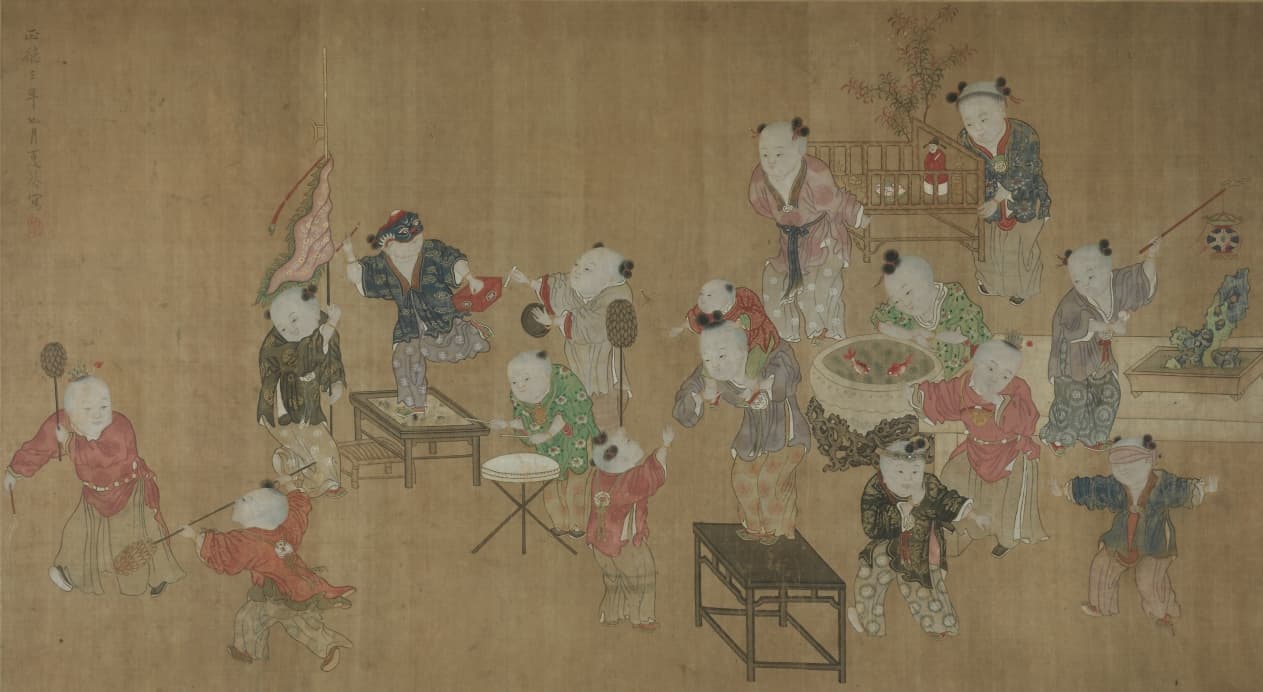
1508 · China, Ming dynasty (1368–1644)
Children at Play
Xia Kui (Chinese, active c. 1405–1445) · hanging scroll; ink and color on silk

1368–1644 · China, Ming dynasty (1368–1644)
Landscape
Artist not recorded · handscroll; ink and slight color on silk
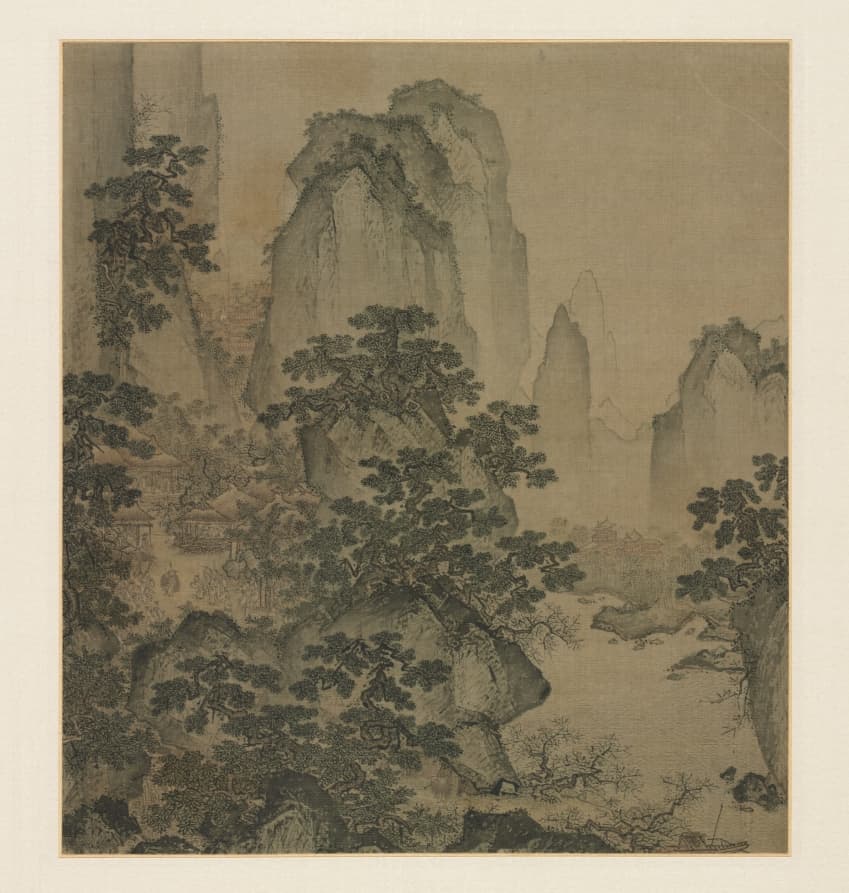
mid-1400s · China, Ming dynasty (1368–1644)
The Haven of the Peach-Blossom Spring
Shi Rui (Chinese, c. 1400-c. 1470) · Album leaf; ink and slight color on silk

1500s · China, Ming dynasty (1368–1644)
Saying Farewell at Xunyang (Song of the Pipa)
Wen Boren (Chinese, 1502–1575) · handscroll; ink and color on paper
Ready to describe what you want in your own space?
Start an artwork inquiry ↗