Painting study · Ink painting
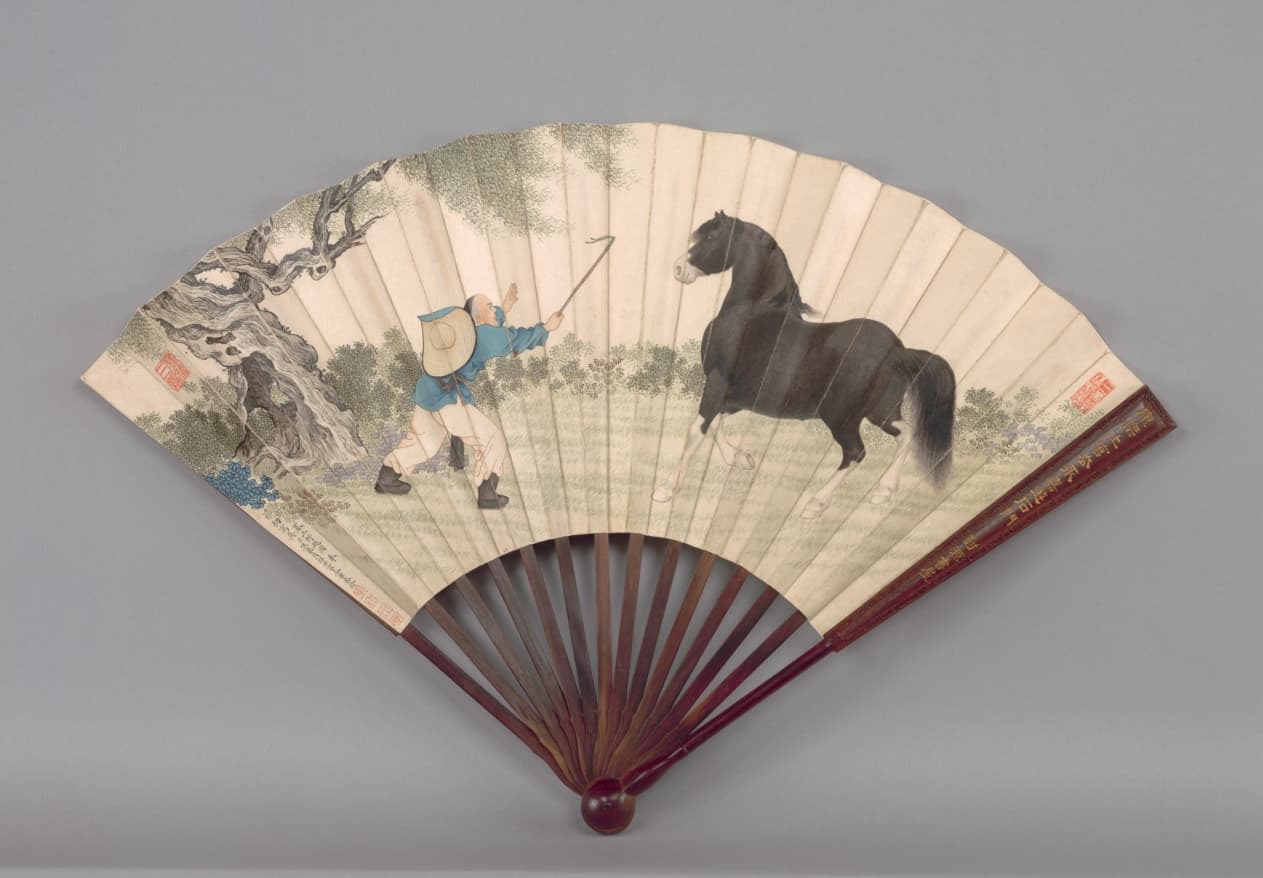
A Vignette of Life on the Frontierc. 1717–22 · Study 1979.18
Jiao Bingzhen (Chinese, active c. 1670–1726); Giuseppe Castiglione (Italian, 1688–1766)
c. 1717–22
Recorded as Folding fan; ink and color on paper, this horizontal work measures 55 × 19 cm using the museum’s painting dimensions. Explore the museum’s context and compare the format with a wall of your choice.
Museum collection reference. This work is not offered for sale by Physical Art For Crypto. Museum attribution does not imply a partnership or endorsement.
Context from the museum
Jiao Bingzhen, a court painter largely active during the reign of the Kangxi Emperor, was the senior artist on this fan. Jiao painted the Manchu horse trainer and the setting into which the horse was inserted by Giuseppe Castiglione. Each artist was bonded to his own artistic tradition, while flexibly and harmoniously accommodating the others’ style. Jiao’s brushwork displays rigor and control, particularly in the twisting and turning trunk of the willow. The treatment of the figure and his clothes is an exercise in linearity. The horse trainer’s gesture and posture closely adhere to the known repertoire of the Chinese figural tradition, but the specificity supplies a sense of documentary reportage of life on the frontier. His shaved forehead and white temples identify him as a Manchu. The thick fabric of his garments was defined in a different sort of brush line than Jiao typically used for Chinese scholars or travelers. Jesuit priest Castiglione, a newcomer to China at the time this was painted, brought a sense of Western realism to the horse. Poised at a slight angle, the horse is alert, its eye gleaming. Its contours suggest the bulk of its anatomy with skilled but not overpowering modelling, and careful and subtly wrought attention to detail, such as fluttering strand of mane. Because of his ability to combine traditional Chinese painting techniques with Western methods of perspective and chiaroscuro, Castiglione went on to be the most favored and honored of the missionary artists who served the early Qing emperors. Throughout his career, in addition to imperial demands for portraits and records of court events, Castiglione continued to paint favored imperial horses. These animal subjects reflect the desire of Kangxi and his successors to celebrate their nomadic origins and to keep alive the martial prowess of the Manchu warriors in their new and sedentary world of conquered China.
Museum description reproduced from its CC0 open-access record. Read the original catalog entry.
A detail to notice
One horseshoe is visible beneath the uplifted hoof.
Observation supplied by the Cleveland Museum of Art.
Read the dimensions before the image
The selected painting measurement for A Vignette of Life on the Frontier is 55 cm wide and 19 cm high, equivalent to approximately 21.7 × 7.5 inches. Dividing width by height gives a format ratio of 2.89:1. The rectangular bounding area is 0.10 square meters; it describes the measured footprint, not the amount of paint or the monetary value.
On an illustrative 300 cm wall, the recorded width occupies 18.3% of the span before adding a frame. A centered placement leaves approximately 122.5 cm on each side before adding a frame. These are calculations by Physical Art For Crypto using museum measurements. They are not the museum’s display recommendations.
Questions to bring to your own collection
With A Vignette of Life on the Frontier in view, identify one feature you can point to, then distinguish what the museum records from your personal response. Keep its medium, Folding fan; ink and color on paper, in your notes when comparing contemporary works.
- Which part of this horizontal composition catches your eye first?
- Would a 55 cm width still suit the space after allowing for furniture and a frame?
- What surface detail would you need to see in person or in a close photograph?
Explore physical scale
How large would this format feel on your wall?
Use this museum work’s recorded format as a reference. Adjust a blank wall and optional frame allowance to compare proportions. The museum painting is an educational reference and is not for sale here.
Calculation: outside width = recorded width + twice your frame allowance. This is a proportion study, not an installation assessment. It excludes furniture, hardware, load capacity, depth and delivery clearance. The display image may include margins absent from the recorded measurement.
Compare formats with the studio collection
These Lei-Kol works have the closest width-to-height ratios in the current catalog. This is a geometry comparison, not a claim of artistic similarity, equivalent value, or association with the museum artist.
| Painting | Width × height | Format ratio | USD catalog price |
|---|---|---|---|
| Bipolar | 60 × 48 in | 1.25:1 | $3,499 |
| Brick and Mortar | 60 × 48 in | 1.25:1 | $3,499 |
| Dominion | 60 × 48 in | 1.25:1 | $3,499 |
Availability and delivery costs must be confirmed for the individual order.
Related studies
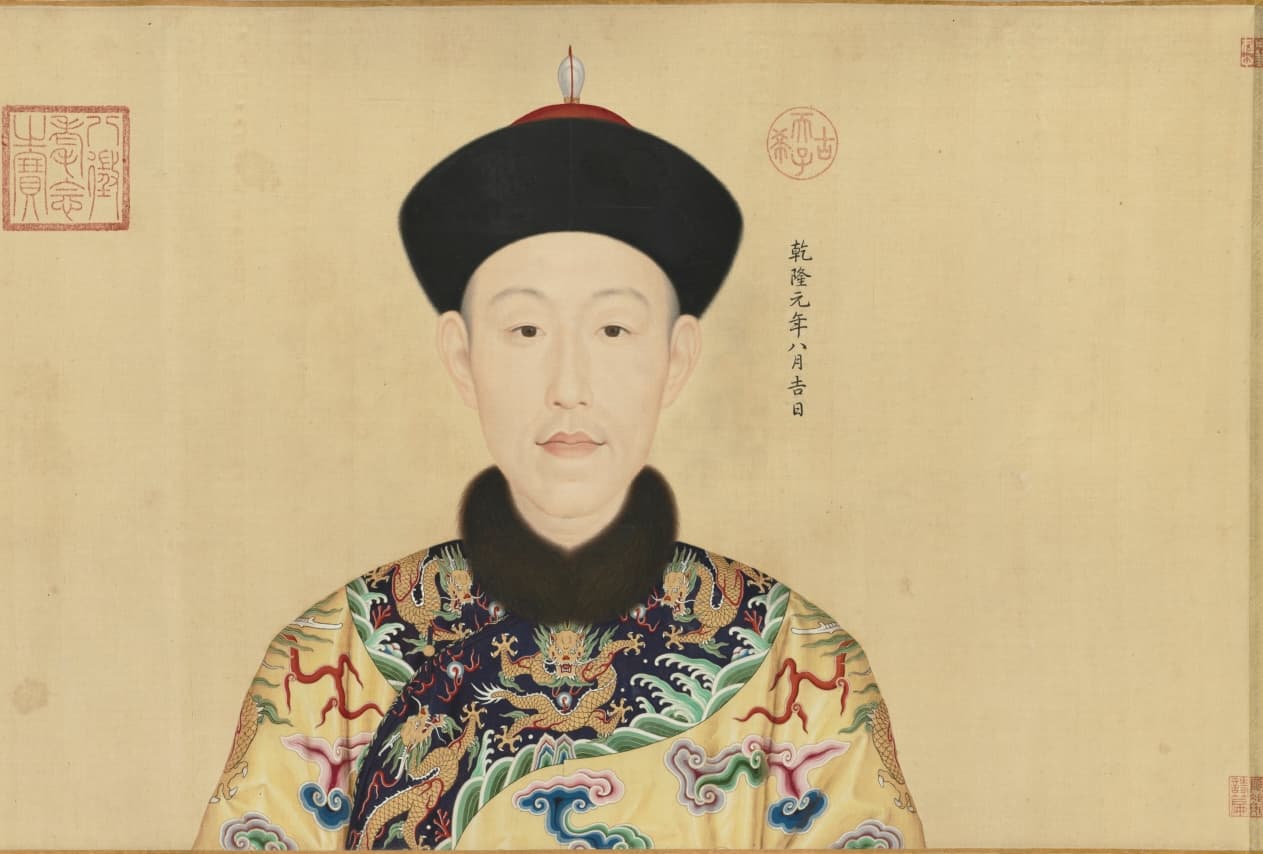
1736–70s · China, Qing dynasty (1644–1911), Qianlong reign (1736–95)
Portraits of the Qianlong Emperor and His Twelve Consorts
Giuseppe Castiglione (Italian, 1688–1766); others (Chinese) · Handscroll; ink and color on silk
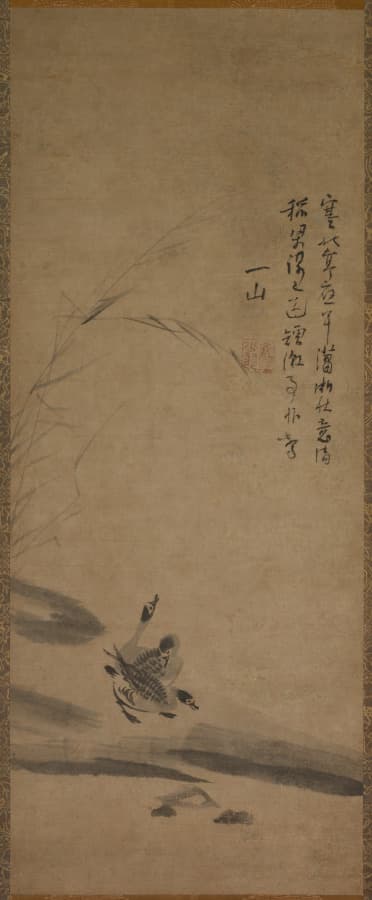
1314–17 · Japan, Kamakura period (1185–1333)
Reeds and Geese
Yishan Yining [Issan Ichinei] (Chinese, 1247–1317) · hanging scroll; ink on paper
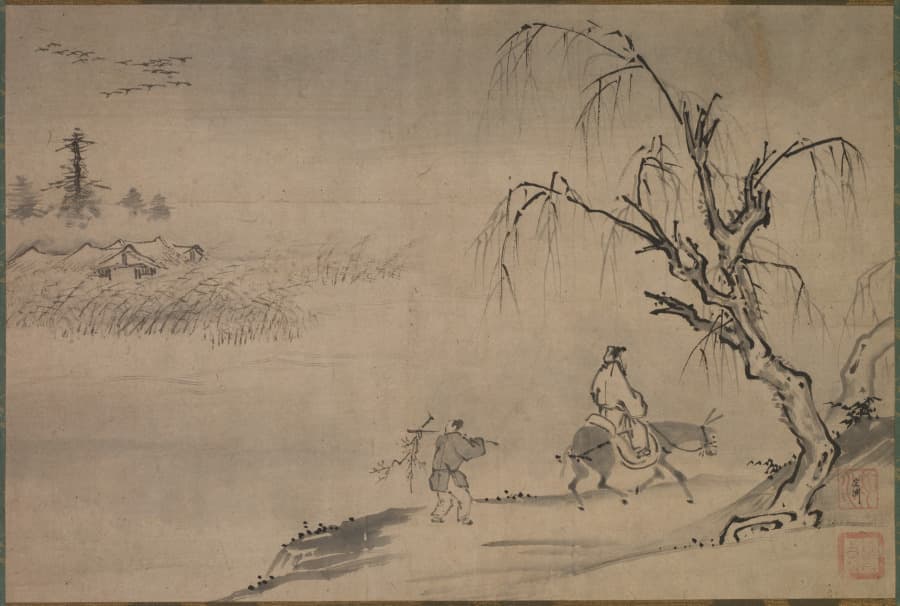
late 1400s · Japan, Muromachi period (1392–1573)
Chinese Literatus in an Autumn Landscape
Josui Sōen (Japanese, active c. 1489–1500) · hanging scroll; ink on paper
1500s · Japan, Muromachi period (1392–1573)
Landscape
Narihide (Japanese, active 1500s) · hanging scroll; ink on paper
Ready to describe what you want in your own space?
Start an artwork inquiry ↗