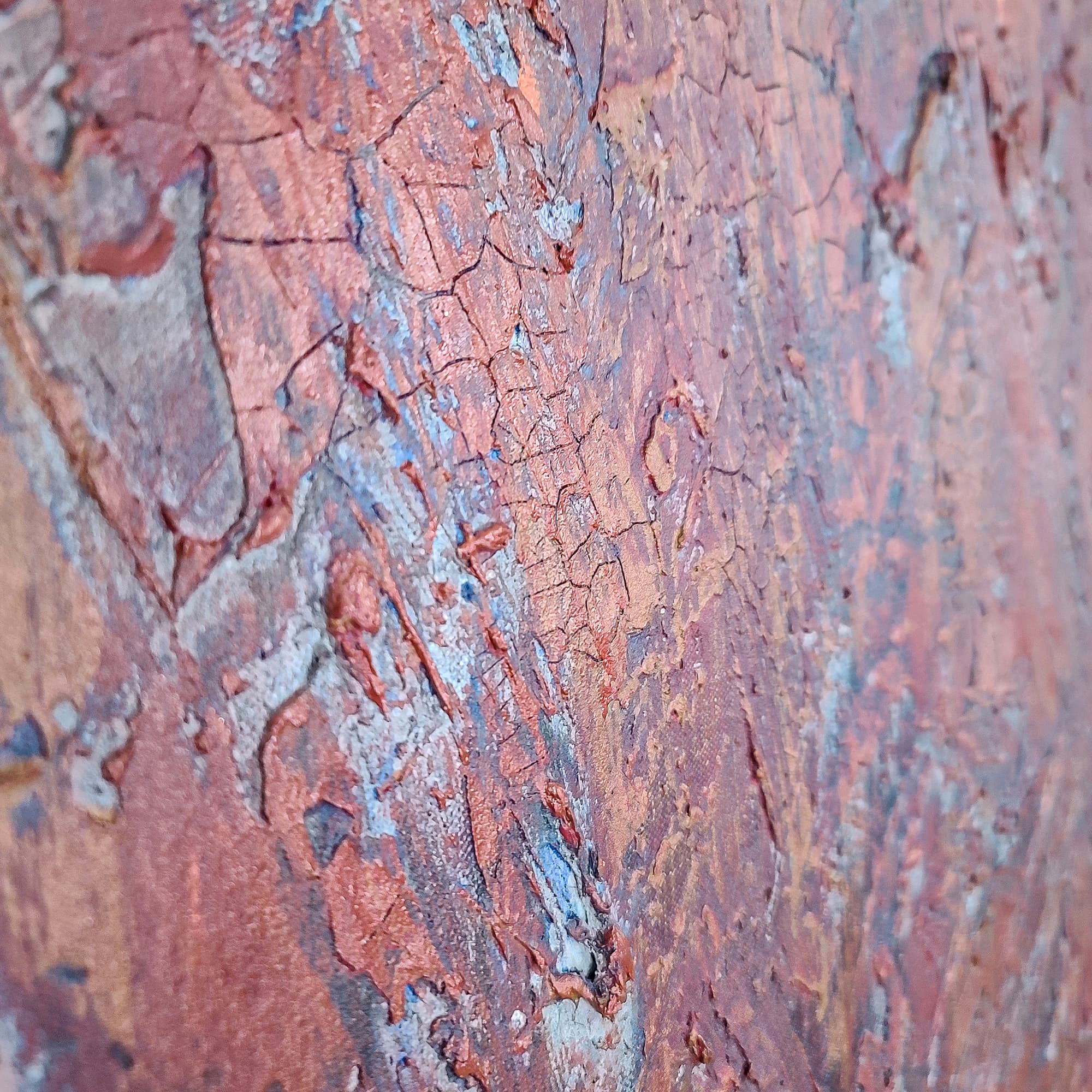
It Starts with a Sensation, Not a Sketch
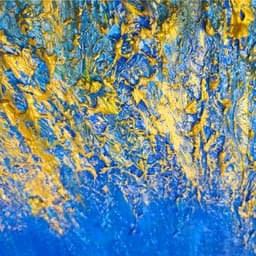
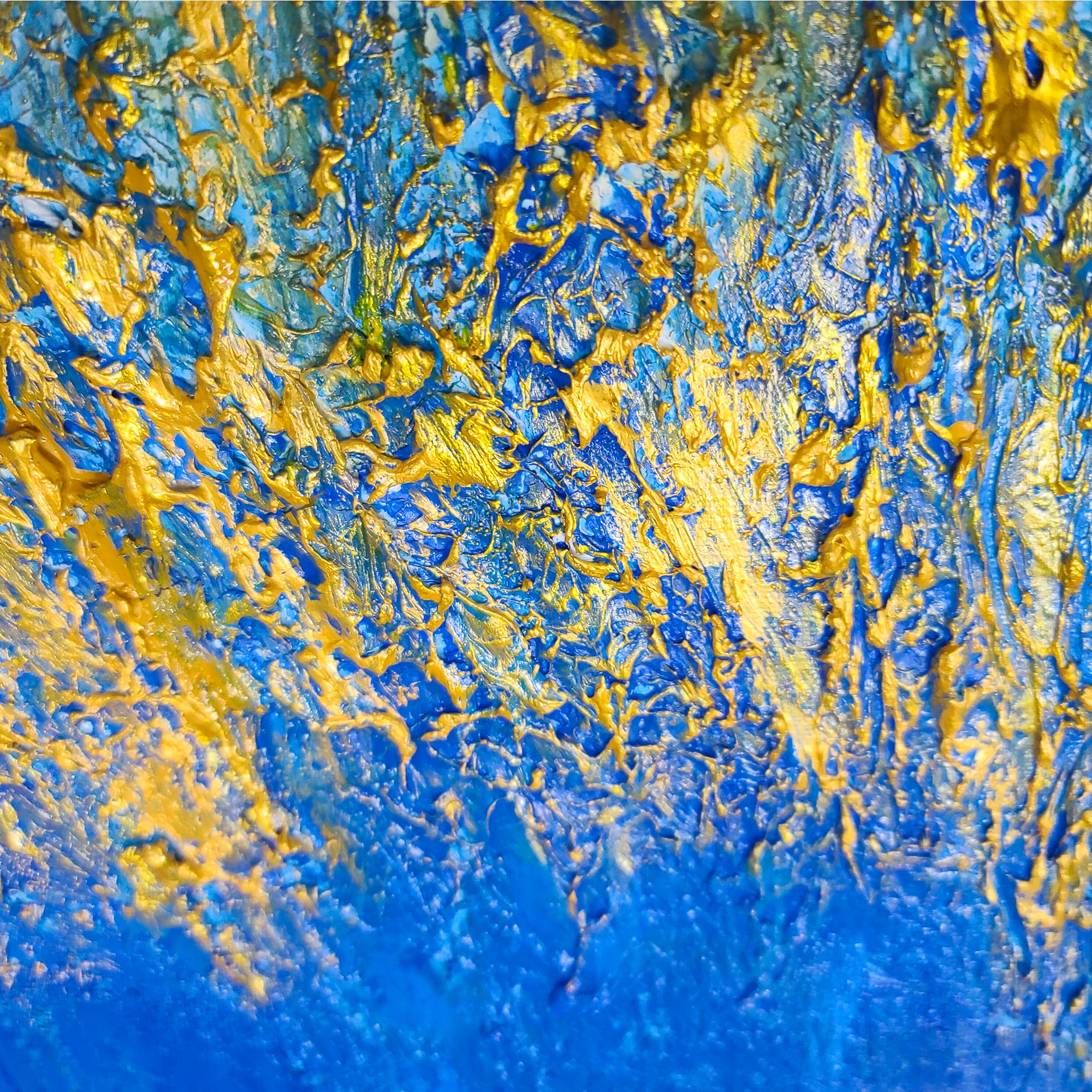
Most painters begin with a sketch, a photograph, or at least a clear mental image. Lei-Kol begins with a physical sensation — the feeling of a surface she wants to create. Before she touches a canvas, she knows how the finished painting should feel under her fingertips. The visual appearance follows from that tactile starting point.
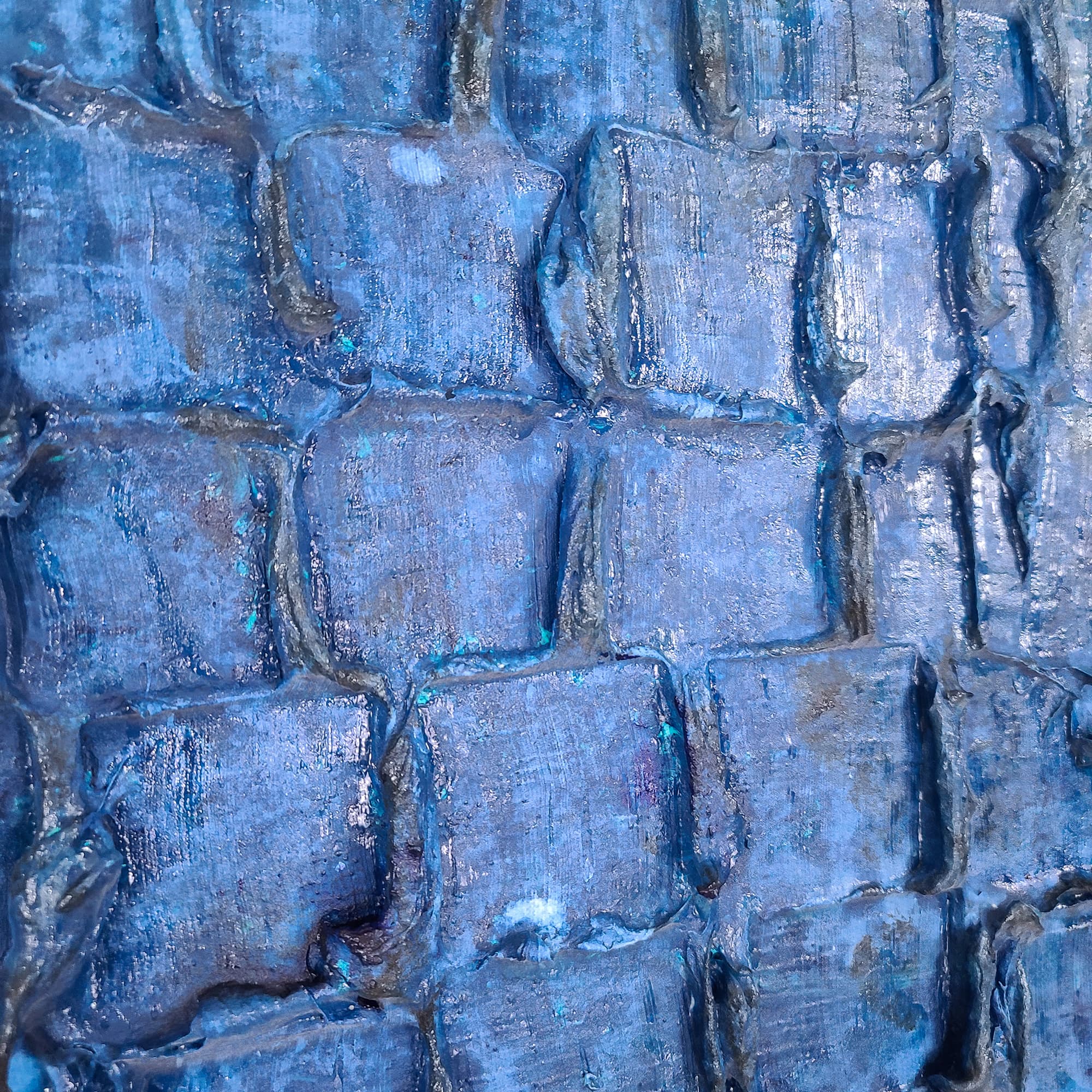
"I know the texture before I know the color," she explains. "For Brick and Mortar, I started by running my hands over actual brick walls. I needed to understand the surface physically before I could recreate it in paint."
Materials: The Foundation
Heavy texture work demands professional-grade materials. Lei-Kol uses heavy-body acrylic paints with the highest pigment concentration available, combined with several structural mediums:
- Heavy-body acrylic: Dense, buttery paint that holds peaks and ridges when applied thickly.
- Modeling paste: A thick, putty-like medium that adds body and structure, allowing the paint to be built up in dramatic three-dimensional forms.
- Gel medium: Extends the paint while maintaining texture, and can be mixed to various consistencies from flowing to stiff.
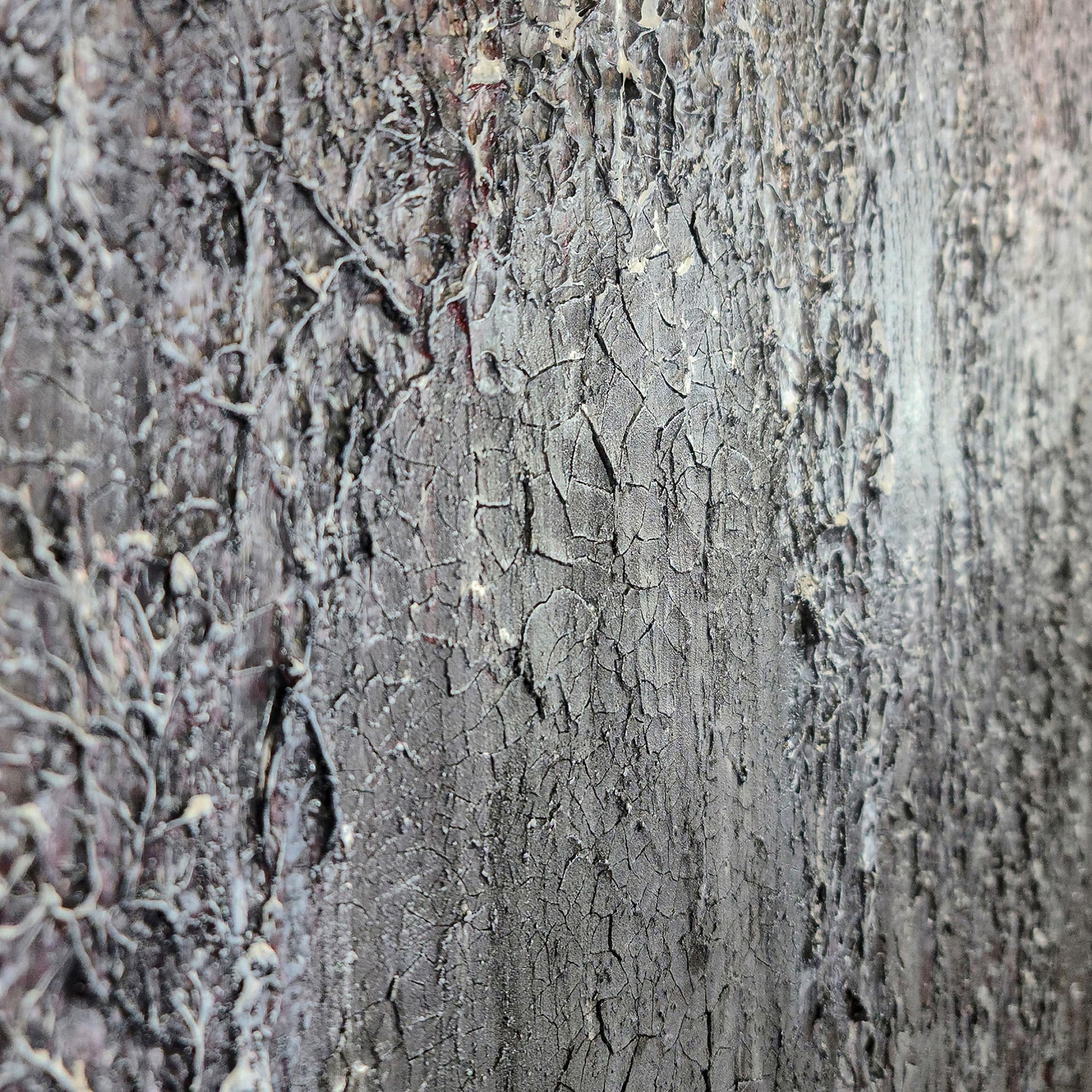
- Metallic pigments: Used in pieces like Stardust where embedded metallic flecks create surfaces that genuinely glow at certain angles.
The Layering Process
Each painting is built in multiple layers, and each layer requires patience:
Layer 1: The Foundation
The first layer establishes the base texture and the overall directional flow of the piece. This is typically the thickest single application, using modeling paste mixed with paint to create the major topographic features of the surface — the ridges, peaks, and valleys that define the painting's physical landscape.
Layers 2–5: Building Depth
Subsequent layers add complexity. Each must dry or partially cure before the next is applied — rushing leads to cracking. Lei-Kol works on multiple paintings simultaneously, cycling between them as each layer dries. These intermediate layers build up the surface detail and begin introducing color variation.
Final Layers: Color and Refinement
The last layers focus on color, using thinner applications that follow the existing topography. Paint settles into the valleys and catches on the peaks, creating the natural variation in color intensity that gives textured paintings their visual depth. This is where the painting's final mood and palette emerge.
Tools of the Trade
Lei-Kol rarely uses traditional brushes. Her primary tools are:
- Palette knives: Of various sizes, used to spread, sculpt, and scrape paint across the surface.
- Trowels: For applying thick layers of modeling paste and creating broad textural sweeps.
- Hands: Yes, directly. Some textures can only be achieved by working the paint with fingers and palms, feeling the surface build up in real time.
Time and Patience
A heavily textured painting cannot be rushed. The typical timeline for a large-format piece (48 × 60 inches) is two to four weeks from first layer to final application. Each of the dozens of layers needs adequate drying time to maintain structural integrity — applying wet paint over insufficiently cured layers leads to cracking, peeling, and eventual failure of the surface.
This patience is part of what makes each piece valuable. A piece like Dominion represents weeks of deliberate, skilled work — not a single session of inspiration but a sustained commitment to building something that has genuine physical substance.
The Finished Object
When the final layer is complete and fully cured, the painting is sealed with a protective varnish that preserves the surface and enhances color saturation. The sides of the canvas are painted (on many pieces) so the painting can be hung without a frame — the texture wraps around the edges, giving the piece a sculptural quality even from the side.
Every finished painting ships with a Certificate of Authenticity signed by Lei-Kol. Browse the collection to see the results of this process, and reach out with any questions about specific pieces.
Tags