Art Was Never a Choice — It Was a Compulsion
Lei-Kol did not decide to become an artist. There was no pivotal moment in a museum, no encouraging teacher, no family tradition of creative work. She simply started making things — layering color and texture onto surfaces because the urge to do so was stronger than any rational argument against it. She is entirely self-taught, and she considers that a strength rather than a limitation.
"Art school teaches you rules," she says. "I never learned the rules, so I never had to unlearn them. Everything I do comes from instinct and experience, not theory."
Hawaii Changed Everything
Lei-Kol spent formative years in Hawaii and Maui, and the islands fundamentally shaped her artistic vision. The volcanic landscape — molten lava meeting the Pacific, the impossible golds and reds of active flows against black rock — taught her that nature's most powerful moments are inherently textured. Smooth surfaces are artificial. The real world has depth, layers, and physical presence.
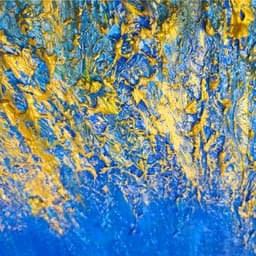
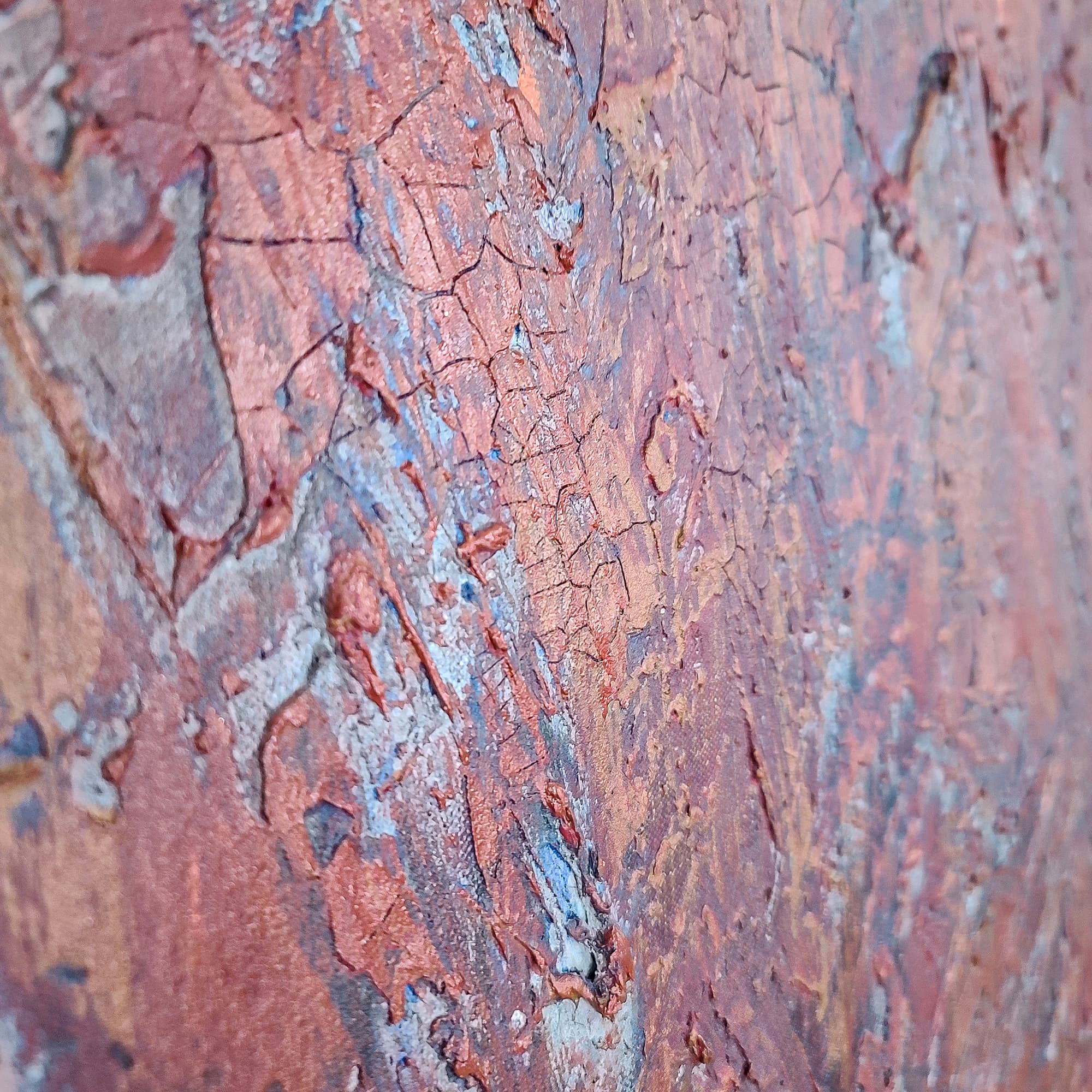
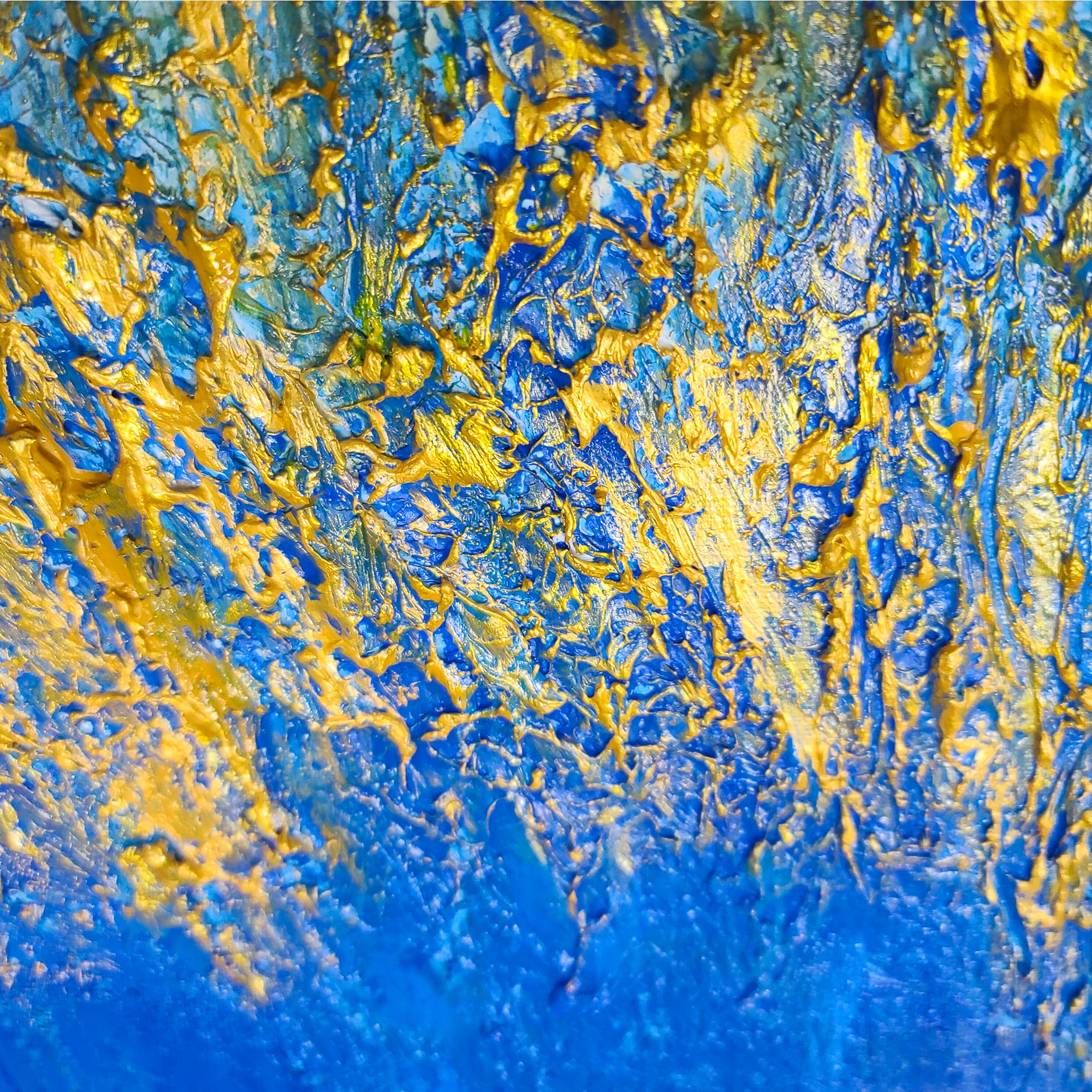
This understanding became the foundation of her work. Pieces like Maui and Blood Moon are direct translations of those volcanic experiences — the thick, flowing ridges of gold pigment catching light the way molten rock catches sunlight. The layered blues of Waterfalls recreate the cascading water of Hawaii's hidden falls, where every shade of blue exists simultaneously at different depths.
Building, Not Painting
Lei-Kol describes her process as building rather than painting. Each piece begins with a vision of texture — not an image to reproduce, but a physical sensation to create. She works with heavy-body acrylics, modeling paste, and palette knives, applying layer after layer over days and sometimes weeks. Each layer must set before the next is applied, and each layer adds to the physical topography of the surface.
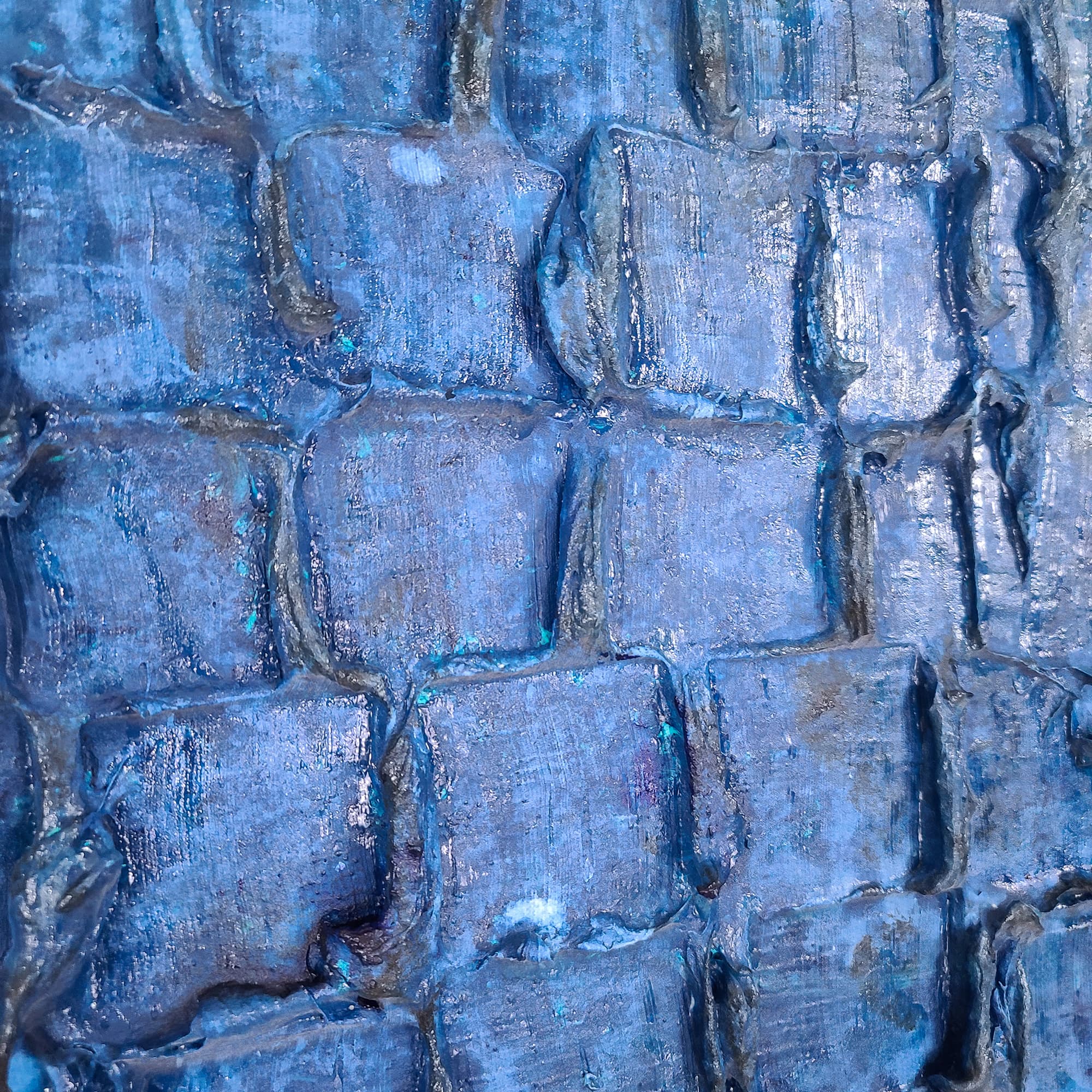
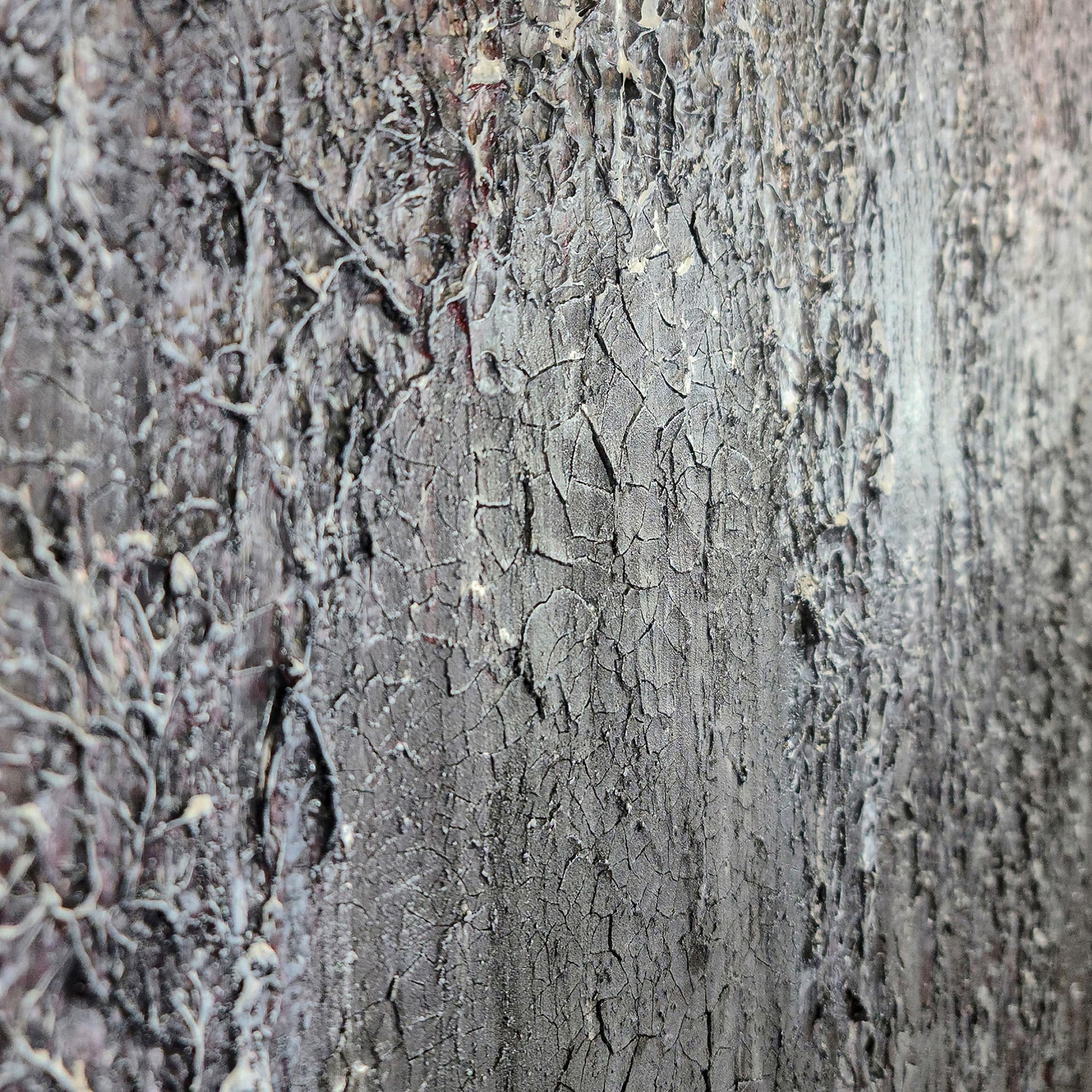
The result is paintings that are as much sculptural objects as they are visual art. The surfaces can extend an inch or more from the canvas, with peaks, ridges, and valleys that create their own micro-landscape. This is why photographs of Lei-Kol's work, no matter how high-resolution, capture only a fraction of the experience. The art demands physical presence.
Inspiration from Everywhere
While Hawaii provides the elemental foundation, Lei-Kol draws inspiration from the full spectrum of human experience:
- San Francisco's street art inspired the fearless color of Graffiti
- Chicago's exposed brick walls became Brick and Mortar
- Seattle's legendary gum wall — that strange, collective monument — inspired Gray Day
- A pair of Diesel jeans led to the textured denim surface of Blue Denim
- Childhood memories of animated snowstorms became the layered whites of Snow Storm
Why Crypto
Lei-Kol accepts cryptocurrency because it aligns with her core belief that art should be accessible to anyone, anywhere. Traditional payment systems create barriers — banks that can deny transactions, credit card fees that inflate prices, international transfer processes that are slow and expensive. Cryptocurrency removes these barriers.
"If someone in Brazil or Japan connects with one of my paintings, I want them to be able to buy it without a bank deciding whether the transaction is allowed," she says. "Art and crypto are both about freedom from gatekeepers."
Every Piece Is the Only One
Lei-Kol does not make prints, reproductions, or limited editions. Every painting in the collection is the only one that will ever exist. When a piece is sold, it belongs to one person and one person only. This is a deliberate choice: the uniqueness of each work is inseparable from its value, both emotional and financial.
To learn more about Lei-Kol's work, visit the artist page or reach out directly. She personally responds to every inquiry.
Tags