It Begins with the Islands
Lei-Kol's artistic vocabulary was shaped by the Hawaiian Islands. Not by the postcard version — the gentle beaches and swaying palms — but by the raw, elemental Hawaii that most tourists never see. The sight of molten lava flowing toward the Pacific. The sound of waterfalls so tall the water seems to dissolve before reaching the ground. The texture of volcanic rock, worn smooth in some places and violently jagged in others.
These experiences are not memories she paints from — they are textures she recreates. When she builds the surface of Maui, she is not trying to illustrate a volcano. She is trying to give you the physical sensation of standing near one — the heat, the glow, the overwhelming power of earth reshaping itself.
Conception: The Idea Takes Shape
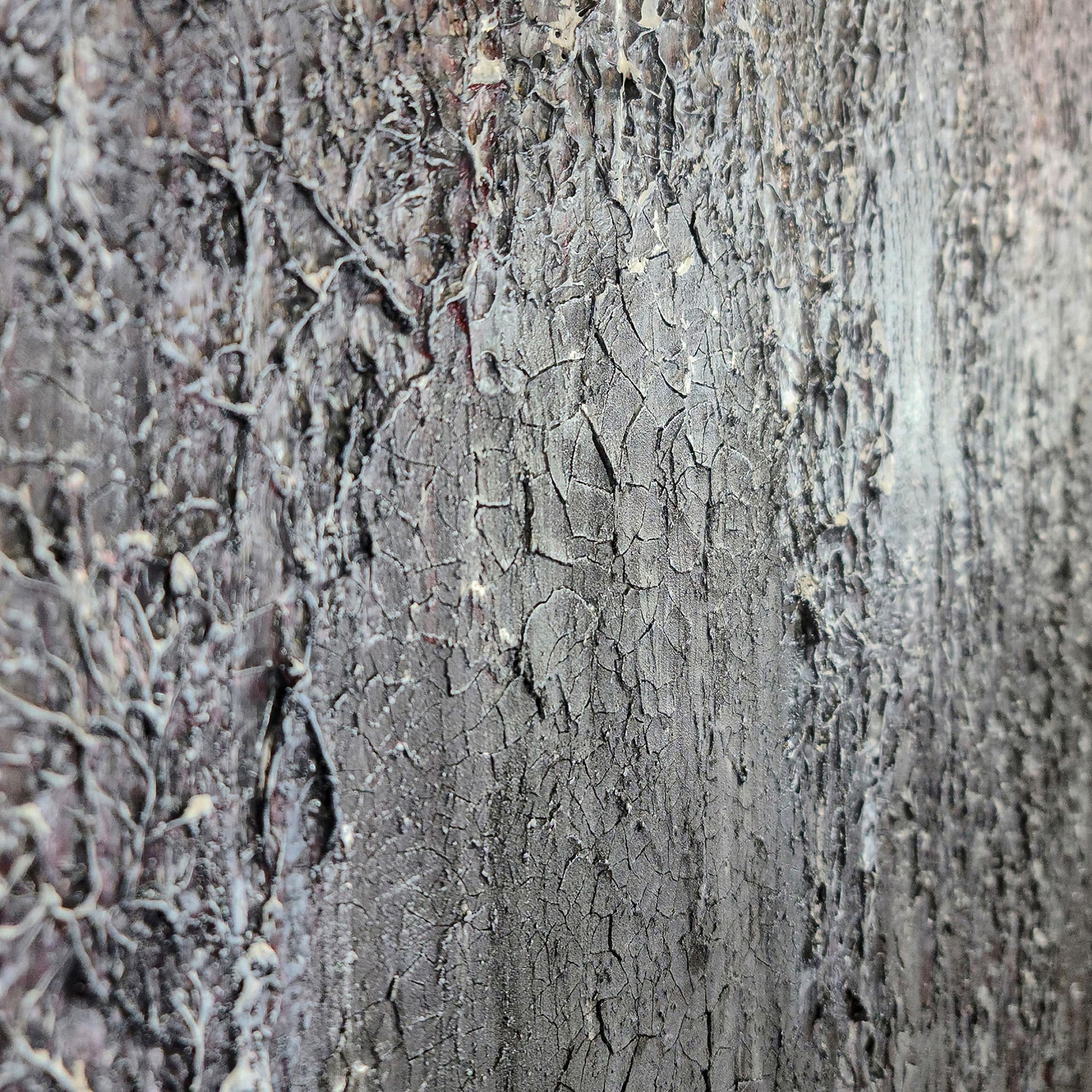
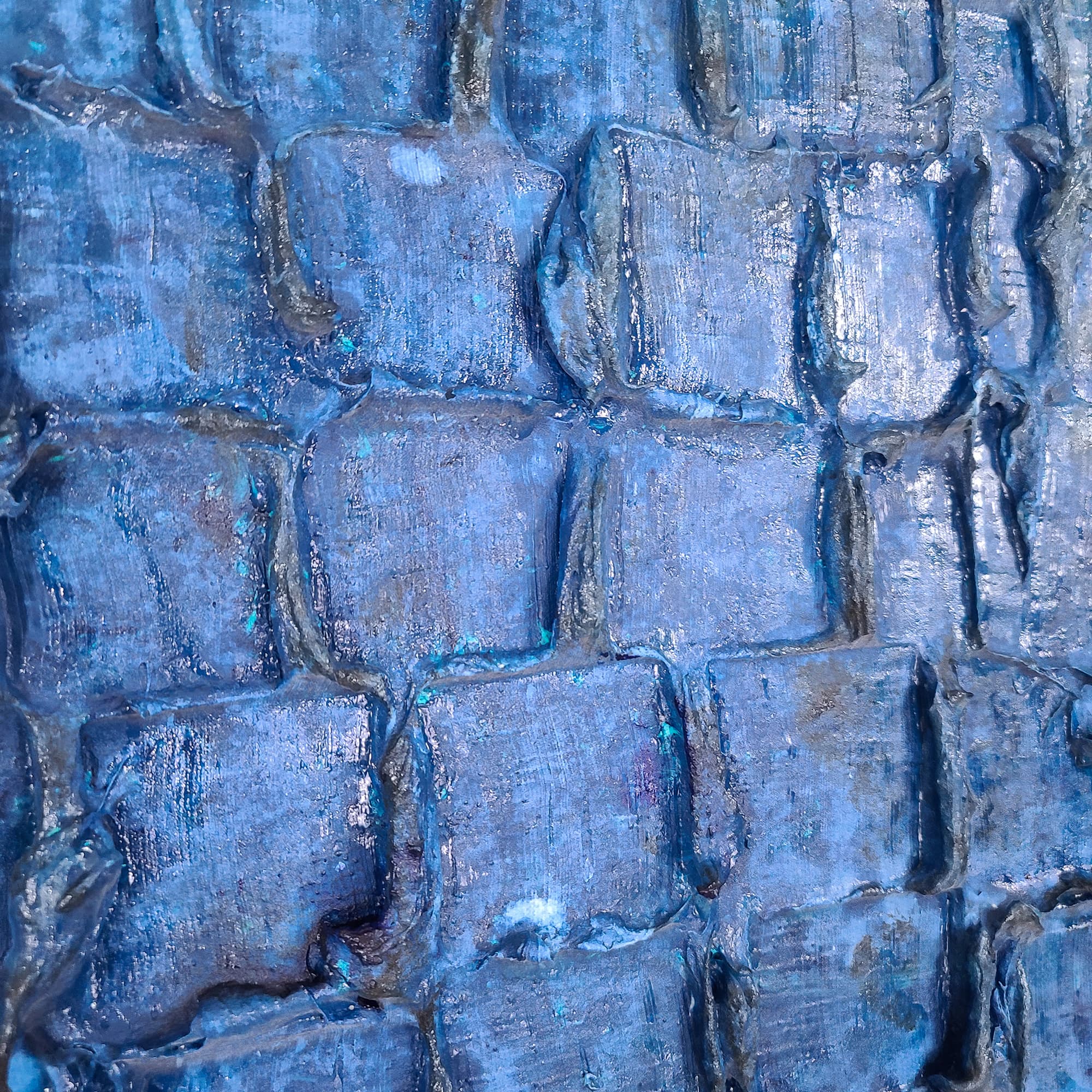
Every painting begins months before the first layer of paint. Lei-Kol carries ideas around with her, collecting textures the way other people collect photographs. A pair of Diesel jeans with the perfect worn surface becomes Blue Denim. Seattle's famous gum wall, with its chaotic layers of color and texture, becomes Gray Day. The inspiration might be natural, urban, emotional, or even humorous — Cheesecake was inspired by the layered richness of an actual strawberry cheesecake.
The idea crystallizes when Lei-Kol can feel the finished texture in her mind — when she knows how the surface should feel under her hands. That is when a painting moves from idea to execution.
Creation: Layer by Layer
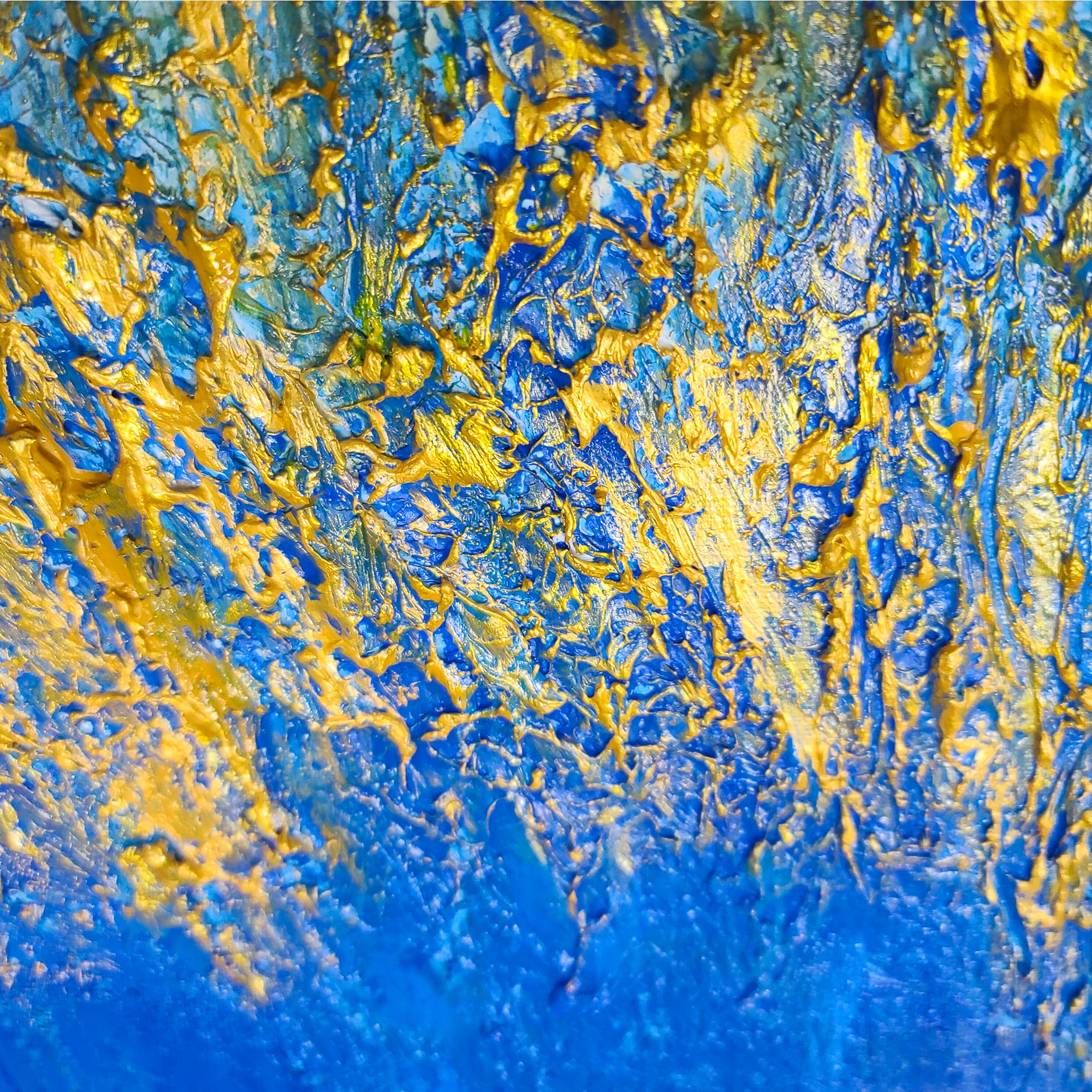
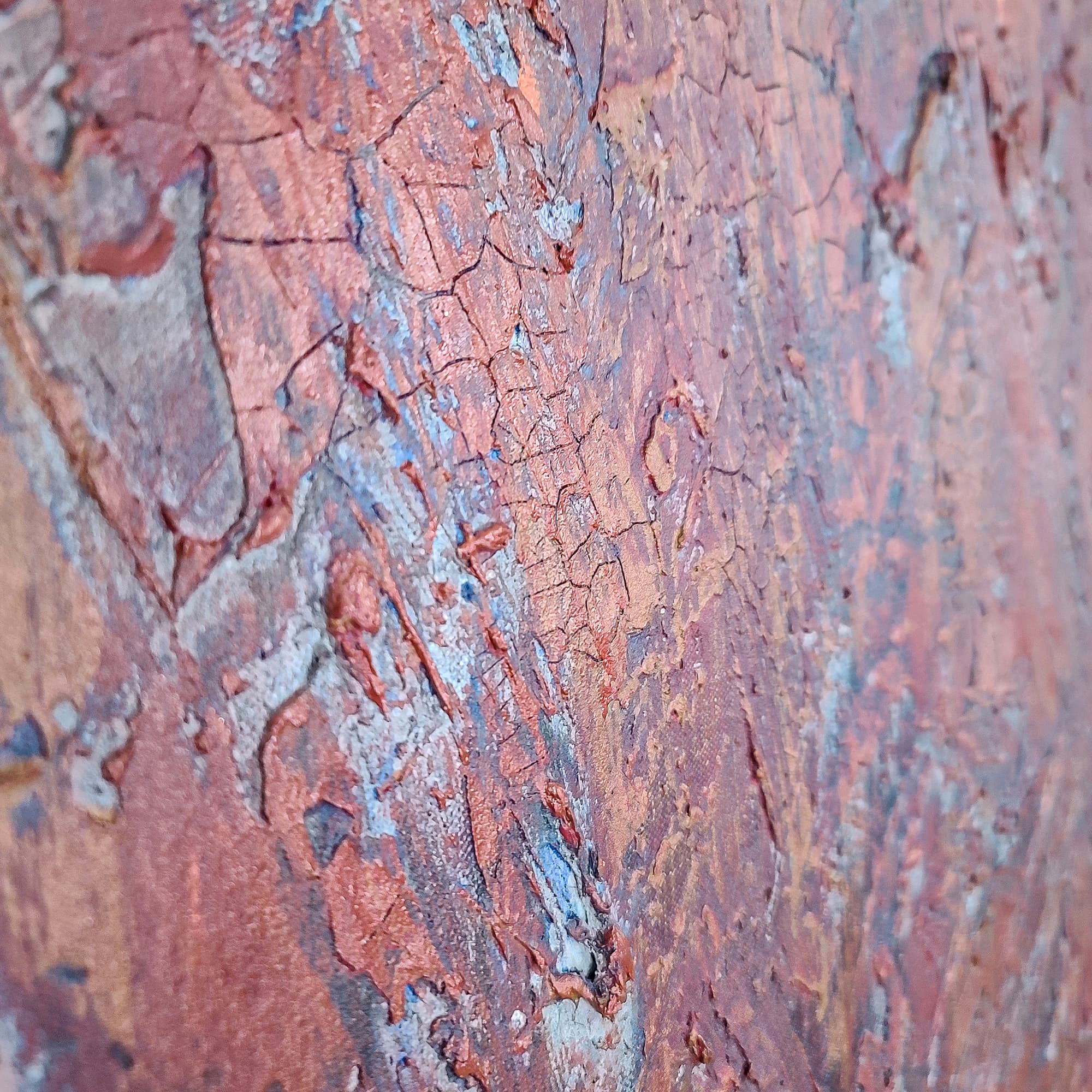
The painting process is covered in detail in The Art of Acrylic Texture, but the essential point is this: every painting is built, not painted. Heavy-body acrylics, modeling paste, and gel mediums are applied in dozens of layers over days and weeks, each layer adding to the physical topography of the surface.
Large-format pieces like Bipolar (48 × 60 inches) typically take two to four weeks of active work. During this time, Lei-Kol works on multiple pieces simultaneously, cycling between them as layers dry.
Finishing: Protection and Documentation
When the final layer is fully cured, the painting receives a protective varnish that preserves the surface, enhances color vibrancy, and provides UV resistance. The sides of the canvas are painted (on applicable pieces) for frameless hanging.
Each painting is then documented: high-resolution photography from multiple angles, detailed measurements, and a signed Certificate of Authenticity that records the title, medium, dimensions, date of completion, and Lei-Kol's signature. This documentation follows the painting throughout its life, establishing its provenance.
Packing: Gallery-Standard Protection
Shipping original art requires serious packing. Each painting is wrapped in acid-free glassine paper to protect the textured surface, then layered with foam padding on all sides. The wrapped painting is placed in a custom-sized double-walled cardboard box with corner protectors, with at least two inches of cushioning material on every side.
For heavily textured pieces, a floating cradle system is used — the painting is suspended within the box so that the textured surface never contacts the packaging material. This prevents any impression or damage to the peaks and ridges of the paint surface during transit.
Shipping: Safe Delivery
All domestic shipments within the USA are free. Paintings ship fully insured via trusted carriers with tracking provided at every stage. International shipping is available to most countries — contact Lei-Kol for a quote that includes customs documentation and international insurance.
Typical domestic delivery is 5 to 10 business days depending on location. International delivery varies but typically runs 10 to 21 business days.
Arrival: On Your Wall
When your painting arrives, unpack it carefully, starting by removing the outer box and foam layers. The glassine paper peels away to reveal the finished piece. Each painting comes ready to hang — D-ring hardware is pre-installed on the back. Find a wall with good lighting, hang the piece at eye level (center at 57 inches from the floor), and step back.
That moment — the first time you see a Lei-Kol original on your own wall — is what this entire journey has been building toward. The texture catches the light in your room, in your space, and becomes something uniquely yours.
Start your journey by finding the piece that speaks to you.
Tags